Maddy summaryThe RRLEF Act of 2025 requires applicants for Edward Byrne Memorial Justice Assistance Grant Program funds to certify they do not purchase firearms from "covered licensed dealers." A "covered dealer" is defined as one traced with 25+ firearms used in crimes within two of the last three years. The bill mandates the ATF publicly publish an annual list of these dealers and notify law enforcement if their transferred firearms are used in crimes. This directly affects state/local law enforcement agencies seeking federal grant funding by restricting their firearm purchasing options.
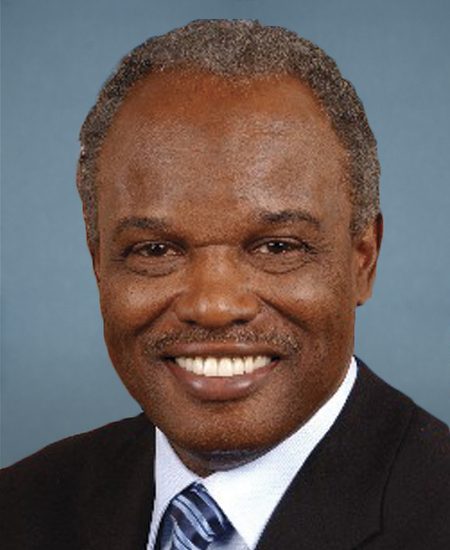
Rep. David Scott
Sponsored bills
Maddy summaryThe FAMILY Act would establish a national paid family and medical leave insurance program that provides wage replacement benefits for workers needing time off for caregiving or medical reasons. It defines "qualified caregiving" to include caring for a family member with a serious health condition, personal medical needs, or recovery from violence (including domestic violence, sexual assault, or stalking). Benefits would be calculated based on earnings, with a minimum monthly benefit of $580 and maximum of $4,000, administered by a new Office of Paid Family and Medical Leave within the Social Security Administration. Eligible individuals would need to have worked for at least 8 quarters in the previous year and file an application with required documentation, while existing state paid leave programs would continue to operate alongside this federal program.
Equal COLA Act This bill applies a cost-of-living adjustment (COLA) for annuities paid under the Federal Employees Retirement System that is equal to the increase in inflation, regardless of the amount of the increase. Specifically, for any year in which the Consumer Price Index (CPI) has increased over the previous year, the COLA amount shall be increased by the change in the CPI from the previous year. Current law applies an adjustment equal to the change in CPI only if the change is 2% or less. If the change is between 2% and 3%, the adjustment is limited to 2%. If the change is more than 3%, the adjustment is limited to 1% less than the change.
Saving the Civil Service Act This bill generally prohibits changes to the classification of positions in the competitive service and excepted service unless certain conditions are met. (Competitive service positions are subject to competitive examination while excepted service positions are appointed under one of five schedules. Competitive service positions have notice and appeal requirements for adverse actions that are not applicable to most excepted positions, including those of a confidential, policy-determining, policy-making, or policy-advocating character under Schedule C.) On October 21, 2020, President Donald Trump issued an executive order that placed executive agency positions that are of a confidential, policy-determining, policy-making, or policy-advocating character, and that are not normally subject to change as a result of a presidential transition, under a new Schedule F in the excepted service. The order was subsequently revoked by President Joe Biden. The bill prohibits executive agency positions in the competitive service from being placed in the excepted service, unless such positions are placed in a schedule in the excepted service as in effect on September 30, 2020. The bill also prohibits positions in the excepted service from being placed in any schedule other than the aforementioned schedules. Additionally, agencies may not (1) transfer occupied positions from the competitive or excepted service into Schedule C without the consent of the Office of Personnel Management, or (2) transfer employees in the excepted service to another schedule or transfer employees in the competitive service to the excepted service without employee consent.
Maddy summaryThe George Floyd Justice in Policing Act of 2025 would establish a National Police Misconduct Registry to track officer complaints, disciplinary actions, and misconduct records across all law enforcement agencies. It would require law enforcement agencies to implement body-worn camera programs with specific recording and retention policies, ban chokeholds and no-knock warrants in drug cases, and reform qualified immunity to make it easier to hold officers accountable for misconduct. The bill mandates comprehensive data collection on use of force incidents, requiring agencies to report detailed information about stops, searches, and force used, disaggregated by race, ethnicity, gender, and other demographics. These provisions would directly affect all Federal, State, and local law enforcement agencies that receive federal grant funding, with requirements for policy changes, training, and data reporting.
Maddy summaryHR 5309, the Congressional Tribute to Constance Baker Motley Act of 2025, authorizes a posthumous Congressional gold medal for Constance Baker Motley, a pioneering civil rights attorney and judge. The bill directs the Treasury Secretary to strike the medal with her image and name, to be presented to her son, Joel W. Motley III, and her niece, Constance Royster. It also permits the sale of bronze duplicates at cost to cover expenses, with proceeds going to the U.S. Mint fund. This is a commemorative measure with no substantive policy changes, honoring Motley’s legacy as the first African-American woman appointed to a federal judgeship.
Maddy summaryThe Endometrial Cancer Research and Education Act of 2025 requires the National Institutes of Health (NIH) to expand research on endometrial cancer, ensure African-American women are represented in clinical trials proportional to their higher incidence rates, and coordinate with health agencies focusing on minority health and women’s health. It also directs the Centers for Disease Control and Prevention (CDC) to develop public education materials about endometrial cancer risk factors, treatments, and disparities, with specific resources targeted to African-American women. The bill authorizes $1 million annually for NIH research and necessary funding for CDC programs from 2026 through 2028. These measures directly affect federal health agencies and aim to address documented disparities in diagnosis and mortality rates among women, particularly African-American women.
Maddy summaryHR 2808, the Homebuyers Privacy Protection Act, restricts how consumer reporting agencies share credit reports during mortgage applications. It prevents agencies from sending these reports to third parties unless the request is tied to a firm credit offer and the recipient has either the homebuyer’s explicit written consent or is directly involved in the mortgage (like the lender, loan servicer, or the homebuyer’s bank holding an active account). This directly affects homebuyers applying for residential mortgages by limiting unsolicited sharing of their credit information. The law amends the Fair Credit Reporting Act to strengthen privacy protections around mortgage-related credit data.
Maddy summary# Summary of Proposed FEMA Reform Legislation (FEMA Act of 2025) This comprehensive legislative document proposes significant reforms to the Robert T. Stafford Disaster Relief and Emergency Assistance Act, with four main sections addressing: ## 1. Disaster Assistance Reforms - **Expanded eligibility** for assistance, including clarifying that absence of a fixed address doesn't disqualify individuals from sheltering assistance - **Improved rental assistance** with consideration of local post-disaster rent increases - **Direct assistance** for those unable to use financial assistance, with no requirement to show other assistance can cover costs (except insurance) - **Enhanced notices** for applicants, including documentation of denial decisions - **Clarification of displacement assistance** eligibility, stating insurance shouldn't be considered a duplication of benefits ## 2. Mitigation Program Enhancements - **Preapproved project mitigation plans** requiring states to develop plans with peer review processes - **Improved allocation of funds** with formulas prioritizing vulnerable communities, high-risk areas, and rural/economically distressed communities - **Resilient buildings** requirements for housing retrofits using the latest building codes - **Streamlined application processes** for hazard mitigation funds across multiple programs - **Study on mitigation benefits** to evaluate cost savings and effectiveness ## 3. Transparency and Accountability Measures - **Public dashboards** for both individual assistance (431) and public assistance (432) showing application status, approvals, denials, and funding - **Transparency requirements** for disaster declarations with detailed justifications for approvals/denials - **GAO studies** on numerous topics including: - Identity theft in disaster assistance (409) - Insurance utilization for public assistance facilities (410) - Wildfire management plans (411) - Effectiveness of alerting systems (412) - Cost savings of repair/rebuilding reforms (415) - **Prohibition on political discrimination** in assistance distribution ## 4. Workforce and Operational Improvements - **Study on workforce retention** in noncontiguous communities - **Pilot program** for preliminary damage assessments in remote communities - **Fast-moving disasters working group** to develop best practices for rapid response The legislation focuses on improving efficiency, transparency, and effectiveness of disaster relief programs while prioritizing vulnerable populations and communities with higher risk of disasters. It also emphasizes data-driven decision making through required studies and reports to continuously improve disaster management policies.

Maddy summaryHR 4989, the Streamlining Rural Housing Act of 2025, requires the Departments of Housing and Urban Development (HUD) and Agriculture (USDA) to simplify coordination for rural housing projects funded by both agencies. Within 180 days, they must create a memorandum of understanding to evaluate environmental review processes, designate a lead agency for efficiency, and maintain existing environmental standards. The bill establishes an advisory group with housing stakeholders - including nonprofits, developers, and residents - to guide implementation. It mandates a report within one year with recommendations to improve project efficiency without reducing resident safety, shifting long-term costs, or undermining environmental standards. This bill directly affects rural housing projects funded by HUD or USDA by targeting bureaucratic delays in approvals.