

Maddy summaryHRES 846 is a symbolic resolution designating October 2025 as National Domestic Violence Awareness Month. It expresses the House's support for raising awareness about domestic violence and its impacts, and calls for continued congressional attention to ending domestic violence through existing programs. The resolution does not create new laws, allocate funding, or directly affect any specific groups - it is purely a statement of support. It references statistics on domestic violence prevalence but focuses on awareness rather than policy changes.
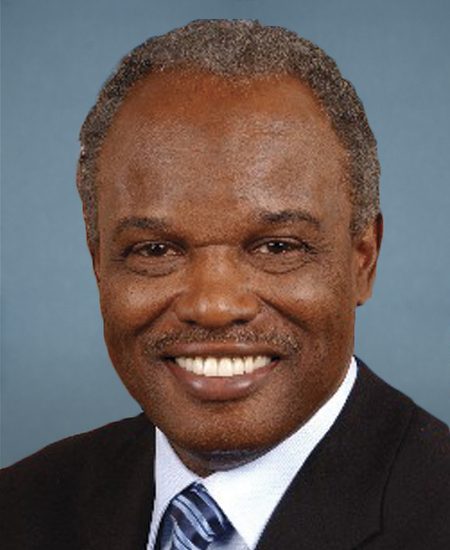
Rep. David Scott
Sponsored bills
Maddy summaryThis bill requires states receiving certain federal law enforcement funds to submit quarterly, anonymous reports to the Attorney General about pregnant individuals and births in custody. It mandates data on pregnancy testing, prenatal care, birth outcomes, restraint use (including during labor), postpartum care, and restrictive housing for incarcerated pregnant people. States failing to comply face up to a 10% reduction in allocated federal funds. The reports will be publicly published, and the Attorney General must conduct a study to analyze the data and improve care standards. The bill affects all states with correctional facilities (including jails, prisons, and boot camps) that receive funding under the specified federal program.
Maddy summaryThis bill increases federal funding for school meal programs by adding 45 cents per lunch and 28 cents per breakfast served by school food authorities, effective November 1, 2025. The additional reimbursement applies to all meals served, including free, reduced-price, and paid meals, and will be adjusted annually for inflation starting July 1, 2026. It directly affects public schools and school districts participating in the National School Lunch and Breakfast Programs by boosting their per-meal funding. The policy change aims to support meal quality and accessibility without altering eligibility requirements or program administration.
Maddy summaryHRES 795 is a non-binding resolution condemning Hamas for the October 7, 2023, attacks that killed over 1,200 people, took 251 hostages (including Americans), and involved sexual violence. It demands Hamas immediately surrender and release all remaining hostages - specifically noting 48 people still held, including two U.S. citizens. The resolution also affirms Israel’s right to self-defense, calls for humanitarian aid to reach Palestinians, and condemns global antisemitism following the attacks. As a symbolic congressional statement, it does not create new laws or alter policies.
Maddy summaryHR 5715, the October 7 Gold Medal Act, authorizes Congress to award a gold medal to American hostages and victims of the October 7, 2023 Hamas attack in Israel. The medal, designed by the Treasury Secretary, will be presented to recognize their suffering and sacrifice, with the medal displayed at the Weitzman National Museum of American Jewish History in Philadelphia. The bill also permits the sale of bronze duplicates to cover costs, but does not create new legal obligations or policy changes. This is a ceremonial recognition, not a substantive legislative measure.
Maddy summaryHR 5714, the October 7 Remembrance Education Act, directs the U.S. Holocaust Memorial Museum to create a curriculum for secondary schools within 180 days of enactment. The curriculum will cover Hamas’ October 7, 2023 attacks on Israel, the history of antisemitism, the spread of anti-Israel rhetoric on campuses and social media following the attacks, and how denial or distortion of antisemitism occurs. It specifically requires schools to address the attacks' brutality, historical context of antisemitism, and contemporary manifestations of hate speech. The Museum must submit a report on the curriculum to Congress within 180 days of completion or by 3 years after the bill’s enactment. This bill affects secondary schools using the curriculum and focuses on educational content about the attacks and related antisemitism.
Maddy summaryThis bill adds Medicare coverage for multi-cancer early detection screening tests (blood or biological tests analyzing cell-free DNA) starting January 1, 2028. It directly affects Medicare beneficiaries aged 68 and older (starting in 2028, with the age limit increasing by 1 year annually), requiring tests to be FDA-cleared and deemed reasonable/necessary by the Secretary for early cancer detection across multiple organ sites. Payment will initially match current stool DNA test rates before 2031, then shift to a lower rate or new payment system after 2031, with limits preventing more than one test per year. The bill explicitly states it does not alter coverage for existing cancer screenings like breast, colorectal, or prostate cancer tests.
Maddy summaryHRES 768 is a ceremonial resolution honoring Alpha Phi Alpha Fraternity, Inc. on its 118th anniversary. The resolution formally recognizes the fraternity's founding in 1906, its mission of promoting leadership and academic excellence, and its service to communities across the globe. It specifically commends the organization for its historical role in civil rights advocacy and community programs like voter engagement and youth education initiatives. This resolution has no policy impact - it is a symbolic gesture of appreciation from the House of Representatives to the fraternity.
Maddy summaryThe Tyler Clementi Higher Education Anti-Harassment Act of 2025 requires U.S. colleges and universities participating in federal financial aid programs to create and distribute clear anti-harassment policies covering harassment based on race, color, national origin, sex (including sexual orientation and gender identity), disability, or religion. These policies must explicitly prohibit harassment in all settings - including online, on campus, off-campus housing, and during school-sponsored activities - and outline reporting procedures and support services for victims. The bill also establishes a $50 million annual grant program to fund schools developing prevention programs, victim support services, or staff/student training on recognizing and addressing harassment. Grants are competitive, require annual reporting on effectiveness, and must be used to improve existing efforts without replacing existing civil rights laws like Title IX.
Maddy summaryHR 5476, the PARA Educators Act, provides federal grants to states to help recruit and retain school support staff (paraprofessionals) in public elementary, secondary, and preschool programs. It allocates funds based on previous Title I education funding, requiring states to prioritize schools serving high numbers of low-income students or those meeting specific poverty criteria. States can use the funds for proven programs like mentoring for paraprofessionals, professional development, helping staff earn credentials (e.g., special education or English learner certificates), and increasing wages or offering retention bonuses. The law mandates annual reporting on wage baselines, paraprofessional employment, and program outcomes. This bill directly affects paraprofessionals and the schools they support, particularly in high-poverty communities.