

Maddy summaryThis bill clarifies that certain local general sales tax revenues can be used for airport purposes without being subject to existing restrictions. It directly affects local governments that met three specific conditions: they had a general sales tax excluding aviation fuel before December 2014, are not airport sponsors, and have a large hub airport (over 35 million passenger boardings in 2021) within their jurisdiction. The key provision modifies federal airport funding rules to explicitly permit these local tax revenues for airport-related expenses. The change applies only to qualifying local governments with these specific historical and geographic criteria.
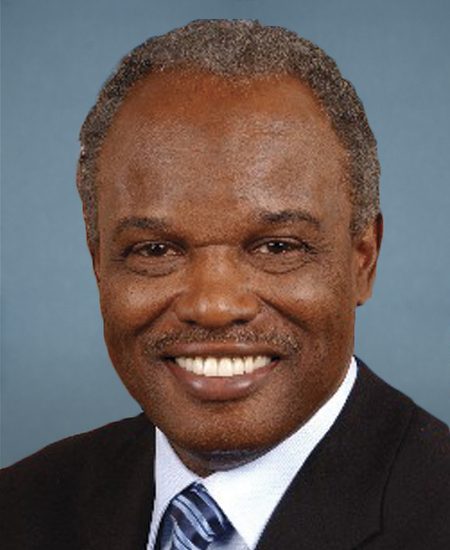
Rep. David Scott
Sponsored bills
Maddy summaryThe Prison Libraries Act of 2026 establishes a federal grant program to fund library services in state and territorial correctional facilities, directly benefiting incarcerated individuals. It requires grantees (states/territories) to submit plans demonstrating need, including demographic data on prison populations, and prohibits using funds for non-library purposes like food or facility maintenance. Grant funds must support library services such as digital access, educational programming (including job training and post-secondary curriculum), literacy initiatives, and partnerships with public libraries. The program authorizes $10 million annually from 2026-2031, prioritizes measurable outcomes like increased literacy and post-release employment opportunities, and mandates free access to all library resources for incarcerated people.
Maddy summaryThis bill creates a tax credit for businesses selling products made with U.S.-grown cotton. The credit equals 24% of the cotton's market value if processed only in the U.S. or in countries with U.S. trade deals, or 18% for other processing locations. To qualify, cotton must be digitally traced from U.S. farms to finished products and certified by the USDA as meeting origin requirements. It directly affects clothing and textile manufacturers selling qualifying products in the U.S. market.
Maddy summaryHR 7206, the Farm and Family Relief Act, provides direct financial assistance to agricultural producers facing market challenges during the 2025 crop year. It establishes one-time payments for eligible crop producers (including wheat, corn, soybeans, and cotton) when expected costs exceed expected returns, with payment limits based on farming income (capping at $125,000 or $250,000 depending on farming income percentage). The bill allocates $5 billion for specialty crop producers, $500 million for timber industry assistance, and $330 million for sugar beet producers through cooperative block grants. Additionally, it delays certain cost-shift provisions in food assistance programs and terminates specific tariff-imposing executive orders.
Maddy summaryThis bill requires the Department of Justice and Health and Human Services to translate key gun violence prevention materials - including extreme risk protection orders and safe storage guides - into the 10 most common non-English languages in the U.S. (like Mandarin, Spanish, and Korean) for limited English proficient populations. It mandates that community-based organizations review translations for cultural appropriateness before publication and prioritizes grant applications that include outreach plans for these communities. The bill also directs DOJ and HHS to create public awareness campaigns using in-language, culturally tailored messaging to promote gun violence prevention strategies. These provisions apply directly to federally funded programs and services aimed at reducing firearm-related harm.
Maddy summaryThis bill would increase the base pay for Federal Bureau of Prisons correctional officers by 35 percent, replacing their current base rate for all pay calculations (including retirement and locality adjustments). It applies to officers whose duties involve inmate custody, control, or direct custodial contact, including certain supervisory staff and lower-grade Bureau of Prisons employees with similar duties. The pay increase is capped at the Executive Schedule level V rate and would expire after five years unless a Department of Justice Inspector General review finds progress in reducing non-custodial staff use for custodial duties and excessive overtime. The review, required 180 days before expiration, would assess impacts on recruitment, retention, and institutional safety.
Maddy summaryHR 6277, the SAWMILL Act, creates a loan guarantee program to support rural sawmills and wood-processing facilities. It provides guaranteed loans to eligible entities (like sawmill owners in rural areas) seeking to establish, expand, or improve operations within 250 miles of federal lands identified for ecological restoration involving vegetation removal. The program aims to reduce the cost of these restoration projects by ensuring local mills process the removed vegetation. The Department of Agriculture will offer up to $220 million in total loan guarantees under this program, with specific conditions set by the Secretary.
Maddy summaryHR 6088, the *Restoring Food Security for American Families and Farmers Act of 2025*, repeals specific sections (10101-10108) from a prior reconciliation law. This action revives previous provisions related to food security programs that were modified by those repealed sections. The bill directly affects federal food assistance and agricultural support programs by restoring their prior legal framework. It does not create new policies but reverses recent changes to existing food security measures.
Maddy summaryThis bill updates federal nutrition law to include Puerto Rico in the Supplemental Nutrition Assistance Program (SNAP), allowing it to transition from its current funding method to the same SNAP benefits available to U.S. states. Puerto Rico must submit a 180-day plan to the USDA detailing its transition to SNAP, with approval required within another 180 days. The transition period lasts up to 5 years from the bill's effective date, during which Puerto Rico would continue receiving block grants while preparing for full SNAP participation. This change directly affects Puerto Rico's 1.4 million residents who currently receive nutrition assistance under a separate funding structure.
Maddy summaryThe MORE Act (HR 5068) would remove cannabis from the federal list of controlled substances, effectively decriminalizing it at the federal level while establishing a new tax on cannabis products. The bill creates an Opportunity Trust Fund that would distribute tax revenues to support communities disproportionately impacted by cannabis prohibition, including funding for expungement programs, job training, and equitable licensing initiatives for minority business owners. It also includes provisions to prevent discrimination based on cannabis use in federal programs, immigration proceedings, and workplace policies. The bill would require federal courts to expunge non-violent cannabis convictions and establish a process for resentencing individuals currently serving time for such offenses. These provisions aim to address racial disparities in cannabis enforcement and create more equitable opportunities in the legal cannabis industry.