

Maddy summaryHRES 1107 is a House resolution urging the President to issue a proclamation flying the U.S. flag at half-staff to honor Rev. Jesse Jackson. The resolution recognizes his civil rights leadership, including founding the Rainbow PUSH Coalition and his presidential campaigns in 1984 and 1988, which advanced racial equality and economic justice. This symbolic gesture directly affects the President (as the one who would issue the proclamation) and the public, who would observe the flag at half-staff.
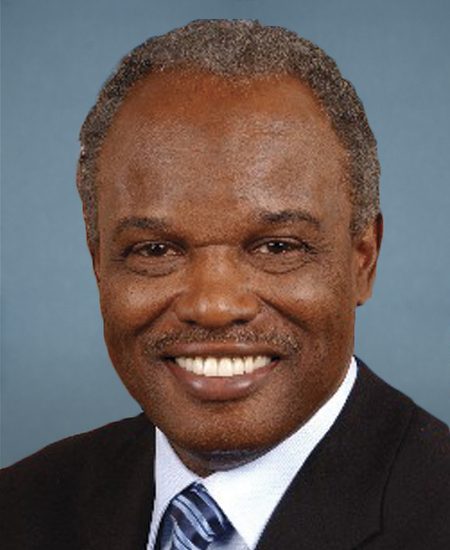
Rep. David Scott
Sponsored bills
Maddy summaryHRES 1106 is a non-binding House resolution honoring the life and legacy of Rev. Jesse Louis Jackson, Sr., a prominent civil rights leader and activist. The resolution recognizes his lifelong work in advancing equality through organizations like Operation PUSH, his leadership in the anti-apartheid movement, and his historic presidential campaigns in 1984 and 1988. It expresses condolences to his family and calls on all Americans to continue his legacy of promoting civil rights and unity. As a commemorative resolution, it does not create new laws or affect any policies.
Maddy summaryThis bill, known as the Direct File Act of 2026, would establish a government-run online system allowing taxpayers to prepare and file their individual income tax returns for free. The legislation prohibits the Treasury Department from entering into agreements that restrict its ability to provide tax preparation or filing services, and it voids any existing contracts with such restrictions. The program would use IRS data to simplify filing, include customer support, be available in multiple languages, and allow users to file even if they are not required to. It also enables taxpayers in participating states to file state and local returns alongside their federal returns, with funding provided to states that meet certain standards.
Maddy summaryThe DISCLOSE Act of 2026 aims to increase transparency in election spending and prevent foreign influence. It expands the ban on foreign money to cover federal, state, and local elections, including ballot initiatives and judicial nominations, and criminalizes using corporations to conceal these funds. The bill mandates that organizations spending over $10,000 on campaign-related activities, such as independent expenditures or judicial nomination advocacy, disclose their beneficial owners and top donors. Additionally, it establishes new "Stand By Every Ad" disclaimers for political communications, requiring the highest-ranking official to approve the message and, for certain ads, list their top funders. These provisions directly affect non-candidate organizations, individuals involved in political and judicial nomination spending, and foreign nationals.
Maddy summaryThe Stop Militarizing Law Enforcement Act reforms the Department of Defense's 1033 program, which transfers surplus military equipment to federal, state, and local law enforcement agencies. The bill prohibits the transfer of specific military-grade items, including controlled firearms (like automatic weapons), ammunition, grenades, mine-resistant ambush-protected vehicles, and silencers. For any permitted transfers, non-federal agencies must notify their local community, get approval from their local governing body, and certify the equipment's necessity for specific public safety or emergency purposes. The bill also mandates increased accountability for all transferred property, prohibits agencies from taking ownership, and requires the return of equipment if an agency is involved in widespread civil liberties abuses using that property.
Maddy summaryThis resolution (HRES 1088) is a non-binding House of Representatives measure recognizing the importance of Black history museums and cultural institutions. It formally acknowledges their role in preserving Black American history and contributions, particularly in relation to the 2026 100th anniversary of Black History Month and the U.S. 250th anniversary. The resolution urges the House to affirm that Black history is foundational to American history and calls for federal agencies to support these institutions through funding and partnerships. It also encourages the public to visit these museums, support them financially, and engage with their educational resources. The resolution does not create new laws or allocate funding, but serves as a symbolic endorsement of these institutions' cultural and historical significance.
Maddy summaryThis bill permanently exempts fixed-income securities (like bonds, notes, and certificates of deposit) from a specific SEC disclosure rule (Rule 15c2-11) that was being applied to debt markets without proper regulatory process. It directly affects businesses raising capital through fixed-income markets, which the bill states are critical for thousands of companies. The exemption removes requirements originally designed for equity markets but mistakenly applied to debt markets. This change makes permanent an existing SEC exemption granted in 2023 and 2024. The bill aims to maintain clear regulatory separation between equity and fixed-income markets.
Maddy summaryThis bill establishes a 12-member National Council on African American History and Culture within the National Endowment for the Humanities (NEH). The Council, appointed by the President with Senate approval, will include experts in African American history and culture who are not federal employees, with balanced representation (6 Democrats, 6 Republicans) and attention to diversity. Its duties include evaluating NEH programs related to African American history, preparing annual reports, and making recommendations to improve preservation and celebration efforts. The Council will operate for 10 years, with members serving five-year terms and receiving partial compensation for their service.
Maddy summaryThis bill amends the process for the Financial Stability Oversight Council (FSOC) when considering actions against U.S. nonbank financial companies. It requires the FSOC to first determine that alternative solutions - such as new regulatory standards, agency actions, or a company's written plan - are not possible or insufficient to protect financial stability before voting on a formal determination. The change directly affects the FSOC and large nonbank financial companies that could face regulatory scrutiny. The key provision adds a new step to ensure the Council explores other options before taking significant action. (Procedural bill; summary limited to 3 sentences as specified.)
Maddy summaryThe Rebuild America's Schools Act of 2026 authorizes $20 billion annually from 2027 to 2031 to improve public school facilities nationwide. The bill provides grants to states to fund school construction, renovation, and modernization projects that focus on safety, energy efficiency, and accessibility, with priority given to schools serving high percentages of students eligible for free or reduced-price lunch. Funds cannot be used for routine maintenance, athletic facilities, or vehicles, and must meet specific environmental, safety, and energy efficiency standards. The bill also includes specific provisions for repairing school foundations affected by pyrrhotite, a mineral that causes concrete deterioration, and requires use of American-made materials for construction projects.