

Maddy summaryHR 5017, the Greyhound Protection Act of 2025, prohibits commercial greyhound racing, live lure training, open field coursing, and related betting across state lines. It bans activities like using live animals as bait, conducting interstate simulcast betting, and transporting greyhounds for racing purposes. The law amends the Animal Welfare Act to make these actions unlawful, with penalties including fines and up to 7 years in prison per violation. It applies to conduct occurring on or after October 1, 2027, and does not override existing state laws banning these activities. The bill directly affects greyhound racing industry participants and the animals involved in these practices.
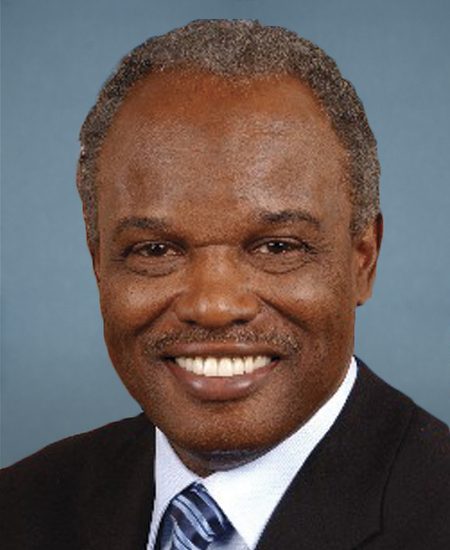
Rep. David Scott
Sponsored bills
Maddy summaryThis concurrent resolution (HCONRES 69) commemorates the 15th anniversary of the January 8, 2011, Tucson shooting that killed six people and injured 13, including former Congresswoman Gabby Giffords. It honors the victims, survivors, and Giffords - now a prominent advocate for gun violence prevention - and recognizes her leadership in promoting civility and reducing gun violence. The resolution also commends Tucson residents and first responders for their resilience and reaffirms Congress’s commitment to respectful dialogue and opposing political violence. As a ceremonial resolution, it does not create new laws or policies.
Maddy summaryHRES 972 is a non-binding resolution recognizing Atlanta, Georgia, as the cradle of the civil rights movement by highlighting its historical role in pivotal events and figures. It specifically acknowledges Atlanta's contributions to milestones like the founding of the NAACP, Dr. Martin Luther King Jr.'s leadership, the desegregation of public transit, and Atlanta's instrumental advocacy for the Civil Rights Act of 1964 and Voting Rights Act of 1965. The resolution honors Atlanta's ongoing status as a global leader in diversity, inclusivity, and opportunity, though it has no legal effect or policy changes.
Maddy summaryHR 4611 (EACH Act of 2025) requires all federally funded health programs - including Medicaid, Medicare, military health plans, and the Indian Health Service - to cover abortion services without restrictions, repealing the Hyde Amendment's long-standing ban on federal funding for most abortions. This directly affects millions of people enrolled in these programs, particularly low-income women, women of color (including 25% of Black women and 22% of Hispanic women on Medicaid), and young people. The bill mandates coverage in all federally administered health plans and prohibits state or private insurers from restricting abortion coverage in health insurance. It aims to eliminate current federal and state barriers that deny abortion access to people who rely on government health programs.
Maddy summaryThis bill establishes a Diversity and Inclusion Administrator at the Department of Labor to increase African American participation in apprenticeships. It requires all new and renewing registered apprenticeship programs to submit plans boosting African American enrollment and creates competitive grants for programs targeting underserved communities in fields like construction, healthcare, and tech. The grants fund outreach, mentoring, and support services to help African American youth access and complete apprenticeships. The bill directly affects African American young people and apprenticeship programs nationwide, with $2 million authorized for fiscal year 2026.
Maddy summaryHR 6726 amends housing counseling programs under the 1968 Housing and Urban Development Act to improve oversight and effectiveness. It requires counseling organizations to serve diverse geographic areas (urban and rural) and mandates regular performance reviews by HUD, including evaluating counselors based on borrower default rates for covered loans. The bill also requires HUD to provide foreclosure mitigation counseling to borrowers 30+ days delinquent on FHA, VA, USDA, or similar loans, with costs covered by the Mutual Mortgage Insurance Fund if eligibility rules are met. These changes directly affect HUD-funded counseling agencies, mortgage counselors, and borrowers with specific loan types facing delinquency. The reforms focus on accountability, quality control, and expanding access to foreclosure prevention services.
Maddy summaryThis bill removes regulatory barriers for certain investment funds. It amends the Investment Company Act of 1940 to allow "closed-end companies" (investment funds that don't issue new shares after launch) to invest all their assets in "private funds" (like venture capital or hedge funds) without SEC restrictions, provided the restriction isn't related to the fund's nature. It also prevents stock exchanges from blocking the listing or trading of these funds' securities. The bill preserves existing fiduciary duties, valuation rules, and liquidity requirements for these funds.
Maddy summaryThe Protect America's Workforce Act cancels an executive order issued on March 27, 2025, that excluded certain groups from federal labor-management relations programs, making it legally unenforceable. It also ensures that all collective bargaining agreements between federal agencies and labor unions, which were active as of March 26, 2025, remain fully effective until their agreed terms expire. This directly affects federal agencies, labor unions, and the employees covered by these agreements. The bill prevents federal funds from being used to implement the canceled executive order while preserving existing labor agreements.
Maddy summaryThe HIRRE Prosecutors Act of 2025 establishes a federal grant program to help state, local, tribal, and territorial prosecutor offices hire, retain, and train prosecutors and support staff. It authorizes $10 million annually (2026-2030) for competitive grants, covering up to 75% of eligible costs, with preference given to rural, tribal, and areas rehiring laid-off prosecutors. Grantees must cover the remaining 25% of costs (or qualify for a waiver), and funds cannot replace existing state/local funding but must supplement it. All funded projects require data tracking and annual performance evaluations by the Attorney General.
Maddy summaryHR 6682, the Endometriosis CARE Act, requires federal agencies to advance research, improve treatment access, and increase awareness for people with endometriosis - a chronic condition causing pelvic pain and fertility challenges affecting an estimated 10% of reproductive-age individuals. The bill mandates $50 million annually for NIH research on endometriosis treatments and cures, directs HHS to analyze barriers like insurance coverage and provider shortages in accessing care, and funds public education campaigns targeting underserved racial, ethnic, and minority groups. It also requires HHS to develop provider training materials on diagnosis and care, and to commission a National Academies study on disparities in endometriosis treatment across race, geography, and insurance status. The legislation focuses on data collection, education, and research rather than altering existing insurance coverage or treatment protocols.