

Maddy summaryHRES 1332 is a symbolic resolution recognizing June as LGBTQIA+ Pride Month. It encourages the celebration of Pride Month to honor the historical struggles and achievements of LGBTQIA+ people in the United States, while acknowledging the ongoing challenges they face. This resolution does not create new laws or policies, but serves as a formal recognition of LGBTQIA+ rights as human rights and highlights their integral role in American history. The resolution was introduced by multiple members of Congress and passed by the House of Representatives.
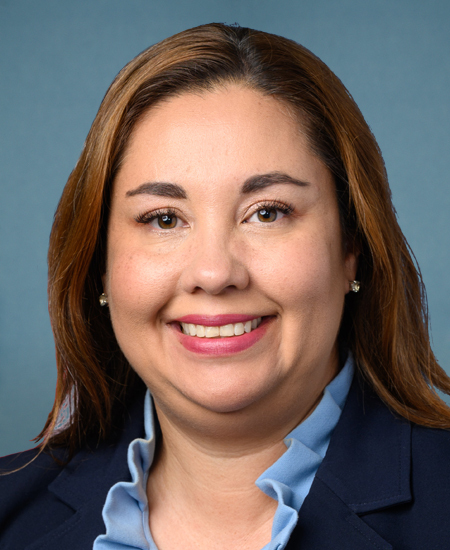
Rep. Yadira Caraveo
Sponsored bills
Maddy summaryHR 8898, the Lower Grocery Prices Act, requires the Government Accountability Office (GAO) to study how grocery prices for U.S. consumers have changed over the past 20 years, including related economic data. The GAO must report its findings and recommendations to specific congressional committees within 180 days of the bill's enactment. This bill does not directly lower prices but mandates a review to identify potential policy options. The study will focus on the Consumer Price Index for food at home and aim to inform future legislative action.
Maddy summaryThis bill establishes a grant program to cover medical costs for retired Federal working dogs. Eligible nonprofits (501(c)(3) organizations with at least two years of experience assisting retired law enforcement and military dogs) can apply for grants to help pay for veterinary care. The program, funded at $1 million annually from 2025 through 2029, targets dogs that have received a retirement letter from their agency and are in their handler's care. It directly affects retired working dogs and the nonprofits providing their medical assistance.
Maddy summaryThis bill enhances the federal tax credit for employers providing paid family and medical leave. It gives eligible employers two options to calculate the credit: either a percentage of wages paid to employees on leave, or a percentage of insurance premiums paid for leave coverage. Crucially, it clarifies that state-mandated paid leave does not count toward the credit amount. The bill also requires the Small Business Administration and IRS to provide outreach and resources to help employers understand and access the credit.
Maddy summaryThis bill requires the Secretary of Commerce to standardize and publish geospatial data about public ocean and waterway access rules on a public website within 4 years. It mandates detailed information on where fishing is restricted, waterway closures, speed limits, allowed vessel types (like motorboats or kayaks), and fishing method rules. The data will include geographic boundaries of protected areas, seasonal closures, and navigation details like depth charts. This directly affects recreational users (boaters, anglers) and commercial operators who need clear, up-to-date access information for Federal waterways and fishing areas. The bill does not change existing fishing regulations but makes compliance information more accessible.
Maddy summaryThis bill requires the federal government to issue guidance to state Medicaid programs within 12 months to improve syphilis screening for pregnant women and newborns. It specifically encourages states to expand third-trimester and delivery screenings, integrate telehealth services, provide multilingual education for providers and patients, and enhance treatment protocols. The guidance aims to prevent congenital syphilis - where syphilis is passed from mother to baby during pregnancy - which caused over 3,700 newborn cases in 2022. States must report on implementing these practices to Congress within two years. The bill directly affects pregnant women, newborns, and Medicaid providers by standardizing and improving access to critical syphilis prevention services.
Maddy summaryHR 8800 designates the bald eagle as the national bird of the United States, amending Title 36 of the U.S. Code to formally state this. The bill directly affects official federal designations but does not change existing policies or government actions. It includes findings about the bald eagle's historical, cultural, and symbolic significance, including its role in Indigenous traditions and government imagery. The bill explicitly states that this designation cannot be used to alter any current government plans or regulations.
Orbital Sustainability Act of 2024 or the ORBITS Act of 2024 This bill directs specified agencies to take actions to remediate orbital debris (human-made space objects that are no longer in use and can harm orbiting satellites and on-orbit activities). The Department of Commerce must publish and periodically update a list of orbital debris that may be remediated to reduce the risk of harm to orbiting satellites and on-orbit activities. In addition, the National Aeronautics and Space Administration (NASA) must (1) establish a demonstration program to foster the development of technologies to remediate the orbital debris on the list, and (2) carry out other research and development activities to advance technologies for remediating orbital debris. NASA (and other relevant agencies) may also contract for remediation services to support the commercial availability of such services. Additionally, the National Space Council must update the Orbital Debris Mitigation Standard Practices within 90 days of the enactment of the bill and update them periodically thereafter. The updates must address matters including satellite constellations and other planned space systems, collision risks, and disposal of space systems after missions. The updates must inform (1) regulations of other agencies concerning orbital debris, and (2) bilateral and multilateral discussions with other countries concerning certain space activities. Finally, Commerce must facilitate the development of standard practices to coordinate on-orbit space traffic. Upon completion of the practices, Commerce and other federal departments must promote their adoption and use for space missions.
Maddy summaryThe No Passport Fees for Heroes’ Families Act waives passport fees for spouses, domestic partners, children, parents, grandparents, and siblings traveling abroad to visit a military service member in a hospital or medical facility. This change, added through an amendment to the Passport Act, removes the standard fee requirement for these specific family members during medical visits. It directly affects military families needing international travel to support a service member in a medical setting overseas. The policy provides immediate financial relief for these travel scenarios without altering broader passport regulations.
Maddy summaryHR 8768, the Restoring Trust in Public Safety Act, provides $15 million annually (2025-2030) for federal grants to state, tribal, and local governments to safely destroy firearms. Eligible entities must use funds to fully destroy firearms (including all parts and accessories) through methods like shredding or crushing, maintain detailed records, and provide documented proof of destruction. The bill requires grantees to use no more than 10% of funds for administration and prioritizes funding for rural areas and Metropolitan Statistical Areas. It directly affects local law enforcement agencies and governments seeking to eliminate firearms through certified destruction programs.