

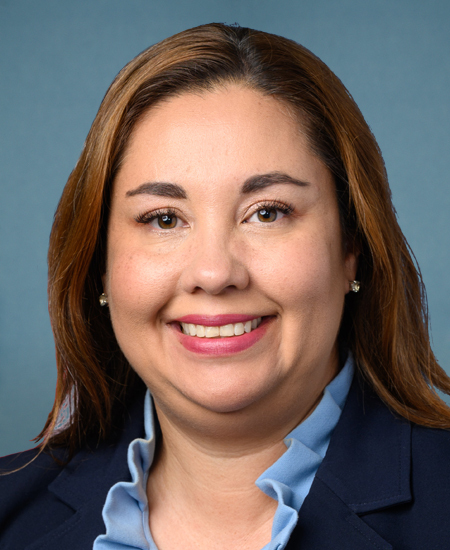
Photo of Yadira Caraveo
D United States House · District 8 · Colorado

Rep. Yadira Caraveo

Compare
Total votes
1,210
all sessions
Attendance
97%
35 missed
Near the chamber average
With party
89%
of cast votes
Lower than 83% of chamber peers
Bipartisan score
6%
crosses aisle rarely
Higher than 79% of chamber peers
Sponsored
659
bills & resolutions
Higher than 90% of chamber peers
Committees
0
assignments
659 bills and resolutions

Sponsored bills

Total
659
Primary
41
Co-sponsor
618
This page
659
matching current filters
Co-sponsor HR 4213
In committee · United States House · Co-sponsor
Conservation Reserve Enhancement Program Improvement Act of 2023

Maddy summaryThis bill updates the Conservation Reserve Enhancement Program (CREP) to give participating landowners more flexibility in payment structures. It allows farmers to choose how annual payments are distributed across their contract years and sets specific payment rates for agreements involving permanent water rights retirement or dryland farming (where crops are grown without irrigation). For dryland farming agreements, payments are calculated as the difference between standard irrigated rates and lower dryland rates, with existing agreements automatically adjusted to reflect this new formula. The bill also exempts CREP payments from standard payment limits under the Food Security Act.

In committee Jun 14, 2024 1 co-sponsor
Co-sponsor HR 5012
In committee · United States House · Co-sponsor
SHINE for Autumn Act of 2023

Maddy summaryHR 5012 (SHINE for Autumn Act of 2023) authorizes federal funding to improve stillbirth research and data collection. It provides $5 million annually for states to collect standardized stillbirth data (including risk factors) while protecting privacy, $1 million annually for developing public educational materials and data collection guidelines, and $3 million annually for medical fellowships training pathologists in perinatal autopsy and stillbirth research. The bill directly affects state health departments, medical professionals (like obstetricians and pathologists), and families who experience stillbirth by improving data quality for future research. It requires federal reports on guidelines and program effectiveness within five years but does not provide direct medical care or financial assistance to families.

In committee Jun 12, 2024 1 co-sponsor
Co-sponsor HR 537
Passed · United States House · Co-sponsor
Forgotten Heroes of the Holocaust Congressional Gold Medal Act

Maddy summaryHR 537 authorizes a Congressional Gold Medal to honor 60 diplomats who saved Jewish lives during the Holocaust by issuing visas and passports against their governments' orders, risking expulsion and personal danger. The medal will be presented to the next of kin of these diplomats, alongside representatives from their home countries, and permanently displayed at the United States Holocaust Memorial Museum. The bill also permits the sale of bronze duplicates to cover production costs, with proceeds going to the U.S. Mint. This legislation recognizes the diplomats' humanitarian actions without creating new government programs or altering existing laws.

Passed Jun 12, 2024 1 co-sponsor
Co-sponsor HR 8594
In committee · United States House · Co-sponsor
Stop the Scam Act

Maddy summaryThis bill establishes the Aviation Security Checkpoint Technology Fund (ASCT Fund) within the Department of Homeland Security. It directs $250 million annually from aviation security fees (for fiscal years 2025-2029) to fund TSA's procurement, deployment, and maintenance of new security checkpoint technology at airports. The TSA Administrator must provide regular reports to Congress on how these funds are used for technology deployment. The bill also repeals a previous section of aviation security law that previously governed these fees. The fund directly affects TSA operations and airport security technology upgrades.

In committee Jun 3, 2024 1 co-sponsor
Co-sponsor HR 8593
In committee · United States House · Co-sponsor
AFTER SCHOOL Act

Maddy summaryThe AFTER SCHOOL Act (HR 8593) creates a federal grant program to fund after-school programs for students in grades 6-12 in school districts located in counties with a juvenile offense rate of at least 10%. Grants are awarded to eligible school districts or nonprofit organizations (501(c)(3) groups) based on the number of students served, with $100 million authorized annually for 2025-2028. Funds can expand existing programs, create new ones, or partner with nonprofits, but must include educational activities. The program directly affects students in high-risk communities by providing structured after-school opportunities, with school districts required to report program details annually.

In committee Jun 3, 2024 1 co-sponsor
Co-sponsor HR 8600
In committee · United States House · Co-sponsor
GOSAFE Act

Maddy summaryThis bill, the GOSAFE Act, prohibits the sale, manufacture, transfer, and possession of gas-operated semi-automatic firearms and large capacity ammunition feeding devices (those holding more than 10 rounds). It defines "gas-operated" firearms as those using gas from fired cartridges to cycle the action, and requires the Attorney General to maintain a list of prohibited firearms. Manufacturers must seek approval for new semi-automatic firearms before selling them to civilians, and the bill creates a fund to support buy-back programs for prohibited firearms and devices. Violations could result in fines up to $5,000 or 12 months in jail, with harsher penalties for those who commit other federal crimes while in possession of prohibited firearms.

In committee Jun 3, 2024 1 co-sponsor
Co-sponsor HRES 1260
In committee · United States House · Co-sponsor
Expressing support for the designation of the month of May 2024 as "Progressive Supranuclear Palsy Awareness Month".

Maddy summaryHRES 1260 is a non-binding resolution expressing the U.S. House of Representatives' support for designating May 2024 as "Progressive Supranuclear Palsy Awareness Month." It recognizes progressive supranuclear palsy (PSP) as a rare neurodegenerative disease affecting approximately 30,000 Americans, with no known cure and symptoms including cognitive decline, balance issues, and speech difficulties. The resolution specifically supports raising public awareness, encourages research for better treatments and a cure, and commends efforts by patients, families, and organizations working to improve PSP care. As a symbolic gesture, it does not create new laws or allocate funding but aims to increase visibility for this under-recognized condition.

In committee May 31, 2024 1 co-sponsor
Co-sponsor HR 3916
In committee · United States House · Co-sponsor
SCREENS for Cancer Act of 2024

Maddy summaryThe SCREENS for Cancer Act of 2024 reauthorizes and expands the National Breast and Cervical Cancer Early Detection Program (NBCCEDP), which provides free screenings and care coordination to low-income, uninsured, or underinsured women. It increases annual funding from $275 million (2024) to $500 million (2028) and explicitly adds "prevention" to the program’s mission, requiring it to reduce racial and ethnic disparities in cancer outcomes. The bill mandates the program to address barriers like social determinants of health and implement evidence-based strategies to boost screenings, particularly for underserved communities disproportionately affected by pandemic-related screening declines. This directly benefits millions of women, especially Black, Hispanic, and Asian women, who face higher cancer death rates and reduced access to care.

In committee May 24, 2024 1 co-sponsor
Co-sponsor HR 8564
In committee · United States House · Co-sponsor
Elevating Biotechnology Threats Reporting Act

Maddy summaryThis bill requires five specific U.S. intelligence agencies (CIA, DIA, FBI, NSA, and ODNI) to submit detailed reports to Congress by June 30, 2025, about how they address biotechnology threats. Each report must describe gaps in their intelligence work, explain how they share threat information with federal agencies, foreign governments, and private industry/academia, and assess their consultation with outside biotechnology experts. The law directly affects these intelligence agencies and Congress, mandating transparency about their biotechnology threat assessment capabilities. It does not create new programs or funding but establishes a reporting mechanism to identify weaknesses and improve information sharing. The focus is on documenting current practices, not prescribing new policies.

In committee May 23, 2024 1 co-sponsor
Co-sponsor HR 4105
In committee · United States House · Co-sponsor
Stop Pills That Kill Act

Maddy summaryHR 4105, the "Stop Pills That Kill Act," targets counterfeit fentanyl and methamphetamine substances marketed as legitimate products (like fake prescription pills). It amends federal law to specifically address these counterfeit substances and requires the Drug Enforcement Administration (DEA) to create a comprehensive plan within 180 days, focusing on enforcement, youth-focused education, and improving existing campaigns like "One Pill Can Kill." The bill mandates annual reports to Congress detailing seizures (especially of pill-form counterfeits), prosecution data, convictions, and prevention efforts related to these substances. These reports will include specific data on pill types, locations of seizures, and how campaigns can be adjusted to combat the spread of dangerous counterfeit pills.

In committee May 23, 2024 1 co-sponsor
Showing 161 to 170 of 659 bills
Previous 1 … 16 17 18 … 66 Next