

Maddy summaryHR 5351, the Nationwide Right to Unionize Act, repeals a federal law (Section 14(b) of the National Labor Relations Act) that currently allows states to enact "right-to-work" laws. This would prevent states from banning agreements requiring workers to pay union dues as a condition of employment, directly affecting workers in states with such laws. The bill's key mechanism is overriding state right-to-work statutes with federal law, ensuring union security agreements remain enforceable nationwide.
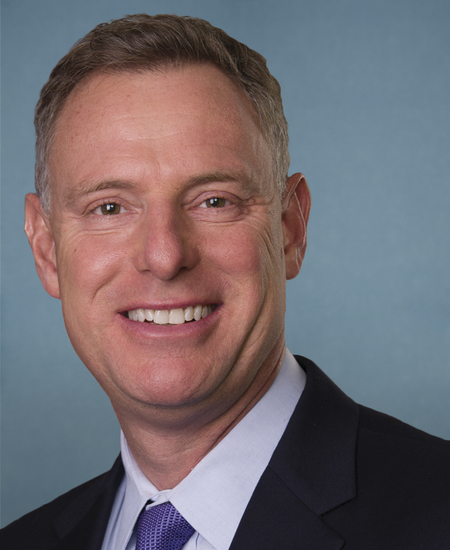
Rep. Scott H. Peters
Sponsored bills
Maddy summaryHRES 668, the BUDS Resolution, amends House rules to allow bipartisan joint sponsorship of public bills and resolutions by one majority-party and one minority-party member. This change directly affects House members seeking to co-sponsor legislation with cross-party support, updating the existing rules for naming cosponsors and submitting constitutional authority statements. The key mechanism requires that for joint sponsorship, one sponsor must represent the majority party and the other the minority party, with both sponsors sharing responsibility for related procedural steps. This procedural adjustment streamlines the process for bipartisan co-sponsorship without altering legislative policy.
Maddy summaryThe SWAMP Act of 2023 requires the President to reimburse the U.S. Treasury for all government costs incurred when staying at properties they own or have a financial interest in. This directly affects the President, mandating repayment for Secret Service protection, security expenses (like local law enforcement overtime), and transportation costs (such as Air Force One flights) during stays at properties like Mar-a-Lago or Trump Tower. The bill’s key mechanism is a mandatory reimbursement clause for all government expenditures related to such stays, as specified in Section 3. It focuses on financial accountability, requiring the President to cover costs the taxpayer would otherwise bear, without altering existing security protocols or creating new programs.
Maddy summaryHR 5295, the Expanding the VOTE Act, modifies Section 203 of the Voting Rights Act to expand language access for voters. It requires states and localities to provide voting materials (including ballots and instructions) in the language of covered language minority groups, with new provisions for American Indian and Alaska Native languages requiring tribal government consultation for unwritten languages. The bill creates $15 million in grants to help jurisdictions provide voting materials in languages that don’t currently trigger Section 203 coverage, while mandating continued provision for those groups in future elections. It also directs a study to evaluate lowering population thresholds for language protections and expanding the definition of covered languages.
Maddy summaryHR 4698 directs the U.S. Department of Agriculture to fund a study on food animal microbiomes (the microbes in animals like cattle, poultry, and aquaculture species) to identify research gaps and assess how better understanding these microbiomes could improve animal health, food safety, and farming. The study, conducted by the National Academies, will evaluate current federal research, industry needs, and potential benefits, with a report due to Congress within 18 months. It does not enact new policies or directly affect specific groups but authorizes $1 million to support this research assessment. This is a procedural study bill focused on gathering data for future research planning.
Maddy summaryThe FASTER Act of 2023 streamlines the permitting process for interstate electric transmission facilities by establishing "national interest electric transmission corridors" where transmission capacity constraints affect consumers. It requires project sponsors to negotiate community benefit agreements with local communities, tribes, and other stakeholders before seeking permits, and designates the Federal Energy Regulatory Commission (FERC) as the lead agency to coordinate federal reviews. The bill sets a 5-year maximum timeline for permit decisions, establishes a prefiling process for early stakeholder engagement, and creates revenue-sharing mechanisms with states and counties from projects on federal land. It directly affects transmission project developers, local communities, tribal governments, and federal agencies involved in the permitting process. The legislation does not alter existing environmental laws but seeks to reduce delays while requiring meaningful community engagement for projects seeking certain federal grants.
Maddy summaryHR 4350, the MONARCH Act of 2023, establishes a $12.5 million annual fund (2023-2027) to support habitat restoration for western monarch butterflies, which are at risk of extinction due to a 99% population decline over 30 years. The bill authorizes grants to eligible entities like tribal governments, nonprofits, and local agencies to restore milkweed, protect overwintering sites, and conserve pollinator habitats across California, Arizona, Nevada, Washington, Oregon, Idaho, and Utah. Projects must include community consultation, avoid conflicts with food safety, and demonstrate clear conservation benefits. The Secretary of the Interior will manage the grants, require annual progress reports to Congress and the public, and coordinate with existing conservation plans.
Maddy summaryHRES 645 is a non-binding House resolution recognizing August as "Chicano Heritage Month" to celebrate the contributions of Mexican Americans to U.S. history. It highlights historical figures like labor leaders Cesar Chavez and Dolores Huerta, landmark court cases (e.g., *Mendez v. Westminster* ending school segregation), and cultural impacts such as Selena's influence on music. The resolution does not create new laws or policies but serves as a symbolic acknowledgment by the House to honor this heritage. It encourages the public and institutions to observe the month with events celebrating Mexican American contributions.
Providing Essential Temporary Shelter Assistance For Emergencies Act of 2023 or the PETSAFE Act of 2023 This bill directs the Federal Emergency Management Agency (FEMA) to establish a pilot program to provide grants for mobile pet shelters during emergencies and major disasters. FEMA may provide funds to state, local, and tribal governments to establish a new pet shelter site that is a mobile unit, which may be a companion animal mobile equipment trailer, to be used in case of evacuation due to emergencies and major disasters. FEMA's authority to approve projects under this bill shall cease on January 1, 2029.
Affordable and Homeless Housing Incentives Act of 2023 This bill allows nonrecognition of gain, for income tax purposes, from the sale of real property to a qualified housing operator for use or development by such operator as affordable housing. The bill defines qualified housing operator to include a state or local government, a tribally designated housing entity, a community housing development organization, or a tax-exempt entity organized to provide affordable housing and which receives federal, state, or local grants to develop or operate such housing. To be eligible for nonrecognition of gain, the seller must make the property either (1) residential rental property, not less than 75% of the units of which are affordable to low-income families; or (2) a homeless shelter. The Departmental Enforcement Center of the Department of Housing and Urban Development must ensure that sales of real property under this bill meet certain involuntary conversion requirements.