

Maddy summaryHR 5155 creates a new temporary visitor visa category specifically for family visits to the U.S. It directly affects U.S. citizens and lawful permanent residents wanting to host relatives for short stays, and their eligible relatives (including parents, children, siblings, and extended family). The bill requires visitors to have a financial sponsor, short-term medical insurance covering U.S. expenses, and proof of intent to leave within 90 days per year - reducing the previous 180-day limit. It explicitly states this visa does not count as immigrant status, and applicants who previously overstayed a similar visa face additional restrictions unless extraordinary circumstances apply.
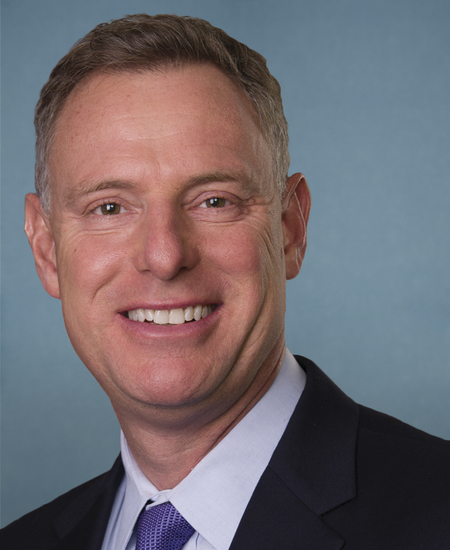
Rep. Scott H. Peters
Sponsored bills
Maddy summaryHR 4832, the Indian Programs Advance Appropriations Act of 2023, changes how funding is allocated for key Native American programs. It requires that starting in fiscal year 2024, new budget authority for specific accounts under the Bureau of Indian Affairs, Bureau of Indian Education, and Indian Health Service must be made available immediately for the current fiscal year *and* include advance funding for the next fiscal year. The bill mandates annual reports by July 31 each year, including workload estimates and resource sufficiency assessments developed with tribal consultation. This affects tribal programs funded through accounts like Operation of Indian Programs, Contract Support Costs, and Indian Health Services, aiming to improve budget planning predictability.
This concurrent resolution opposes actions that undermine Israel's future as a Jewish, democratic state. The resolution expresses that democracy is at the core of the special relationship between the United States and Israel, and that Congress stands with all Israelis seeking to defend liberal democracy, judicial review, and independent political institutions.
Maddy summaryHR 4963, the Tax Fairness for Workers Act, would restore tax deductions for certain employee expenses. It creates an above-the-line deduction for union dues and expenses paid by wage-earning employees, and allows miscellaneous itemized deductions for other work-related expenses (like uniforms or supplies) that were previously disallowed after 2017 tax law changes. These provisions directly affect employees who pay union dues or incur qualifying job-related costs. The bill amends specific sections of the Internal Revenue Code to make these deductions available for taxable years beginning after December 31, 2022. It does not change tax rates or provide new benefits, only reinstating previously eliminated deductions for eligible workers.
Maddy summaryThis bill regulates "ghost guns" (unserialized firearms assembled from kits or parts) by requiring all firearms to have unique serial numbers for traceability. It makes it unlawful for unlicensed individuals to manufacture, sell, transfer, or possess ghost guns in interstate commerce, with limited exceptions for licensed dealers during a one-year transition period. The law defines ghost guns as firearms lacking a serial number from a licensed manufacturer and prohibits unlicensed people from engraving serial numbers or using machines to manufacture firearms. It directly affects individuals building or possessing untraceable firearms, including those using 3D-printed parts or unfinished frames. The bill aims to improve law enforcement's ability to track firearms used in crimes, referencing that 27.4% of traced firearms in 2021 were recovered across state lines.
Expedited Federal Permitting for California Act This bill expands a Department of Transportation (DOT) program that allows up to two states to approve environmental reviews for certain transportation projects under state laws and regulations instead of under the National Environmental Policy Act of 1969 (NEPA). Specifically, the bill makes permanent a pilot program that allows DOT to approve a state to participate in a program to conduct environmental reviews and approve permits for certain transportation projects if DOT (with the concurrence of the Council on Environmental Quality) determines that the state laws and regulations are at least as stringent as the federal NEPA requirements. The bill also expands project eligibility for the program to include certain federally funded airport and port development projects.
Maddy summaryHRES 578 is a non-binding House resolution calling for the immediate release of Eyvin Hernandez, a U.S. citizen and Los Angeles County public defender wrongfully detained by Venezuela since March 2022. The resolution urges U.S. officials, including the President and Secretary of State, to press Venezuela for his release and condemns Venezuela’s practice of detaining U.S. citizens for political purposes. It specifically references Hernandez’s wrongful detention without evidence or fair trial, noting his status as a Department of State-designated wrongfully detained individual. The resolution expresses support for Hernandez and other Americans detained abroad, without creating new legal requirements or funding.
Maddy summaryHR 4942 extends and modifies the Conrad State 30 program, which allows states to sponsor foreign medical graduates to work in medically underserved areas in exchange for a commitment to practice for three years. The bill directly affects foreign medical graduates seeking to work in the U.S., states that sponsor them, and health facilities in underserved communities. Key provisions include creating mechanisms for physicians to change employers or states if they face issues with their current employment, adding requirements for employment agreements (including prohibitions on non-compete clauses), and establishing exceptions to the three-year work requirement under certain circumstances. The bill also creates a process for states to recapture waiver slots when physicians leave their employment and requires annual reporting on the program's usage. These changes aim to improve physician retention in underserved areas by providing more flexibility and protections for foreign medical graduates.
Maddy summaryHR 1776, the End Tuberculosis Now Act of 2023, would amend U.S. foreign assistance law to strengthen global tuberculosis (TB) programs. The bill requires U.S. assistance to align with the World Health Organization's End TB Strategy, aiming to reduce TB deaths by 95% and incidence by 90% by 2035. It mandates annual reporting on TB diagnosis and treatment progress, prioritizes research for new diagnostics and treatments, and emphasizes integrating TB services into primary health care. The legislation affects U.S. government agencies, global health partners, and countries with high TB burdens, particularly focusing on low- and middle-income nations.
Maddy summaryThis bill directs the U.S. Treasury to mint commemorative coins marking the Marine Corps' 250th anniversary in 2025. It authorizes three coin types: $5 gold coins (max 50,000), $1 silver coins (max 400,000), and half-dollar coins (max 750,000), with surcharges of $35, $10, and $5 respectively. The surcharge proceeds will fund the Marine Corps Heritage Center's educational programs, with no net cost to taxpayers as the Treasury must recover all minting costs through the surcharges. The coins can only be issued during 2025, and the Treasury must ensure all costs are covered before distributing funds to the Heritage Foundation.