

Maddy summaryHR 6081 amends the short title of the Lake Tahoe Restoration Act (Public Law 106-506) to honor Senator Dianne Feinstein, renaming it the "Dianne Feinstein Lake Tahoe Restoration Act." This change applies to all federal references in laws, maps, regulations, documents, or records that previously cited the original title. The bill does not alter the Act's policies or funding but updates its official name and all related references. It directly affects federal agencies and documents that reference the legislation. This is a purely procedural renaming with no substantive policy changes.
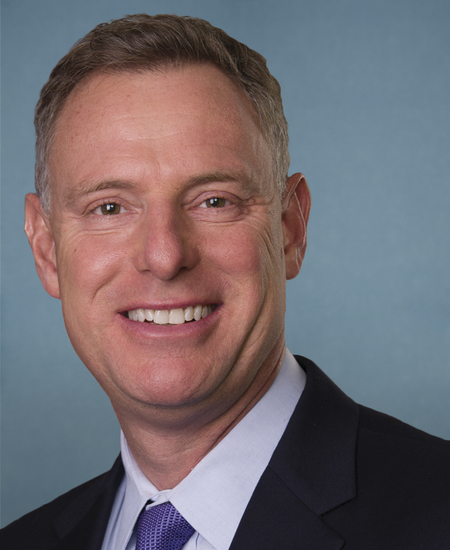
Rep. Scott H. Peters
Sponsored bills
Maddy summaryThis bill establishes a 16-member Fiscal Commission in Congress to develop bipartisan recommendations for improving the federal budget and debt situation. The Commission must identify policies to balance the budget, stabilize the debt-to-GDP ratio at or below 100%, and improve long-term fiscal outlook, with recommendations requiring approval from at least 3 Republican and 3 Democratic members. The Commission must submit its report and legislative language by November 15, 2024, including economic and budgetary effects, after which Congress would consider the proposals through expedited procedures. The Commission would terminate 30 days after submitting its final report.
Maddy summaryThis bill restores visa eligibility for immigrants who had diversity visas allocated for fiscal years 2017-2022 but were denied entry due to specific travel restrictions (like Executive Orders 13769/13780 or related proclamations) or pandemic-related delays. The State Department must notify affected individuals within 90 days of the bill’s enactment, giving them one year to confirm they wish to proceed with their visa applications. Unused visas from those years can be reallocated without counting against current annual limits, and applicants who fail to respond or are denied for standard reasons (like education requirements) lose eligibility. The policy directly affects individuals impacted by these specific past barriers to immigration.
Maddy summaryHRES 963 is a symbolic resolution honoring Korean American Day, which commemorates the January 13, 1903 arrival of the first large wave of Korean immigrants to the U.S. It recognizes Korean Americans' contributions to U.S. society, including their economic, cultural, and military impacts, and marks the 121st anniversary of this historic migration. The resolution urges all Americans to observe Korean American Day to appreciate these contributions. As a commemorative measure, it does not create new policies or affect specific groups beyond this ceremonial recognition.
Maddy summaryHRES 955 is a resolution commending Taiwan for its democratic election history and supporting Taiwan's democratic institutions. It recognizes Taiwan's transition to democracy since the late 1980s, including 7 presidential and 9 legislative elections held since then, all deemed free and fair. The resolution specifically expresses support for Taiwan's upcoming January 13, 2024, elections and condemns interference by the Chinese Communist Party. It affirms U.S. commitment to a strong partnership with Taiwan across multiple domains and supports Taiwan's self-defense and liberty. As a procedural resolution, it does not create new law but formally expresses congressional support for Taiwan's democratic development.
Maddy summaryThe Affordable Connectivity Program Extension Act of 2024 allocates $7 billion in funding for the Affordable Connectivity Program (ACP) during fiscal year 2024. The ACP provides subsidies to low-income households to help cover the cost of internet service and connected devices like laptops or tablets. This funding ensures the program can continue supporting eligible households throughout the year, with the money remaining available until fully spent. The bill extends existing program funding without changing eligibility criteria or service requirements.
Maddy summaryThe Hydrogen for Ports Act creates a federal grant program to fund port infrastructure using hydrogen and ammonia as clean energy sources. Eligible entities - including states, local governments, tribes, port authorities, and private port operators partnering with public entities - can apply for grants to install or operate hydrogen/ammonia-fueled cargo equipment, trucks, vessels, shore power systems, and fueling infrastructure. The program prioritizes projects that reduce emissions, benefit low-income communities, create quality U.S. jobs, and avoid net job losses from automation (prohibiting grants for fully automated equipment that causes such losses). Additionally, the bill mandates a study on safety, feasibility, and storage challenges for hydrogen and ammonia fuels in maritime settings.
Maddy summaryHR 6888, the Clean Energy Workforce Act, provides $100 million in federal grants to develop clean energy job training programs. It directly affects local schools, career technical education centers, colleges, and industry partners by funding: (1) new or expanded training programs in clean energy fields (like renewable energy and climate adaptation), designed to be shared with other schools and accessible to diverse students; and (2) upgrades to school facilities to use renewable energy and improve energy efficiency. Grants require partnerships between educational institutions, industry representatives, and community groups to create replicable training that prepares students for jobs in growing clean energy sectors. The bill focuses on concrete workforce development, not environmental outcomes.
Hydrogen for Trucks Act This bill requires the Department of Transportation to establish a grant program that assists eligible entities in purchasing (1) heavy-duty fuel cell vehicles (e.g., trucks) that use hydrogen as a fuel source, and (2) related equipment. Certain entities that control heavy-duty truck fleets or public hydrogen fueling stations may apply for grants. Grant recipients must use the funding to demonstrate the performance of at least seven heavy-duty fuel cell vehicles that use hydrogen as fuel source or at least one hydrogen fueling station for use by such vehicles.
Maddy summaryHR 6724, the *Energizing American Shipbuilding Act of 2023*, requires natural gas and crude oil exporters to use US-registered vessels with specific domestic manufacturing components for a growing percentage of their vessel-based exports. For natural gas, exporters must use qualifying vessels for 2% of exports in year 1, rising to 15% by year 22; for crude oil, the target starts at 3% and reaches 10% by year 14. A qualifying vessel must be either built in the US with all major parts and specified components (like valves, propulsion systems, and electrical equipment) made domestically, or retrofitted in a US shipyard using US-made parts for those components. The bill also mandates exporters provide training opportunities for US mariners and requires the Energy Information Administration to track and publish export data.