

Maddy summaryThe Hydrogen Infrastructure Finance and Innovation Act establishes a federal pilot program to support hydrogen infrastructure development through grants and low-cost loans. The program, funded with $100 million annually from 2024 to 2028, prioritizes projects that reduce greenhouse gas emissions, minimize environmental impact, and benefit low-income communities. To qualify, projects must have a dedicated revenue source and include hydrogen leakage monitoring systems. This program directly supports companies and organizations building hydrogen pipelines, storage facilities, and delivery systems across the United States.
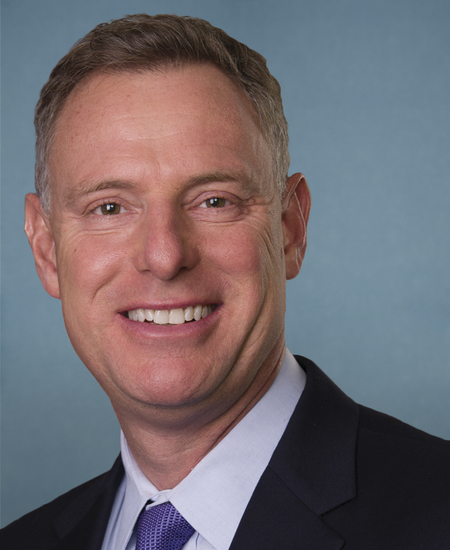
Rep. Scott H. Peters
Sponsored bills
Maddy summaryHR 7155 establishes the Abraham Accords Bureau within the FDA to strengthen U.S. healthcare supply chains. The bureau, headquartered at the FDA, will create lists of essential medical products primarily made in "covered countries" (nations with documented religious freedom violations or human rights issues) and identify facilities in Abraham Accords countries (like the UAE and Bahrain) that could support U.S. medical needs. It will facilitate FDA consultations with these countries on manufacturing standards, share regulatory information, and provide technical assistance to help shift production away from covered countries. The bureau must report to Congress within three years on progress in diversifying supply chains and improving FDA coordination with Abraham Accords nations.
Maddy summaryThis bill authorizes the U.S. Forest Service or Bureau of Land Management to partner with local communities and non-profits on projects involving federal lands (like national forests and public lands). It allows these groups to initially fund environmental reviews (such as NEPA studies) for proposed projects, with the government reimbursing them from project funds if possible. The Secretary must maintain a list of approved contractors to conduct these reviews and will repay the initial funding using receipts generated by the project. The program expires on January 1, 2033, and aims to streamline project approvals through community collaboration.
Maddy summaryThis bill amends the McKinney-Vento Homeless Assistance Act to allow federal funding through the Emergency Solutions Grant Program to cover "safe parking" initiatives. It defines "safe parking" as providing homeless individuals living in vehicles (including RVs) with overnight parking alongside re-housing and supportive services to transition to stable housing. The key change makes safe parking programs eligible for federal grant funding that previously did not cover this specific activity. This directly affects homeless individuals residing in vehicles and the service providers operating these programs.
Maddy summaryHR 7132 creates a federal grant program to help state and local governments, tribes, and Native Hawaiian organizations develop and implement housing plans. Grants fund both planning (creating strategies) and implementation (putting strategies into action) to increase housing supply and affordability while avoiding displacement of current residents. At least 10% of funds must support rural communities, and recipients must report annually on progress and submit final evaluations after three years. The program requires comprehensive plans addressing housing needs, land use reforms, and community engagement to expand housing options.
Maddy summaryHR 7056, the Access to Family Building Act, establishes federal rights for individuals to access assisted reproductive technology (ART) like IVF without unreasonable restrictions, directly affecting patients seeking fertility treatments and health care providers offering ART services. The bill prohibits states from imposing limitations on ART that are more burdensome than those for comparable medical procedures, fail to advance safety, or unduly restrict access, while allowing health and safety regulations that are necessary and least restrictive. It creates federal enforcement mechanisms, including lawsuits by the Attorney General or affected individuals to challenge violating state laws, and preempts conflicting state regulations. The bill explicitly preserves state authority over health/safety regulations and does not alter existing state insurance coverage laws for ART.
Maddy summaryThe Carbon Dioxide Removal Leadership Act of 2024 requires the U.S. government to remove increasing annual amounts of carbon dioxide from the atmosphere, starting at 50,000 metric tons for 2024-2025 and scaling to 10 million metric tons per year by 2035. The Secretary of Energy must contract with private entities to achieve these removals at specified price limits (from $750 to $150 per metric ton), while ensuring strict monitoring, reporting, and verification of results. The bill prioritizes projects that support job creation, environmental justice, and innovative carbon removal technologies, and mandates biennial reports to Congress on progress, costs, and impacts. This federal program directly affects the Department of Energy and private contractors through binding removal targets and financial mechanisms.
Maddy summaryThe PREPARE Act of 2023 establishes an Interagency Council composed of senior officials from 25 federal agencies to coordinate extreme weather resilience efforts across the government. The law requires each federal agency to develop and update comprehensive extreme weather plans that integrate climate considerations into agency operations, with plans submitted annually to the Office of Management and Budget. The Council will create a public website to share resources, best practices, and progress updates, and will issue annual reports to Congress detailing implementation and effectiveness. This legislation directly affects all federal agencies by mandating they incorporate extreme weather planning into their operations and budgeting processes. The Act aims to improve government coordination on climate resilience without creating new regulatory requirements or duplicating existing federal programs.
Maddy summaryThe Fiscal State of the Nation Act requires Congress to hold an annual joint meeting within 45 days of the Treasury Department submitting its audited financial statement. At this meeting, the Comptroller General (GAO) must present a nonpartisan, fact-based analysis of the federal government's current finances and long-term fiscal outlook, including deficits and sustainability projections. This analysis must then be formally included in the annual budget resolution. The meeting is open to the public, ensuring transparency in how Congress reviews the government's financial health.
Maddy summaryThis bill requires the President's annual budget submission and congressional budget resolutions to include the ratio of public debt to estimated gross domestic product (GDP). It amends existing laws (31 U.S.C. §1105(a) and the Congressional Budget and Impoundment Control Act of 1974) to mandate this specific metric be reported. The change would standardize the inclusion of this ratio in federal budget documents, making it a formal part of fiscal planning. It is a procedural update to reporting requirements, not a policy change affecting debt levels or spending.