

Maddy summaryThe Restore Honor to Service Members Act of 2023 establishes a Department of Defense "Tiger Team" to improve outreach to veterans with certain discharge statuses (specifically those discharged under "former section 654" before 2011, often related to policies like the "Don't Ask, Don't Tell" era). The team will collaborate with the VA, veterans' groups, and other stakeholders to identify eligible veterans, share contact information, and guide them through the existing review process under Section 527 of the 2020 National Defense Authorization Act. The bill requires the team to submit regular progress reports to Congress and a final report within three years, tracking how many veterans successfully changed their discharge status to "honorable" through the review process. This focuses on streamlining access to an existing review mechanism, not creating new benefits or altering discharge standards.
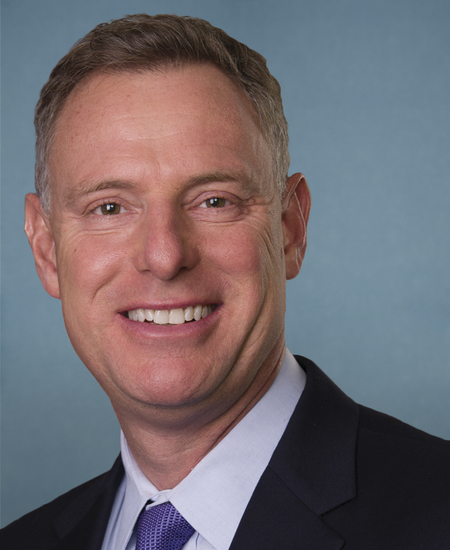
Rep. Scott H. Peters
Sponsored bills
Maddy summaryThis resolution urges the Biden administration to facilitate the safe, timely, and sufficient delivery of humanitarian aid to civilians in Gaza. It specifically calls for expanding aid convoys, opening additional border crossings, providing fuel to aid organizations, establishing safe shelters, and renewing humanitarian pauses to address the severe crisis. The resolution directly affects civilians in Gaza, where infrastructure damage, contaminated water, and shortages of medical supplies have created a dire humanitarian situation. It does not create new laws but expresses Congress's position on improving aid access.
Maddy summaryThis bill designates the Elk River Trail in California's Headwaters Forest Reserve as the "Senator Dianne Feinstein Memorial Trail." It updates all official federal references - such as laws, maps, and documents - to reflect this new name. The bill directly affects the Elk River Trail and federal records mentioning it. No substantive policy changes or funding are involved; it solely honors Senator Feinstein through a trail naming designation.
Maddy summaryThis bill reauthorizes and extends funding for programs addressing substance use disorders and opioid addiction, including residential treatment for pregnant and postpartum women, first responder training, and community recovery initiatives. It increases funding levels for these programs, adds xylazine to Schedule III of controlled substances, and requires a study on remote monitoring for patients prescribed opioids. The bill also expands Medicaid coverage requirements for medication-assisted treatment and mandates reporting on mental health condition data alongside substance use disorder data, directly affecting individuals with substance use disorders, healthcare providers, and state and tribal governments.
Maddy summaryThe Rent Relief Act of 2023 creates a new refundable tax credit for renters whose rent exceeds 30% of their adjusted gross income. It directly affects low-to-moderate income renters in their principal residence, with credit percentages ranging from 100% (for incomes under $25,000) down to 0% (for incomes over $100,000). The credit is limited to rent within HUD's fair market rent guidelines, and the IRS will make monthly advance payments starting July 2024 for eligible taxpayers who elect this option. The bill requires no additional tax filing for the credit but includes $50 million for outreach to help eligible households enroll.
Maddy summaryHR 6600, "Tyler’s Law," requires the Secretary of Health and Human Services to study how often hospital emergency departments test for fentanyl during overdose cases, along with the costs, benefits, risks, and patient privacy impacts. The study must be completed within one year of the bill’s enactment, followed by guidance issued within six months on whether fentanyl testing should become routine. This guidance will address how hospitals can inform clinicians about testing protocols and how fentanyl testing might affect future overdose risks and patient health outcomes. The bill directly affects hospitals and emergency departments treating overdose patients, focusing on improving data-driven practices for fentanyl detection.
Maddy summaryHR 6641, the Keep America's Waterfronts Working Act, establishes a federal task force to identify and address critical needs of working waterfronts, which are coastal areas used for commercial fishing, boating, aquaculture, and related activities. The bill creates a grant program to help coastal states, Indian Tribes, and Native Hawaiian organizations develop and implement plans to preserve and expand working waterfronts through property acquisition, facility improvements, and climate adaptation measures. It also establishes a loan fund to provide financial assistance for waterfront preservation, with special provisions for disadvantaged communities and requirements for covered entities to develop plans ensuring waterfronts remain available for their intended uses. The legislation authorizes $50 million annually from 2024-2028 for these programs, with reporting requirements to track implementation and effectiveness.
Maddy summaryThis bill amends the Equal Credit Opportunity Act to require lenders to collect and report data on loans to LGBTQI-owned businesses. It specifically adds "LGBTQI-owned" to existing categories for data collection, includes sexual orientation, gender identity, and intersex status as protected characteristics in lending data, and defines an "LGBTQI-owned business" as one where over 50% of ownership/control and net profit/loss accrues to self-identifying LGBTQI individuals. The policy change directly affects financial institutions that report lending data to the government, mandating they track and disclose these new categories. This provides concrete data on lending practices for LGBTQI business owners, who face documented barriers in accessing credit.
Maddy summaryThis bill allows Medicare Part D plans to adjust drug formularies mid-year to lower costs for seniors using biologic medications. Specifically, it permits plans to change the cost-sharing tier for a reference biologic drug (the original brand) if the plan simultaneously adds a biosimilar version (a similar, lower-cost alternative) at the same or better tier. This change can occur after the first 60 days of a plan year, starting in 2025, giving plans flexibility to offer cheaper options without delaying access. The policy directly affects seniors enrolled in Medicare Part D plans who use biologic drugs, aiming to reduce their out-of-pocket costs through earlier access to biosimilars.
Maddy summaryHR 6592, the Fight Book Bans Act, provides federal grants to reimburse public school districts for legal costs when they choose to keep instructional or library materials after parental objections. It directly affects school districts (covered local educational agencies) that select materials for students and handle challenges to their removal. The bill authorizes up to $100,000 per case in grants to cover attorney fees and court costs, provided the district didn’t remove the materials and wasn’t reimbursed by the state. Funding of $15 million is authorized for fiscal years 2024-2028. The grants are strictly for legal challenges to decisions not to remove materials, not for the content of the materials themselves.