

This resolution calls for the federal government to establish a national biodiversity strategy, which must include a goal of conserving at least 30% of U.S. lands and waters to protect biodiversity and address climate change by 2030 and other goals necessary to reduce the threats to biodiversity.
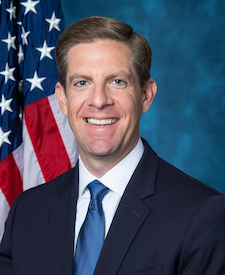
Rep. Mike Levin
Sponsored bills
Maddy summaryHR 1369, the "Peace on the Korean Peninsula Act," directs the U.S. State Department to review restrictions on Americans traveling to North Korea, particularly for humanitarian reasons like family reunions (affecting approximately 100,000 Americans with relatives there). It also requires the State Department to create a diplomatic roadmap for ending the Korean War through formal negotiations with North and South Korea, including establishing liaison offices. The bill mandates reports to Congress within 180 days detailing these reviews and strategies, without changing existing military deployments or U.S. policy on North Korea's nuclear program. It focuses on diplomatic engagement to replace the 1953 armistice with a permanent peace agreement.
Maddy summaryThis bill requires airlines to train flight crews and maintenance staff on identifying and responding to cabin smoke/fume incidents, implement a standardized reporting system for such events, and install real-time air quality monitors to detect dangerous contaminants like carbon monoxide. It directly affects airline crews, maintenance technicians, and passengers by mandating new safety protocols and equipment on commercial flights. Key provisions include annual training on fume sources and health impacts, detailed incident reports covering flight details and symptoms, and public databases of reported events (with personal information redacted). The law also mandates aircraft manufacturers to include monitoring procedures in flight manuals and requires the FAA to investigate incidents involving health symptoms. These changes aim to improve cabin air safety through better detection, reporting, and response systems.
Maddy summaryThe Protecting America's Meatpacking Workers Act of 2023 establishes new safety standards for meat and poultry processing facilities to protect workers from injuries and unsafe conditions. The bill prohibits "no fault attendance policies" that penalize workers for taking legally protected leave and requires employers to provide adequate toilet facilities without punishment. It mandates new ergonomic standards to prevent musculoskeletal injuries, increases OSHA inspection resources through $60 million in annual funding, and requires facilities to report infections and deaths during pandemics. The bill directly affects meat and poultry processing workers, their employers, and federal agencies overseeing workplace safety through concrete policy changes to improve working conditions.
Maddy summaryHR 1322 expands federal retirement benefits to include specific non-traditional law enforcement roles. It adds IRS employees focused on tax collection, U.S. Postal Inspection Service staff, Department of Veterans Affairs police officers, and U.S. Customs and Border Protection seized property specialists to the definition of "law enforcement officer" under federal retirement systems. Current employees in these newly covered positions must elect to pay deposits for past service to receive full retirement credit, while their agencies must contribute additional funds for that past service. The bill also temporarily prevents mandatory separation for current law enforcement officers for three years after enactment.
Maddy summaryHR 1321, the "More Homes on the Market Act," increases the tax exclusion for gains from selling a primary residence. It doubles the exclusion amount from $250,000 to $500,000 for single filers and from $500,000 to $1,000,000 for married couples filing jointly. The bill also adds automatic annual inflation adjustments to these amounts starting in 2023, ensuring the exclusion keeps pace with rising costs. This change directly affects homeowners who sell their primary residence and meet the ownership and use requirements under current tax law. The policy modifies the Internal Revenue Code to make selling a home less financially burdensome for qualifying homeowners.
Maddy summaryThe Military Spouse Hiring Act expands the Work Opportunity Tax Credit to include military spouses. Employers who hire a spouse of an active-duty military member - certified by a local agency as meeting eligibility requirements on the hiring date - can claim this tax credit. The credit reduces the employer's federal tax liability for hiring such individuals. This provision applies to new hires after the bill's enactment date.
Saving Us from Pandemic Era Resistance by Building a Unified Global Strategy Act of 2023 or the SUPER BUGS Act of 2023 This bill requires the Department of Health and Human Services (HHS) to seek to enter into arrangements with foreign countries, multilateral organizations, and other appropriate entities to facilitate the development and commercialization of qualified pandemic or epidemic products, which include drugs, biological products, and medical devices. HHS shall report to Congress a strategy for achieving this goal.
Maddy summaryThe Peace Corps Reauthorization Act of 2023 makes several key updates to support Peace Corps volunteers. It increases readjustment allowances from $125 to $375, establishes protocols for safely returning volunteers whose service was interrupted by catastrophic events, and improves health care provisions including mental health services. The bill extends noncompetitive hiring eligibility for returning volunteers for up to three years and implements a zero-tolerance policy for illegal drug use. It also adds protections against retaliation for volunteers who report issues related to waste, fraud, or safety concerns. These changes aim to better support volunteers before, during, and after their service.
Maddy summaryThe Air Carrier Access Amendments Act of 2023 updates the 1986 Air Carrier Access Act to improve accessibility for travelers with disabilities. It creates a private right of action (allowing individuals to sue for violations), sets new standards for accessible aircraft (including boarding equipment, seating, lavatories, and communication systems), and requires airports to provide accessible facilities and digital services. The bill establishes clearer complaint procedures with the Department of Transportation, including a 120-day investigation timeline and specific civil penalties for violations like delayed assistance or damage to assistive devices. These changes directly affect air carriers, foreign air carriers, and travelers with disabilities who face barriers such as inaccessible aircraft and inadequate assistance. The legislation aims to address ongoing issues including damaged assistive devices, inaccessible aircraft features, and inappropriate treatment of service animals.