

Maddy summaryThis bill requires major airlines and ticket agents to provide full cash refunds - including all fees - for canceled flights or tickets canceled at least 48 hours before departure, within 30 days of a passenger’s request. It limits refunds to one flight per city pair per date, allows alternatives like vouchers (with indefinite validity and clear disclosure of cash refund rights), and permits retroactive cash refunds for passengers who received vouchers since March 2020. Passengers must be informed in writing before purchase and when cancellations occur about their right to a cash refund. The law applies to airlines with over $1.5 billion in 2018 revenue or foreign carriers operating U.S. flights, with a $1,000 penalty for violations.
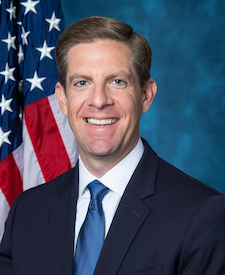
Rep. Mike Levin
Sponsored bills
Maddy summaryThe DERAIL Act requires the Secretary of Transportation to update federal regulations within 90 days to define a "high-hazard flammable train" as any train carrying at least one tank car of flammable liquid or gas, plus additional safety-related materials. Railroad carriers must report within 24 hours after a derailment involving toxic-by-inhalation materials to the National Response Center, state officials, local authorities, and Tribal governments. The report must specify all toxic-by-inhalation materials on the train. This bill directly affects railroad companies and the Department of Transportation by establishing new safety reporting standards for hazardous material incidents.
Maddy summaryThis bill establishes pay equity for federal firefighters by adjusting how their retirement benefits are calculated and setting a standard workweek. It requires retirement annuities to include overtime hours worked as part of a firefighter's regular schedule (e.g., overtime during standard shifts), rather than excluding them. The bill also mandates a maximum 60-hour regular workweek for federal firefighters, set by the Office of Personnel Management within one year of enactment. These changes directly affect federal firefighters, aiming to improve pay comparability with municipal firefighters and other federal employees while supporting recruitment and retention.
This bill provides for the award of a Congressional Gold Medal posthumously to Doris Miller in recognition of his acts of valor while a member of the Navy during World War II.
Maddy summaryThe Richard L. Trumka Protecting the Right to Organize Act of 2023 strengthens workers' rights to organize unions by making it harder for employers to interfere with organizing efforts. Key provisions include changing the definition of "employee" to make it more difficult to classify workers as independent contractors, prohibiting employers from threatening to permanently replace striking workers, and requiring employers to provide voter lists for union elections. The bill also creates a new electronic voting system for union elections, strengthens whistleblower protections for workers reporting labor violations, and increases penalties for unfair labor practices. These changes directly affect workers seeking to form unions, employers who may interfere with organizing, and labor organizations. The bill aims to make it easier for workers to exercise their right to collective bargaining under the National Labor Relations Act.
Maddy summaryHR 1222, the Buffalo Soldiers Congressional Gold Medal Act of 2023, authorizes a single Congressional Gold Medal to honor the six all-Black cavalry and infantry regiments established in 1866 (later consolidated into four regiments). The medal recognizes their service from the post-Civil War era through World War II, including roles in frontier protection, national park preservation, and combat during major conflicts. After awarding the medal, it will be permanently displayed at the Smithsonian's National Museum of African American History and Culture, with bronze duplicates available for sale to cover costs. This bill is purely commemorative, with no new policies or direct impacts on current laws or individuals.
Maddy summaryThe Aviation Noise and Emissions Mitigation Act creates two grant programs to address noise and pollution from airports. The first program funds 3-year pilots for communities near airports to measure noise and emissions (including greenhouse gases and particulate matter) using technology that traces sources to specific aircraft and neighborhoods, with a focus on identifying disproportionately impacted areas. The second program provides grants to community groups, health departments, and local governments to implement mitigation strategies - such as noise-reducing building upgrades, health services, and environmental programs - prioritizing low-income and disadvantaged communities identified through the monitoring. Both programs require regular community engagement, public reporting, and alignment with environmental justice goals.
Maddy summaryHR 724, the Arctic Refuge Protection Act, repeals the existing oil and gas program for the Arctic National Wildlife Refuge in Alaska and designates approximately 1.56 million acres of the refuge's coastal plain as federal wilderness. This bill directly affects the Arctic Refuge by permanently prohibiting oil and gas leasing and development in that specific area. The key mechanism is adding the designated land to the National Wilderness Preservation System under the Wilderness Act, requiring it to be managed for its natural conditions. This change legally protects the area from future fossil fuel extraction activities.
Boundary Waters Wilderness Protection and Pollution Prevention Act This bill withdraws approximately 234,328 acres of federal land and waters in a specified area in the Rainy River Watershed of Superior National Forest in Minnesota from entry, appropriation, and disposal under the public land laws; location, entry, and patent under the mining laws; and operation of the mineral leasing, mineral materials, and geothermal leasing laws. The area is adjacent to the Boundary Waters Canoe Area Wilderness and the Boundary Waters Canoe Area Wilderness Mining Protection Area. Land or interest in land within such area that is acquired by the United States shall be immediately withdrawn in accordance with this bill. The Forest Service is authorized to permit the removal of sand, granite, iron ore, and taconite from national forest system lands within such area if the removal is not detrimental to the water quality, air quality, and health of forest habitat within the Rainy River Watershed.
Land Restoration and Resiliency Act of 2023 This bill directs the U.S. Fish and Wildlife Service to enter into cooperative agreements with the National Fish and Wildlife Foundation to establish the Community Resilience and Restoration Fund at the foundation, for purposes including to improve community safety in the face of climactic extremes through conservation and protection of restoration and resilience lands; protect, conserve, and restore restoration and resilience lands in order to help communities respond and adapt to natural threats, including wildfire, drought, extreme heat, and other threats posed or exacerbated by the impacts of global climate; and protect and enhance the biodiversity of wildlife populations across restoration and resilience lands. The bill defines restoration and resilience lands as fish, wildlife, and plant habitats, and other important natural areas in the United States, on public lands, private land (after obtaining proper consent from the landowner), or land of Indian tribes, including grasslands, shrublands, prairies, chaparral lands, forest lands, deserts, and riparian or wetland areas within or adjacent to these ecosystems. To the extent amounts are available in the fund, the foundation shall award grants to eligible entities (e.g., a federal agency, a unit of local government, an Indian tribe, or a nonprofit organization) through a competitive grant process to carry out eligible projects and activities.