

Maddy summaryThis bill modifies federal highway funding rules to prioritize safety for cyclists and pedestrians. It allows states and local governments to receive 100% federal funding for projects that connect existing bike/pedestrian infrastructure or reduce safety risks for these users, instead of the usual lower federal share. The bill also requires projects to align with state safety plans focusing on vulnerable road users and includes specific "Proven Safety Countermeasures" for cyclists/pedestrians. These changes directly affect states administering federal highway funds and local governments seeking to improve non-motorized transportation infrastructure.
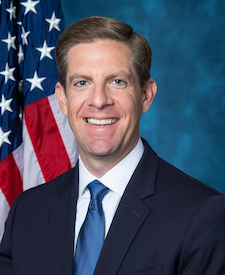
Rep. Mike Levin
Sponsored bills
Maddy summaryHR 1396 expands Berryessa Snow Mountain National Monument by adding approximately 3,925 acres of federal land in Lake County, California (known as the Walker Ridge/Molok Luyuk Addition), directly affecting land management in that area. The bill modifies the monument's boundary to include this parcel, formally designates it as "Condor Ridge (Molok Luyuk)" (using the Patwin language), and requires the Secretary of the Interior to develop a joint management plan with the Secretary of Agriculture within one year of enactment. This plan must include consultation with affected federally recognized tribes and establish ongoing engagement with tribes for monument management. The bill also mandates public availability of updated maps and legal descriptions for the newly designated area.
California Clean Coast Act of 2023 This bill prohibits oil and gas exploration and leasing in areas of the outer Continental Shelf located off the coast of California.
Maddy summaryHR 1654, the DEPOSIT Act, imposes a new tax on certain bank executives' bonuses and stock profits when their bank fails and the FDIC becomes conservator or receiver. It specifically targets executives who earned over $250,000 (adjusted for excluded profits) in the year before their bank's failure and received bonuses within 60 days prior to the FDIC takeover or sold bank stock within that same period. The tax adds 90% of bonus profits and 100% of stock profit amounts to the executive's regular income tax. All revenue generated from this tax will be directed to the Deposit Insurance Fund, which protects bank deposits.
Maddy summaryHR 1591 amends the Elementary and Secondary Education Act to increase annual federal funding for impact aid programs that support school districts near military bases, national parks, and other federal properties. It authorizes specific, rising funding levels for four key areas: payments for federal land acquisitions ($90 million in 2024, growing to $150 million by 2029), basic payments to heavily impacted school districts ($1.6 billion in 2024, growing to $2.45 billion by 2029), payments for students with disabilities ($60 million in 2024, growing to $120 million by 2029), and school construction projects ($22.9 million in 2024, growing to $45.4 million by 2029). These appropriations represent incremental steps toward full federal funding for these aid programs, as specified in the bill's text. The bill directly affects school districts located near federal land, providing predictable annual funding increases for their operational and infrastructure needs.
Maddy summaryThis bill authorizes a Congressional Gold Medal to honor the "Hello Girls" - female telephone operators who served in the Army Signal Corps during World War I. They provided critical battlefield communications in France (connecting 26 million calls), wore military uniforms, and faced combat risks, but were denied veteran benefits for 60 years due to being classified as civilian contractors. The medal recognizes their pioneering service, devotion, and the decades-long struggle to gain military recognition. The award follows similar recognition for other WWII women veterans and aims to correct the historical injustice they faced.
Maddy summaryThe PHIT Act of 2023 allows individuals and families to deduct certain fitness expenses as medical costs on their federal taxes. It covers gym memberships, fitness classes, and specific equipment used exclusively for exercise (like home workout gear), with a yearly limit of $1,000 ($2,000 for joint returns). Expenses for activities like golf, hunting, or non-exercise-focused facilities (e.g., private clubs) are excluded, and equipment must be used solely for physical activity. This directly affects taxpayers who pay for qualifying fitness programs, making these costs partially tax-deductible under revised IRS rules.
Maddy summaryThe SVB Act (HR 1602) repeals Title IV of the 2018 Economic Growth, Regulatory Relief, and Consumer Protection Act, which had relaxed banking regulations. It directly affects banks previously subject to those relaxed rules, particularly smaller institutions that benefited from the 2018 changes. The bill’s key mechanism is restoring the pre-2018 regulatory framework, reversing the specific provisions that eased oversight. This returns banking oversight to the structure that existed before the 2018 law took effect, without creating new rules.
Maddy summaryThe Strengthening Local Processing Act of 2023 provides targeted support for smaller meat and poultry processing businesses (defined as those with fewer than 50 employees under existing regulations). It creates a free, searchable database of validation studies and scale-appropriate model safety plans to help these businesses meet federal food safety requirements, while increasing federal funding for state inspection programs from 50% to 65%. The bill also establishes a $20 million annual grant program to help small processors improve safety, expand capacity, and access training, with priority given to businesses serving farmers within 200 miles and those owned by disadvantaged individuals. These changes directly benefit small meat and poultry processing establishments that often struggle with compliance costs and resources.
Maddy summaryHRES 219 is a symbolic resolution (not a binding bill) expressing the House’s support for inclusive public schools. It urges schools to adopt historically accurate, diverse educational materials that reflect the nation’s diversity, foster parent-educator partnerships, and eliminate discrimination based on race, disability, LGBTQ+ identity, or other factors. The resolution emphasizes creating safe, well-rounded learning environments that prepare all students for success while protecting students’ civil rights. It directly affects public school districts, educators, families, and students by encouraging practices that promote equity and inclusion.