Multiple Firearm Sales Reporting Modernization Act of 2022 This bill expands reporting requirements with respect to sales or dispositions of multiple firearms. Currently, a federal firearms licensee (e.g., a gun dealer) must report multiple sales or dispositions of pistols or revolvers to the same person within five business days. This bill requires a federal firearms licensee to report multiple sales or dispositions of any firearms to the same person within five business days.
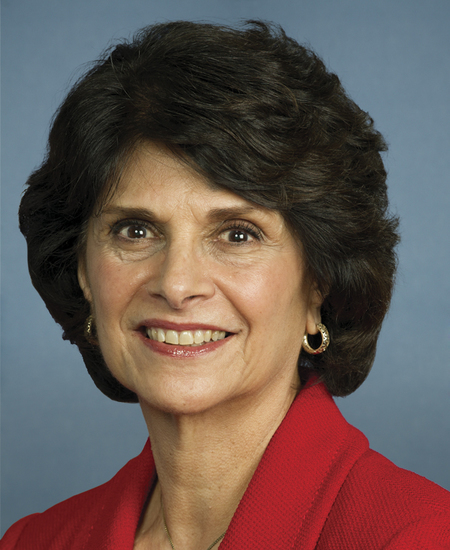
Rep. Lucille Roybal-Allard
Sponsored bills
Justice for Victims of War Crimes Act This bill broadens the scope of individuals who are subject to federal prosecution for war crime offenses. Currently, the federal war crimes statute provides federal jurisdiction over war crime offenses committed anywhere (i.e., inside or outside the United States) if the victim or offender is a member of the Armed Forces or a U.S. national. First, this bill extends federal jurisdiction over war crime offenses committed anywhere to offenses where (1) the victim or offender is an alien lawfully admitted for permanent residence; or (2) the offender is present in the United States, regardless of the nationality of the victim or the offender. Second, the bill expands federal jurisdiction over war crime offenses to include offenses that occur in whole or in part within the United States, regardless of whether the victim or offender is a member of the Armed Forces, a U.S. national, or an alien lawfully admitted for permanent residence.
Warrant for Metadata Act This bill addresses the disclosure of customer electronic communications or records, including by requiring a governmental entity to obtain a warrant before requesting that a provider of electronic communication service or remote computing service disclose a customer's metadata.
Open App Markets Act This bill establishes rules related to the operation of an app store by a covered company (i.e., the owner or controller of an app store with more than 50 million U.S. users). An app is a software application or electronic service that may be run or directed by a user on a computer or mobile device. An app store is a publicly available website, software application, or other electronic service that distributes apps from third-party developers to users. The bill prohibits a covered company from (1) requiring developers to use an in-app payment system owned or controlled by the company as a condition of distribution or accessibility, (2) requiring that pricing or conditions of sale be equal to or more favorable on its app store than another app store, or (3) taking punitive action against a developer for using or offering different pricing terms or conditions of sale through another in-app payment system or on another app store. A covered company may not interfere with legitimate business communications between developers and users, use non-public business information from a third-party app to compete with the app, or unreasonably prefer or rank its own apps (or those of its business partners) over other apps. The bill provides for enforcement of its provisions by the Federal Trade Commission and the Department of Justice, as well as through suits brought by developers that are injured by reason of anything prohibited by this bill.
Save Americans from the Fentanyl Emergency Act of 2022 or the SAFE Act of 2022 This bill permanently places fentanyl-related substances as a class into schedule I of the Controlled Substances Act. A schedule I controlled substance is a drug, substance, or chemical that has a high potential for abuse; has no currently accepted medical value; and is subject to regulatory controls and administrative, civil, and criminal penalties under the Controlled Substances Act. It limits the application of mandatory minimum penalties for certain offenses involving fentanyl-related substances, establishes a process to deschedule or remove certain fentanyl-related substances that have a low potential for abuse, and allows a federal court to vacate or reduce the sentence for convictions of offenses involving a fentanyl-related substance that is descheduled or moved to a schedule other than schedule I or II. The bill establishes a new, alternative registration process for schedule I research. It also makes other changes to registration requirements for conducting research with controlled substances, including permitting a single registration for related research sites in certain circumstances, waiving the requirement for a new inspection in certain situations, and allowing a registered researcher to perform certain manufacturing activities with small quantities of a substance without obtaining a manufacturing registration. Finally, the bill requires the Government Accountability Office to analyze the implementation and impact of permanently placing fentanyl-related substances into schedule I of the Controlled Substances Act.
SESTA/FOSTA Examination of Secondary Effects for Sex Workers Study Act or the SAFE SEX Workers Study Act This bill requires the Department of Health and Human Services (HHS) and the Department of Justice (DOJ) to study the impacts of the reduction in access to certain websites and other interactive computer services resulting from the Allow States and Victims to Fight Online Sex Trafficking Act of 2017 on individuals engaged in adult, consensual sex work. Specifically, HHS must study the impacts of the reduction on the health and safety of individuals engaged in transactional sex while DOJ must study the impacts of the reduction on human trafficking investigations and prosecutions.
Latonya Reeves Freedom Act of 2022 This bill prohibits government entities and insurance providers from denying community-based services to individuals with disabilities that require long-term service or support that would enable such individuals to live in the community and lead an independent life. Specifically, these entities may not discriminate against such individuals in the provision of community-based services by such actions as imposing prohibited eligibility criteria, cost caps, or waiting lists or failing to provide a specific community-based service. Additionally, community-based services must be offered to individuals with such disabilities prior to institutionalization. Institutionalized individuals must be notified regularly of community-based alternatives. The bill requires the Department of Justice to issue regulations requiring government entities and insurance providers to offer community-based long-term services to individuals with such disabilities who would otherwise qualify for institutional placement. Government entities must ensure sufficient availability of affordable, accessible, and integrated housing that is not a disability-specific residential setting or a setting where services are tied to tenancy. Regulations shall also (1) require government entities and insurance providers to perform self-evaluation on current services, policies, and practices and concerning compliance with requirements of this bill; and (2) require government entities to submit a transition plan. The bill provides funds for FY2022 for the Department of Health and Human Services to provide technical assistance with respect to transition plans. The bill allows civil actions by individuals subjected to, or about to be subjected to, a violation of its requirements.
Election Worker and Polling Place Protection Act This bill addresses certain protections for election workers and polling places. In particular, the bill prohibits, with enhanced penalties for certain types of threats and harms (1) intimidation of poll watchers, election officials, and election agents, vendors, and contractors involving violence or threats of harm; and (2) physical damage to or threats to physically damage a polling place, tabulation center, or other election infrastructure.
Ethiopia Stabilization, Peace, and Democracy Act This bill imposes sanctions and addresses other issues related to the conflict in Ethiopia. The President must impose property-blocking sanctions (and visa-blocking sanctions in the case of an individual) against a foreign entity or individual that has taken certain actions to expand or extend the civil war or other conflicts in Ethiopia. The bill prohibits assistance, with certain exceptions, to Ethiopia's security forces unless the Department of State certifies to Congress that Ethiopia's government has ceased all military operations associated with the civil war and met other specified conditions. The Department of the Treasury must instruct U.S. representatives at international financial institutions to oppose, with some exceptions, such institutions providing loans or assistance to the governments of Ethiopia or Eritrea. Furthermore, the U.S. International Development Finance Corporation may not provide certain support for projects in Ethiopia. These restrictions must terminate after the State Department certifies that certain conditions, such as a cessation of military operations associated with the civil war in Ethiopia, have been met. The President may provide support for activities necessary to preserve evidence of atrocities in Ethiopia and to pursue accountability for such atrocities. Within 90 days of this bill's enactment, the State Department must report to Congress a determination of whether actions in Ethiopia by the armed forces of Ethiopia and Eritrea, the Tigrayan Peoples Liberation Front, and other armed actors constitute genocide, war crimes, or crimes against humanity.

End Prison Gerrymandering Act This bill requires the Department of Commerce, beginning with the 2030 decennial census, to attribute an individual incarcerated in a correctional center to the individual's last place of residence before incarceration. Further, a state must treat such an individual's last place of residence in the state before incarceration as the individual's place of residence for purposes of congressional redistricting.