Human Trafficking Awareness Training Act This bill authorizes the Federal Law Enforcement Training Centers to establish a human trafficking awareness training program for state, local, tribal, territorial, and educational institution law enforcement personnel.
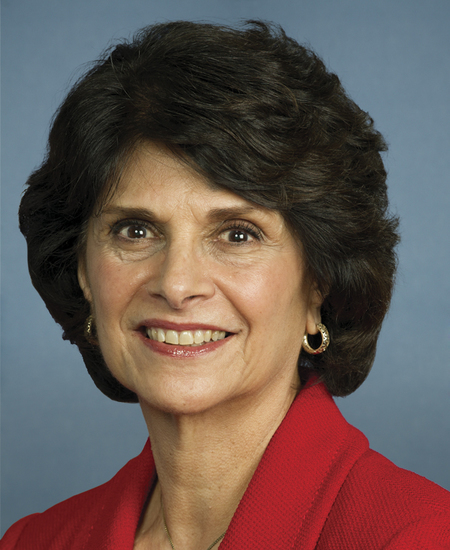
Rep. Lucille Roybal-Allard
Sponsored bills
Family Notification of Death, Injury, or Illness in Custody Act of 2021 This bill requires the Department of Justice (DOJ) to develop policies and procedures for notifying next-of-kin or other emergency contacts in the event of the death, or serious illness or serious injury, of an individual in custody. The bill requires DOJ to implement the policies and procedures at its detention agencies. Further, the bill requires DOJ to distribute model policies and procedures to state, territorial, tribal, and local detention agencies.
Comprehensive Addiction Resources Emergency Act of 2021 This bill establishes programs, grants, and other activities to address substance use disorders. Specifically, the Department of Health and Human Services (HHS) must establish a program for purchasing and distributing opioid overdose reversal drugs for states and Indian tribes. HHS must also award grants for and otherwise support addressing substance use, particularly in states, tribes, territories, and localities with disproportionately high drug overdose rates; increasing access to preventive, medical, recovery, and related services; developing innovative models of delivering treatment and harm reduction services; and expanding the treatment capacity of Medicaid providers. In addition, HHS must issue model standards of care for treatment services and recovery residences and may award grants for training health care professionals. The bill also supports prevention and treatment services for workers, addiction and pain management research, and data collection on substance use disorders. Further, dispensers, distributors, and manufacturers of schedule II controlled substances (e.g., oxycodone), with the exception of opioid treatment programs, must certify that they maintain effective drug diversion controls. Violators are subject to specified civil and criminal penalties. Collected penalties shall be used for the grant programs and other substance use disorder activities established under the bill.
Bivens Act of 2021 This bill provides individuals with a statutory right to sue and recover damages from federal officials for violations of their constitutional rights. Currently, individuals have a statutory right to bring such suits against state or local officials (e.g., law enforcement), commonly known as Section 1983 suits or Bivens actions. Although the statute does not explicitly authorize such suits against federal officials, the Supreme Court has found this right to be inferred from the Constitution in certain situations (e.g., Fourth Amendment violations committed by federal law enforcement officers).
Repeal Existing Policies that Encourage and Allow Legal HIV Discrimination Act of 2022 or the REPEAL HIV Discrimination Act of 2022 This bill addresses federal and state laws, policies, and regulations that may burden people living with HIV/AIDS. Specifically, the bill directs the Department of Justice (DOJ), the Department of Health and Human Services (HHS), the Department of Defense (DOD), and the White House Office of National AIDS Policy to initiate a national review of federal (including military) and state laws, policies, regulations, and judicial precedents and decisions regarding criminal and related civil commitment cases involving people living with HIV/AIDS. DOJ must transmit to Congress and make publicly available the results of such review with related recommendations. The White House Office of National AIDS Policy must also develop and publicly release guidance to assist states with handling relevant cases. The office, DOJ, HHS, and DOD must transmit to the President and Congress any proposals necessary to implement adjustments to federal laws, policies, or regulations. This bill shall not be construed to discourage the prosecution of individuals who act with the intent to do harm to another individual by intentionally transmitting HIV.
Preventing Vigilante Stalking that Stops Women's Access to Healthcare and Abortion Rights Act of 2021 This bill increases the maximum prison term for a stalking offense, if the offense is committed with the intent to obtain health care information of an individual or to prevent the health care decisions of an individual.
Lifting Immigrant Families Through Benefits Access Restoration Act of 2021 or the LIFT the BAR Act of 2021 This bill repeals certain limits on the eligibility of noncitizens who lawfully reside in the United States for federal means-tested programs, including Medicaid, the Children's Health Insurance Program (CHIP), programs funded through Temporary Assistance for Needy Families (TANF) grants, Supplemental Security Income (SSI), and certain nutrition and housing programs.
Frank Harrison, Elizabeth Peratrovich, and Miguel Trujillo Native American Voting Rights Act of 2021 This bill addresses the voting rights of Native American and Alaska Native voters and voting access on tribal lands. The bill includes provisions expanding the types of facilities that can be used as voter registration agencies; increasing polling site accessibility, including by expanding early in-person voting and providing ballot drop boxes; providing enforcement power to citizens and attorneys general; requiring approval for actions like moving a polling place; validating certain tribal identification for voting or registering to vote; permitting voters to designate another individual to return a ballot on their behalf; and expanding requirements for bilingual voting accessibility. In addition, the bill establishes a Native American voting task force grant program for the purpose of increasing voter outreach, education, registration, turnout, and accessibility for Native American communities. The bill also directs the Government Accountability Office to study and report on (1) the prevalence of nontraditional or nonexistent mailing addresses among Indians, members of tribes, and individuals residing on Indian lands; and (2) the alternatives for removing barriers to voter registration, receipt of voter information and materials, and receipt of ballots.
Hold Accountable and Lend Transparency on Campus Sexual Violence Act of 2021 or the HALT Campus Sexual Violence Act of 2021 This bill addresses dating violence, domestic violence, sexual assault, or stalking incidents on college campuses, including by expanding requirements governing the disclosure of such incidents and efforts to prevent them. Specifically, the bill requires the Department of Education (ED) to make available an online survey tool regarding student experiences with domestic violence, dating violence, sexual assault, harassment, and stalking. ED must publish a biennial report that includes campus-level data for each institution of higher education (IHE). The bill permits ED to impose civil penalties on IHEs that have violated a law under the jurisdiction of its Office for Civil Rights. In addition, the bill directs ED, the Department of Health and Human Services, and the Department of Justice to create a task force on sex-based harassment and violence in education.
Firearm Owners Responsibility and Safety Act This bill establishes a framework to regulate the storage of firearms at the federal, state, and tribal levels. The bill also removes limitations on the civil liability of gun manufacturers and the disclosure of gun trace data in civil actions. Among its provisions, the bill generally requires firearms to be kept, left, or stored in a secure gun storage or safety device; requires the Department of Justice to award grants to states and tribes to implement firearms safe storage requirements that are functionally identical to the requirements established by this bill; repeals the Protection of Lawful Commerce in Arms Act, which prohibits civil actions against a firearm or ammunition manufacturer, seller, importer, dealer, or trade association for damages resulting from the criminal or unlawful misuse of a firearm; and allows firearms trace data maintained by the Bureau of Alcohol, Tobacco, Firearms and Explosives to be discoverable, admissible as evidence, and used, relied on, or disclosed in a civil action or administrative proceeding.