

Maddy summaryThe PHASE Act of 2023 directs the National Institute of Standards and Technology (NIST) to identify innovative traffic control technologies that improve safety for pedestrians and cyclists without causing distraction. It requires the Transportation Secretary to conduct a study analyzing urban areas with rising pedestrian fatalities and test physical safety measures like crosswalk technology, better lighting, and accessible sidewalks. The bill also creates a $5 million annual grant program for cities, tribes, and municipalities to fund specific pedestrian safety infrastructure, including marked crosswalks, adaptive lighting, accessible curb ramps, and upgraded traffic signals. These grants must comply with federal regulations and the Americans with Disabilities Act. The law directly affects local governments seeking funding and aims to protect pedestrians and vulnerable road users through concrete infrastructure improvements.
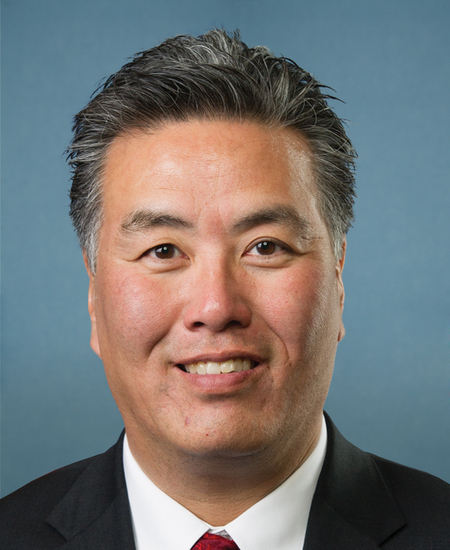
Rep. Mark Takano
Sponsored bills
National Museum of American LGBTQI+ History and Culture Act This bill establishes within the Smithsonian Institution the National Museum of American LGBTQI+ History and Culture. The museum (1) may carry out educational and liaison programs in support of its goals, and (2) shall establish specified grant and scholarship programs.
Maddy summaryHR 5983, the Clean Water Act of 2023, redefines "protected water resources" under federal law to explicitly include all interstate and intrastate waters (such as intermittent and ephemeral streams), wetlands, and their tributaries. This directly affects federal agencies like the EPA, states managing water quality, and developers or landowners needing permits for activities near these waters. The bill eliminates the Supreme Court’s narrow "navigable waters" definition from Sackett v. EPA (2023), restoring protections for tens of millions of acres of wetlands and millions of miles of small streams. Key mechanisms require the EPA to annually review and adjust exclusions from protections based on scientific evidence, ensuring water bodies critical to drinking water, flood control, and ecosystems remain safeguarded.
Maddy summaryHRES 819 is a symbolic resolution recognizing the 5-year anniversary of the October 27, 2018, antisemitic attack at Pittsburgh’s Tree of Life Synagogue, which killed 11 people. It condemns antisemitism and references rising hate incidents, including the Anti-Defamation League’s 2022 report of record antisemitic activity (3,697 incidents). The resolution honors the victims, expresses solidarity with affected Jewish communities, and reaffirms the U.S. commitment to combatting hate and protecting religious freedom. As a procedural resolution (not a law), it has no binding effect but serves as a formal statement of congressional stance.
Maddy summaryThis bill restores federal student loans for graduate and professional students by temporarily reinstating eligibility for Federal Direct Stafford Loans, which was previously terminated. It applies directly to graduate students who were excluded from these loans, preventing them from accumulating additional debt. The change is temporary, ending on or before June 30, 2023, and modifies specific provisions of the Higher Education Act without requiring additional rulemaking.
Maddy summaryThe All Students Count Act of 2023 amends the Elementary and Secondary Education Act to require states to collect and report detailed educational data for specific Asian American and Native Hawaiian/Pacific Islander subgroups, including Chinese, Filipino, Cambodian, Hmong, Samoan, and Chamorro communities. It mandates that states disaggregate student performance data by these specific ethnic subgroups rather than reporting only broad categories. This change directly affects public school systems and state education agencies, which must now collect and report data for these detailed groups as part of federal accountability requirements. The bill aims to address historical data gaps that obscured educational disparities affecting diverse communities, such as lower high school graduation rates or college enrollment among specific subgroups.
Maddy summaryHR 6102 establishes a nonpartisan commission to study the feasibility of creating a National Museum of American LGBTQI+ History and Culture. The 8-member commission, appointed by congressional leaders, will assess costs, location options, governance, fundraising needs, and potential impacts on existing museums, with reports due within 18 months. Crucially, the bill prohibits federal funding for the commission’s work and requires a fundraising plan to support the museum’s future operation without relying on ongoing government appropriations. The commission’s findings will inform future legislative action but do not authorize the museum’s creation. This is a study-only measure, not a funding or construction bill.
Maddy summaryHRES 794 is a symbolic resolution recognizing October as "National Learning Disabilities Awareness Month." It does not create new policies, allocate funding, or directly affect students or schools. The resolution cites statistics about learning disabilities (e.g., 34% of students in special education have specific learning disabilities, and over 95% of affected 4th/8th graders were not reading proficient in 2022) to contextualize the recognition. The House formally acknowledges the importance of raising awareness about learning disabilities through this annual observance.
Maddy summaryHRES 771 is a non-binding resolution expressing the U.S. House of Representatives' support for Israel following Hamas' October 7, 2023, attack. It condemns Hamas' actions, affirms Israel's right to self-defense, and calls for the immediate release of hostages. The resolution also urges enforcement of existing laws restricting aid to terrorists and sanctions against Iran for supporting Hamas. It does not create new policies or allocate funds, as it is a symbolic statement of congressional support.
Maddy summaryHRES 768 is a symbolic House Resolution expressing congressional support for Israel following Hamas' October 7, 2023 attacks. It condemns Hamas' actions, reaffirms Israel's right to self-defense, and calls for the immediate release of hostages. The resolution references the U.S. commitment to Israel's security through existing military aid programs, including the 2016 U.S.-Israel Memorandum of Understanding, and emphasizes enforcement of laws like the Taylor Force Act to prevent U.S. aid from reaching terrorist groups. As a symbolic resolution, it does not create new policy but serves as a statement of congressional support for Israel.