

Maddy summaryHRES 881 is a symbolic House resolution commemorating the 50th anniversary of the Endangered Species Act of 1973. It honors the Act's role in preventing the extinction of species like the bald eagle and humpback whale, citing its success in protecting 99% of listed species. The resolution does not create new legal requirements or affect any specific group, as it serves solely as a ceremonial recognition of the Act's conservation achievements.
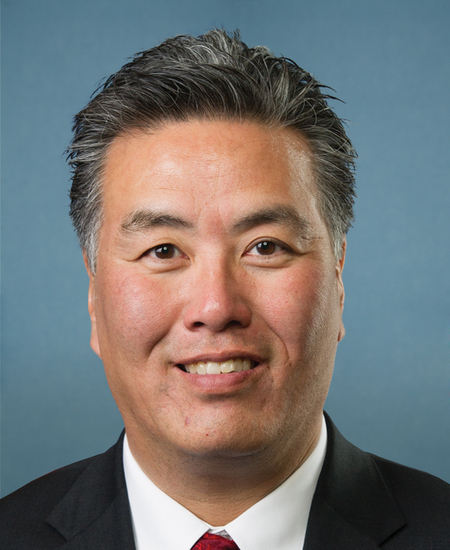
Rep. Mark Takano
Sponsored bills
Maddy summaryHRES 886 is a non-binding House resolution supporting Transgender Day of Remembrance (TDoR) by recognizing the epidemic of violence against transgender people and memorializing those lost in the year ending September 30, 2023. It specifically acknowledges the disproportionate impact of violence on transgender women of color, citing 33 documented deaths in the U.S. during that period (with estimates suggesting the actual number is higher due to underreporting). The resolution calls for Congress to prioritize studying and preventing such violence while affirming that all transgender people deserve dignity and respect. As a symbolic resolution, it does not create new laws or allocate funding but serves to raise awareness and honor victims.
Maddy summaryThis bill (HR 366, Korean American VALOR Act) changes VA healthcare eligibility rules to include Korean American veterans who served with South Korea's military in Vietnam during specific periods. It directly affects Korean American individuals who served as part of the Republic of Korea's armed forces in Vietnam between January 1962 and May 1975 (or a period the VA later determines). The key provision adds a new eligibility category under VA law, allowing these individuals to access the same healthcare benefits as U.S. veterans under the same rules and conditions. This is a concrete policy change that removes a prior barrier to VA healthcare for this group.
Maddy summaryThe TREES Act of 2023 establishes a federal grant program to fund tree planting projects that reduce residential energy use. It provides 90% federal funding (up to $50 million annually) for projects in neighborhoods with high energy burdens, low tree canopy, or vulnerable populations like seniors and low-income households. Eligible applicants - including state/local governments, tribes, nonprofits, and power companies - must demonstrate how planting specific tree species will cut cooling and heating costs through shade and wind protection. The program aims to plant at least 300,000 trees yearly, prioritizing projects that maximize energy savings for households spending a high percentage of income on energy bills.
Maddy summaryThis bill would amend the Fair Labor Standards Act to remove an exemption (currently found at 29 U.S.C. 213(b)(1)) that prevents certain commercial truck drivers from receiving overtime pay. It directly affects truck drivers who currently fall under this exemption and are not entitled to overtime for hours worked beyond 40 in a workweek. The key mechanism is striking the specific exemption language from the law, requiring covered truck drivers to receive overtime pay at 1.5 times their regular rate for all hours worked over 40. This change would extend standard overtime protections to these workers under federal law.
Maddy summaryHRES 815 is a non-binding resolution expressing the U.S. House of Representatives' support for recognizing October 26, 2023, as "Intersex Awareness Day," which commemorates the 1996 demonstration by intersex individuals and promotes bodily autonomy. It encourages federal, state, local, and community organizations to observe the day through educational programs and to provide culturally competent care to intersex people. The resolution also urges healthcare providers and schools to connect intersex individuals and families to resources and support education about intersex diversity. As a symbolic gesture, it does not create new legal requirements but aims to raise public awareness and affirm the rights of intersex people.
Maddy summaryHRES 840 is a symbolic resolution passed by the U.S. House of Representatives expressing support for Veterans Employment Week (November 5-11, 2023). It recognizes veterans’ contributions to the economy - citing data that 9 million veterans work in the U.S. workforce, own 321,000 businesses, and contribute over $926 billion annually - and encourages businesses to adopt best practices for hiring and retaining veterans and their spouses. The resolution does not create new laws or funding but formally acknowledges veterans’ value to the workforce through a non-binding statement. It directly affects veterans, their families, and businesses participating in employment initiatives, while highlighting their economic impact.
Maddy summaryThis resolution (HRES 839) condemns antisemitism at U.S. colleges and universities and urges campus leaders to publicly oppose hate speech targeting Jewish students, faculty, and staff. It encourages university presidents, administrators, and faculty to speak out against speech that promotes violence or discrimination based on religion, national origin, or ancestry. The resolution specifically calls on institutions to support Jewish student organizations and ensure Jewish members can study and work without fear. As a non-binding resolution, it does not create new laws but expresses congressional support for addressing antisemitism on campuses.
Maddy summaryHRES 831 is a symbolic congressional resolution supporting October as "National Domestic Violence Awareness Month." It does not create new laws or allocate funding, but formally expresses the House of Representatives' support for the goals of raising awareness about domestic violence. The resolution urges Congress to continue highlighting domestic violence's impact and backing programs that prevent and address it. It directly affects public awareness efforts and serves as a non-binding statement of congressional support for victims and advocacy organizations.
Maddy summaryThe Health DATA Act of 2023 requires group health plans (like employer-sponsored insurance) and their service providers (such as pharmacy benefit managers and healthcare networks) to allow plan managers to audit de-identified claims data without unreasonable restrictions. It bans contracts that delay audits, limit data access, or hide pricing terms, and imposes $10,000 daily penalties for violations. Health plans must annually attest to compliance, confirming data is accessible and no "gag clauses" restrict audits. The bill directly affects health plan managers, providers, and service entities by mandating transparent data access for fiduciary oversight. It focuses on concrete policy changes to ensure health plan data remains accessible for cost and quality oversight.