

Maddy summaryH.J. Res. 193 proposes a constitutional amendment to eliminate legal immunity for federal officials, including the President, from criminal prosecution for actions taken while performing official duties. It also prohibits the President from granting a pardon to themselves. The amendment would apply to all federal officers (such as the President, Vice President, and members of Congress) except for Congress members acting in their legislative role as defined in the Constitution. If ratified by 38 states, this change would become part of the U.S. Constitution, requiring no further congressional action.
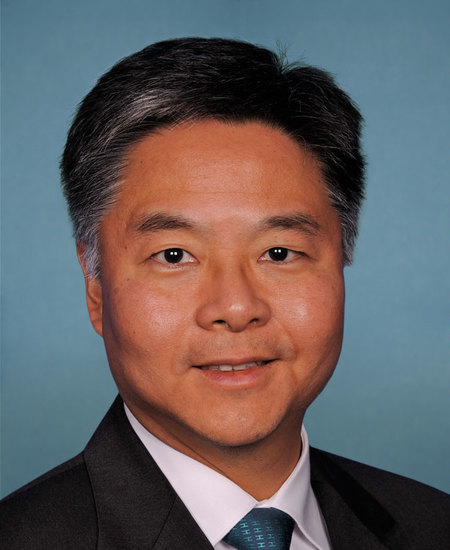
Rep. Ted Lieu
Sponsored bills
Maddy summaryHRES 1381 is a symbolic resolution that commemorates the United States Olympic and Paralympic Teams' historical achievements, including over 5,300 total medals across past Games. It expresses congressional support for U.S. athletes competing in the 2024 Summer Olympics and Paralympics in Paris, France, and commends the Government of France for hosting the events. The resolution also commits to ensuring a safe environment for the 2028 Los Angeles Olympic and Paralympic Games. As a non-binding expression of support, it does not create new laws or allocate funds.
Maddy summaryThis resolution designates September 2024 as "PCOS Awareness Month" to highlight polycystic ovary syndrome (PCOS), a hormonal condition affecting an estimated 5-10 million U.S. women and girls. It recognizes PCOS as a serious health issue linked to infertility, type 2 diabetes, heart disease, mental health challenges, and other related conditions. The resolution urges increased public and medical education about PCOS, improved diagnosis, and research into better treatments, without creating new laws or funding. It directly supports women and girls living with PCOS by promoting awareness of its wide-ranging health impacts.
Maddy summaryThe BRAIN Act (HR 9113) establishes new research networks and funding mechanisms to advance brain tumor treatment and care. It requires the NIH to create a searchable database of brain tumor biospecimens, authorizes $50 million annually for a Glioblastoma Therapeutics Network, and allocates $10 million yearly for CAR-T cell therapy research. The bill also mandates a national awareness campaign about clinical trials and biomarker testing, and funds pilot programs to improve long-term care for brain tumor survivors. These provisions directly affect researchers, patients, healthcare providers, and survivors, with funding allocated for fiscal years 2026 through 2030.
Maddy summaryHR 9104, the Access to Birth Control Act, requires pharmacies that normally stock contraception to provide birth control or related medications without delay if in stock, or immediately offer alternatives like referrals to other pharmacies or expedited orders if unavailable. It prohibits pharmacists from intimidating customers, misrepresenting availability, breaching confidentiality, or refusing to fill valid prescriptions for birth control. Pharmacies violating these rules face civil penalties up to $1,000 per day or private lawsuits. The law specifically applies to pharmacies that routinely carry contraception and excludes cases where a valid prescription is missing or payment cannot be made. It aims to address documented refusals to dispense birth control, particularly following the Dobbs decision.
Maddy summaryHR 1631, the Pro Codes Act, requires standards development organizations (like ANSI or IEEE) to make technical standards publicly accessible online for free if those standards are referenced in federal, state, or local laws or regulations. This directly affects the organizations that create these standards and government agencies that incorporate them into rules. The key provision mandates that organizations must provide free, online access to all referenced standards within a reasonable time after learning they’re incorporated, without charging users or requiring payment. It ensures the public can access current standards used in government rules while allowing organizations to maintain revenue models through paid subscriptions for other users. The law balances public access with the need for standards organizations to fund their work through copyright licensing.
Maddy summaryHR 9005, the Teacher, Principal, and Leader Residency Access Act, amends the Higher Education Act to allow Federal Work-Study funds to support paid residency programs for aspiring teachers, principals, and school leaders. The bill enables schools to use these funds for compensation during residency training and travel, prioritizing students eligible for Federal Pell Grants. It defines a "residency program" as a structured, year-long apprenticeship where participants work alongside mentor educators while completing coursework in teaching or leadership skills, culminating in full state certification. This directly affects school districts facing teacher shortages, especially in high-need subjects and schools serving low-income or minority students, by expanding access to a proven model that increases educator retention. The policy change focuses on funding mechanisms rather than outcomes, making residency participation financially feasible for participants and institutions.
Maddy summaryThe Rohingya GAP Act establishes a U.S. Special Coordinator for Rohingya Atrocities Prevention and Response to coordinate U.S. government efforts on Rohingya issues. It authorizes $10 million annually for atrocity investigations and $8 million for a Burma-focused conflict observatory to document human rights violations. The bill directs U.S. agencies to support Rohingya refugees' protection, education, and livelihoods in Bangladesh while promoting durable solutions including safe return to Myanmar with full citizenship rights when conditions allow. It requires annual reporting on U.S. efforts to address atrocity risks, protect Rohingya, and advance accountability for crimes against them. The legislation aims to address root causes of violence against Rohingya through empowerment, inclusion in decision-making, and support for transitional justice mechanisms.
Maddy summaryHR 7914, the Accountability for Terrorist Perpetrators of October 7th Act, imposes U.S. sanctions on the Popular Resistance Committees (PRC) and associated individuals or groups, including blocking property transactions and denying visas to members. The bill requires the President to enforce these sanctions 90 days after enactment, with exceptions for United Nations operations and national security activities, and allows temporary 180-day waivers for national security reasons. It also mandates a 90-day report to Congress on whether the PRC and the group "Lion's Den" meet criteria for designation as terrorist organizations under existing laws. Ongoing reports every two years will track new entities linked to the PRC.
Maddy summaryThis bill reauthorizes the United States Commission on International Religious Freedom (USCIRF) through fiscal year 2026. It extends the commission's funding authorization from 2023-2024 to 2025-2026 and delays the expiration date of its statutory authorization from September 30, 2024, to September 30, 2026. The bill directly affects USCIRF by ensuring its continued operation and funding without altering its existing mandate or reporting requirements. It is a procedural extension, not a policy change.