

Maddy summaryThe AI Grand Challenges Act of 2024 creates a National Science Foundation program to award cash prizes for solving specific artificial intelligence challenges in critical U.S. priority areas like health, national security, energy, and cancer research. It requires the NSF to establish competitions with clear problem statements and success metrics, including a mandatory cancer-focused competition offering at least $10 million in prizes within one year of enactment. Eligible participants must be U.S. entities or U.S. citizens/permanent residents, and winners receive minimum $1 million prizes per competition. The NSF must publish competition details online, report annually to Congress on program outcomes, and ensure public accessibility of all challenges.
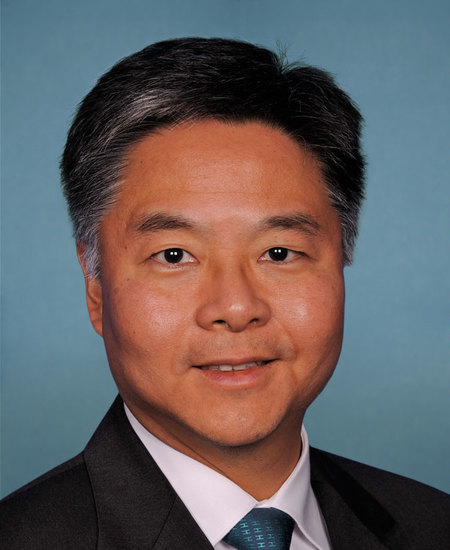
Rep. Ted Lieu
Sponsored bills
Maddy summaryHR 8492 prohibits wildlife killing contests - events where participants kill animals for cash, prizes, or entertainment - on all federal public lands managed by agencies like the National Park Service or U.S. Forest Service. It specifically bans contests targeting species such as coyotes, foxes, and bobcats, except for field trials with hunting dogs, contests for deer/birds (Galliformes/Anatidae), or agency-led invasive species control. The law requires federal agencies to issue implementing regulations within a year of enactment. It directly affects organizers, sponsors, and participants of such contests on federally managed lands, while allowing states to maintain stricter rules.
Maddy summaryHR 8169, the Lead Free Forests Act of 2024, requires the Forest Service to prohibit the use of lead ammunition on National Forest lands within one year of enactment, mandating instead certified non-lead ammunition. This directly affects hunters using firearms on Forest Service-managed lands, with exceptions for government officials, law enforcement, and military personnel during official duties. The bill establishes a process for the Forest Service to maintain and publish an annual list of certified non-lead ammunition and imposes fines up to $5,000 for violations. It aims to reduce lead contamination in the environment and protect wildlife, particularly scavenging birds, from lead exposure through spent ammunition.
Maddy summaryThis bill bans the sale and use of adhesive rodent traps that cause prolonged suffering. It amends federal pesticide law to prohibit "covered glue traps" - defined as devices using non-drying adhesive to immobilize rodents, leading to death by starvation, dehydration, or suffocation. The prohibition directly affects pest control companies, food processors, and homeowners who currently use these traps. The law applies to both selling/distributing and using such traps, aligning with existing bans in other jurisdictions over animal welfare and health concerns.
Maddy summaryThe Equal Pay for Equal Work Act establishes a National Equal Pay Enforcement Task Force to strengthen enforcement of existing equal pay laws. The task force, made up of representatives from the Equal Employment Opportunity Commission, Department of Justice, Department of Labor, and Office of Personnel Management, will coordinate efforts to investigate pay disparities and develop solutions. It will create action plans to address enforcement gaps and improve public education about pay equity. This bill directly affects federal agencies and workers facing wage discrimination by enhancing how equal pay laws are enforced across government.
Maddy summaryThis bill would allow states to skip in-person interviews for SNAP (food stamp) benefit renewals if applicants agree to waive the interview and have already proven they qualify for continued benefits. It also requires states to offer phone or virtual interview options when interviews are still needed for renewal. The change directly affects SNAP recipients who may face fewer in-person requirements and state agencies administering the program. The policy aims to reduce paperwork burdens without altering eligibility rules for food assistance.
Maddy summaryHRES 1409 is a symbolic House resolution condemning Nicolás Maduro's regime for alleged election fraud in Venezuela's July 28, 2024 presidential election. It recognizes opposition candidate Edmundo González Urrutia as the president-elect based on observed vote tallies showing his decisive victory, and condemns the regime's refusal to release transparent results. The resolution calls for new sanctions against Maduro and his allies, demands respect for the election outcome, and urges diplomatic pressure to support Venezuela's democratic transition. This resolution directly addresses the Maduro regime's actions and expresses U.S. solidarity with Venezuelan voters and the opposition.
Maddy summaryHR 9299, the IRAN Act, requires the U.S. Secretary of State to lead federal efforts promoting internet freedom and access to information in Iran. It amends a 2012 law to mandate specific strategy updates, including evaluating how activists use virtual private networks (VPNs) and satellite tech, developing guidance to prevent sanctions from blocking internet tools for Iranians, and planning to bypass government internet blackouts. The bill directs the State Department to coordinate with Treasury, Commerce, USAID, and intelligence agencies to implement these updates. This affects U.S. government agencies' coordination and aims to improve internet access for Iranian civil society activists.
Maddy summaryThe Sustaining America's Fisheries for the Future Act of 2024 aims to improve the long-term health of U.S. fisheries by addressing climate change impacts, supporting fishing communities, and modernizing management practices. The bill requires federal agencies to incorporate climate science into fishery management decisions and mandates regular vulnerability assessments of fish stocks to environmental changes. It establishes new grant programs to help coastal communities preserve working waterfronts and improve data collection systems through electronic monitoring technologies. The legislation also strengthens transparency by requiring more detailed reporting on fishery management council activities and expanding tribal representation on regional councils. Additionally, the bill creates a standardized national program to track and reduce bycatch across all fisheries while updating international fisheries management agreements.
Maddy summaryHR 9139 authorizes the U.S. Navy to transfer or lease specific parcels of land at Defense Fuel Support Point San Pedro (Los Angeles) to the cities of Los Angeles or Lomita. The bill covers approximately 5.7 acres for Lomita's ballfields, 15.3 acres for Los Angeles' ballfields, and 3.2 acres of a firing range (for law enforcement use). The cities must pay conveyance costs (cash or in-kind improvements/services) and agree to use the land only for parks/recreation or law enforcement, with the Navy retaining the right to reclaim the land if used improperly. An interim lease option for up to three years is also provided before final transfer.