

Maddy summaryThe Protecting Data at the Border Act (HR 9567) requires U.S. government agencies to obtain a warrant based on probable cause before accessing the digital contents of electronic devices belonging to U.S. persons at border crossings. It prohibits denying entry or delaying entry based on a person's refusal to provide access credentials or disclose digital contents, and limits border searches to 4 hours when seeking voluntary consent. The bill establishes emergency exceptions for national security threats or immediate danger, mandates written consent for voluntary data access, and prohibits using evidence obtained in violation of the law in court proceedings. It also requires annual reporting on border data access by government agencies, including data on race and ethnicity. This bill directly affects U.S. persons entering or exiting the United States, strengthening their digital privacy protections at border crossings.
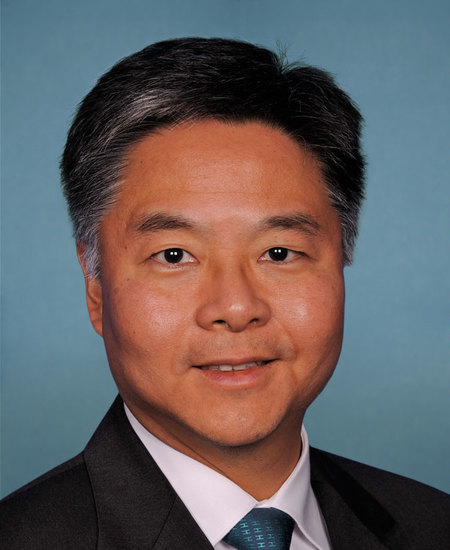
Rep. Ted Lieu
Sponsored bills
Maddy summaryThis bill creates a federal grant program to fund supportive services for residents in affordable housing properties. It provides 5-year competitive grants to non-profit organizations or tribes managing properties assisted by programs like the low-income housing tax credit or Section 8 housing. Grantees must use at least 25% of funds for staff salaries/benefits and can cover services including health access, education, financial literacy, aging-in-place support, and disability services - though residents cannot be required to accept these services. The program targets residents of qualifying affordable housing properties, focusing on improving health, economic stability, and community integration.
Maddy summaryHRES 1437 is a ceremonial resolution designating the week beginning September 9, 2024, as "National Hispanic-Serving Institutions Week." It recognizes Hispanic-serving institutions (HSIs) - colleges and universities with at least 25% Hispanic enrollment - and their role in educating low-income students, advancing economic mobility, and serving 31.7% of all undergraduate students. The resolution calls for the public and organizations to observe this week with ceremonies and activities during Hispanic Heritage Month. It does not create new laws, allocate funding, or change existing policies - it is purely a symbolic gesture of recognition.
Maddy summaryThis bill designates the U.S. Postal Service facility at 130 South Patterson Avenue in Santa Barbara, California, as the "Brigadier General Frederick R. Lopez Post Office Building." It updates all official U.S. government references to the building to reflect this new name, with no policy changes or funding impacts.
Maddy summaryHR 9497, the AI Advancement and Reliability Act of 2024, creates a new Center for AI Advancement and Reliability within the Commerce Department to advance U.S. leadership in AI safety and reliability. The Center will conduct research, develop voluntary standards, and collaborate with federal agencies, industry, and researchers to address AI reliability, security, and safety risks - such as system flaws and adversarial attacks - through testing and benchmarking. It prohibits new regulatory authority or mandatory data sharing from private entities, requires annual reports to Congress, and is funded at $10 million for fiscal year 2025 with a six-year sunset provision. This bill directly affects federal agencies (like NIST and the National Science Foundation), research institutions, and private sector partners working on AI systems, without imposing new compliance requirements.
Maddy summaryThe AI Development Practices Act of 2024 requires the National Institute of Standards and Technology (NIST) to develop voluntary guidance for AI developers on best practices for creating, releasing, and assessing artificial intelligence systems. This guidance will cover defining risk tolerances (including security, economic, and social risks), documenting system characteristics like fairness and safety, and public reporting of capabilities and limitations. NIST must update the guidance periodically, base it on international standards and industry practices, and report to Congress within 18 months on new materials and policy recommendations. The bill does not mandate specific actions but aims to foster industry-wide communication and coordination on AI development practices.
Maddy summaryThe CREATE AI Act of 2023 establishes a National Artificial Intelligence Research Resource (NAIRR) to improve access to AI research tools, computational resources, data, and educational materials for researchers and students across the United States. The NAIRR will provide computational resources, curated datasets, educational tools, and access to AI testbeds, with special emphasis on supporting groups historically underrepresented in STEM fields. Governed by a Steering Subcommittee chaired by the Director of the Office of Science and Technology Policy and managed by a Program Management Office within the National Science Foundation, the NAIRR includes specific requirements for ethical AI development, privacy protections, and security measures. The resource will be accessible to researchers at U.S. institutions of higher education, nonprofits, government agencies, and certain businesses, with priority given to projects addressing privacy, ethics, civil rights, and AI safety.
Maddy summaryThe Enhancing Subnational Diplomacy Act authorizes the U.S. State Department to provide direct support to state and local governments (including elected officials and staff) for international engagement that aligns with U.S. foreign policy goals. It allows the State Department to fund travel for state and local officials to attend international meetings, assist in hosting major global events, and cover costs for staff training and memberships in international organizations. The bill also creates a grant program for state and local governments to fund public diplomacy, commercial diplomacy, and technical assistance projects in collaboration with federal agencies. These provisions aim to strengthen the role of subnational governments in U.S. foreign policy efforts through formalized support mechanisms.
Maddy summaryHR 7159, the Pacific Partnership Act, mandates the U.S. government to develop a comprehensive strategy for engagement with Pacific Island nations. It requires the President, by January 1, 2026, and every four years thereafter, to submit a detailed strategy to Congress outlining U.S. diplomatic, defense, and economic goals in the region, including assessments of threats like natural disasters, illegal fishing, and foreign military activity. The strategy must detail plans to address these threats, coordinate with Pacific Island governments and regional organizations like the Pacific Islands Forum, and outline required resources and staffing. This bill directly affects U.S. foreign policy operations and shapes how the federal government engages with Pacific Island nations on shared security, economic, and environmental priorities.
Maddy summaryHRES 1056 is a non-binding House resolution recognizing recent trilateral cooperation among the United States, Japan, and South Korea. It formally acknowledges specific collaborative efforts, including resumed summitry, joint military exercises, shared missile warning systems, economic partnerships, and coordinated responses to regional challenges like North Korea and crises in Sudan and Israel. The resolution does not create new policies or funding but expresses congressional support for strengthening this alliance framework. It highlights the importance of continued cooperation across diplomatic, security, and economic domains to promote stability in the Western Pacific. The resolution was introduced by multiple House members and referred to the Foreign Affairs Committee.