

Maddy summaryHR 1794 authorizes the minting of commemorative coins to honor the 2028 Los Angeles Olympic and Paralympic Games. It specifies four coin types ($5 gold, $1 silver, half-dollar clad, and proof silver $1) with defined weights, sizes, and mintage limits (e.g., up to 100,000 gold coins). A surcharge is added to each coin sale (e.g., $35 for gold coins), with all surcharge funds directed to the U.S. Olympic and Paralympic Properties to support legacy programs and the Games' operations. The coins must be issued only during 2028 and are legal tender, though the bill focuses solely on commemorative coinage, not policy changes.
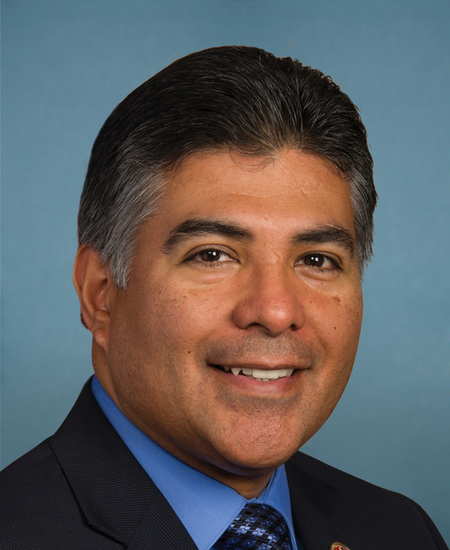
Rep. Tony Cárdenas
Sponsored bills
Maddy summaryHR 1637 establishes a Medicare pilot program called the Dementia Care Management Model to improve care for beneficiaries with Alzheimer's disease or related dementia. It requires participating providers to offer comprehensive services - including continuous monitoring, personalized care plans, medication management, and caregiver support - while excluding hospice care. Payments are made monthly based on patient needs (with pathways for uncomplicated vs. complex cases) and include quality-based bonuses, with no cost-sharing for beneficiaries. The model tests whether this approach improves health outcomes, care quality, and caregiver support while reducing Medicare spending, targeting Medicare beneficiaries not in nursing homes or hospice who meet specific diagnosis and enrollment criteria.
CBD Product Safety and Standardization Act of 2023 This bill requires the Food and Drug Administration (FDA) to regulate food containing cannabidiol (CBD) derived from hemp as a food additive. (The FDA has determined that food containing added CBD cannot be sold in interstate commerce.) Under this bill, in order to be sold, a food containing CBD derived from hemp must conform with current FDA requirements pertaining to food additives or be generally recognized as safe (GRAS). (Under current law, a food additive with the GRAS designation is not subject to FDA premarket review and approval requirements.) In addition, such a food must comply with all other relevant FDA and labeling requirements. Such a food shall be exempt from an existing provision that prohibits the sale of a food containing an additive that is (1) an FDA-approved drug or biological product, or (2) subject to certain clinical investigations. The FDA must issue regulations pertaining to such foods that specify (1) the maximum amount of CBD derived from hemp per serving, (2) labeling and packaging requirements, and (3) any conditions for intended use.
Hemp and Hemp-Derived CBD Consumer Protection and Market Stabilization Act of 2023 This bill allows the use of hemp, cannabidiol (i.e., CBD) derived from hemp, or any other ingredient derived from hemp in a dietary supplement, provided that the supplement meets other applicable requirements. (Currently, the Food and Drug Administration's position is that CBD products may not be sold as dietary supplements.)
This resolution recognizes the Islamic faith as one of the great religions of the world, acknowledges the onset of Ramadan (the holy month of fasting and spiritual renewal for Muslims), and expresses respect to Muslims in the United States and throughout the world on this occasion.
Maddy summaryThe Office of Gun Violence Prevention Act of 2023 establishes a new office within the Department of Justice to coordinate federal efforts on gun violence prevention. The office, led by a Director appointed by the Attorney General, will evaluate existing programs, identify data gaps, and make evidence-based policy recommendations to Congress and the President. It will work with an advisory council including DOJ officials and external members like gun violence survivors, community service providers, and public health experts. The office must produce an annual report to Congress on gun violence trends and policy recommendations, and the bill authorizes funding to support these activities.
Maddy summaryThis bill prohibits colleges receiving federal funds from discriminating against "Dreamer students" in admissions, enrollment, or tuition rates. It requires institutions to treat eligible Dreamers (those meeting specific immigration criteria, like DACA recipients or long-term residents) the same as in-state students for tuition and admissions, and strictly protects their immigration information from disclosure. The bill also allows Dreamers to access federal financial aid for higher education, reversing a 1996 prohibition. These changes apply to all institutions of higher education receiving federal funding.
Maddy summaryHR 1723, the Abortion is Health Care Everywhere Act of 2023, amends the Foreign Assistance Act to remove restrictions on using U.S. foreign aid funds for abortion services. It explicitly allows U.S. foreign assistance programs to fund comprehensive reproductive health care, including abortion services, training, and equipment. This change directly affects U.S. international health programs and recipient countries, enabling them to integrate safe abortion care into broader reproductive health services. The bill aims to align U.S. policy with global health guidelines by making abortion services a standard part of reproductive health care funded through foreign assistance.
Maddy summaryThe Food Deserts Act creates a federal grant program to help establish grocery stores in underserved communities by funding state revolving funds. States receive capitalization grants (up to $150 million for FY2022) to provide low-interest loans to grocery stores that meet specific criteria, such as selling unprocessed, affordable healthy foods and matching 20% of the loan with non-federal funds. Priority is given to stores hiring local workers, offering nutrition education, sourcing from local farms, and having established supply chains. The program directly supports grocery store operators in areas with limited access to fresh food, aiming to improve community health outcomes through increased access to nutritious options.
Maddy summaryHR 1619 requires schools participating in the National School Lunch Program to provide fluid milk substitutes (like soy or almond milk) upon request by a student or their parent/guardian. The bill removes the previous requirement that substitutions needed a medical authority's written statement for most dietary needs, instead allowing requests based on the student's or parent's request alone. It aligns the definition of acceptable substitutes with current Dietary Guidelines for Americans. This change directly affects students with dietary restrictions, making it simpler for schools to accommodate their needs without extra medical documentation.