

Maddy summaryThe Women's Health Protection Act of 2023 would protect access to abortion services by prohibiting states from imposing restrictions that are more burdensome than those for comparable medical procedures. The bill would ensure people can obtain abortion services before fetal viability without unnecessary limitations like mandatory waiting periods or biased counseling, and after viability when necessary to protect the patient's life or health. It would preempt state laws that conflict with these protections and allow for civil enforcement actions to challenge restrictive state laws. This bill directly affects people seeking abortion services (including transgender and nonbinary individuals who can become pregnant), health care providers, and states that have implemented abortion restrictions.
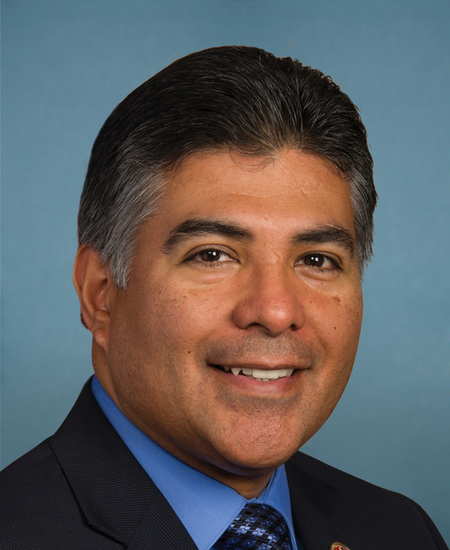
Rep. Tony Cárdenas
Sponsored bills
Maddy summaryThis resolution (HRES 279, introduced April 6, 2023) designates April 10 as "Dolores Huerta Day" to symbolically honor Dolores Huerta's civil rights work. It recognizes her role co-founding the farm workers movement, advocating for labor rights (including the California Agricultural Labor Relations Act), promoting women's equality, and originating the "Sí Se Puede" slogan. The resolution has no binding policy effect - it is purely commemorative, celebrating her legacy without creating new laws or affecting any group directly. It was introduced by multiple House members as a formal expression of support for her contributions to social justice.
Maddy summaryHR 1465, "Violet’s Law," requires federal research facilities to establish standards for placing eligible animals (dogs, cats, primates, guinea pigs, hamsters, rabbits) no longer needed for research with animal rescue organizations, sanctuaries, shelters, or individuals. Federal departments and agencies operating such facilities must create these placement standards within one year of the law's enactment. The law mandates that animals must be vet-certified as healthy (free of infectious disease or physical issues) before placement and prohibits facilities from using animals for commercial trade, breeding, or public exhibitions. This policy directly affects federal research facilities and aims to provide permanent homes for research animals through defined, safe pathways.
Maddy summaryThis resolution expresses the U.S. House of Representatives' support for recognizing March 31, 2023, as "César Chávez Day" to honor the legacy of César Estrada Chávez, a civil rights leader who founded the United Farm Workers union and advocated for farmworkers' rights. It does not create new laws or policies but formally acknowledges his life and work through a symbolic resolution. The resolution highlights Chávez's achievements, including his nonviolent organizing efforts, the 1975 California Agricultural Labor Relations Act, and his enduring influence on labor rights and social justice. It encourages the public to commemorate his legacy, referencing existing state observances and previous presidential proclamations of the day.
Maddy summaryHR 2394, the Protection from Abusive Passengers Act, creates a federal list of passengers who commit specific aviation security offenses, such as assaulting crew members, threatening flight safety, or tampering with security systems. Individuals added to this list are banned from boarding commercial flights until removed through established procedures. The bill requires the Transportation Security Administration (TSA) to develop clear policies for adding individuals to the list, handling appeals within 5 days for potential errors, and maintaining annual reports on the list's composition. These provisions directly affect passengers convicted of or penalized for the specified offenses, aiming to enhance safety by restricting repeat offenders from flying.
Maddy summaryThe International Human Rights Defense Act of 2023 creates a permanent Special Envoy at the State Department to coordinate U.S. efforts against discrimination and violence targeting LGBTQI+ people globally. The bill requires the development of an annual global strategy to address criminalization, discrimination, and violence based on sexual orientation, gender identity, or sex characteristics. It also mandates that U.S. country reports on human rights practices include detailed information about laws and practices affecting LGBTQI+ communities. The legislation authorizes U.S. foreign assistance programs to support LGBTQI+ rights through health services, legal protections, and community capacity building. This bill aims to strengthen U.S. diplomatic engagement on LGBTQI+ rights as part of broader human rights policy.
New Way Forward Act This bill makes changes to immigration enforcement, including ending mandatory detention in certain cases. The Department of Homeland Security (DHS) may not enter into or extend any contract with any for-profit entity to own or operate a detention facility. The bill provides for various protections related to detaining non-U.S. nationals ( aliens under federal law), such as (1) requiring DHS to make an initial custody determination and establish probable cause within 48 hours of taking an individual into custody, (2) establishing in hearings related to such determinations a presumption that the individual be released, and (3) requiring immigration judges to impose the least restrictive detention conditions necessary. A DHS officer may not interrogate an individual as to immigration status based on factors such as the individual's race, religion, or spoken language. The bill removes mandatory detention requirements for certain individuals, such as asylum seekers with a credible fear of persecution. Certain individuals who were previously admitted into the United States may be removed only if removal proceedings commenced within five years of the individual becoming deportable or inadmissible. The bill also removes certain crime-related grounds of inadmissibility and deportability. The bill gives immigration judges discretion to provide relief from removal if the removal is not based on certain crime-related grounds. State or local officers are prohibited from performing certain immigration enforcement functions. The National Crime Information Center database may not contain an individual's immigration information. The bill repeals criminal penalties for improper entry or reentry into the United States.
Maddy summaryHR 1831 would award Billie Jean King a Congressional Gold Medal to honor her lifelong advocacy for equal rights in sports and society. The bill directs the Secretary of the Treasury to strike the medal and have it presented by congressional leaders, recognizing her pivotal role in advancing women's equality through tennis (including founding the Women’s Tennis Association and securing equal prize money) and her broader impact on society through initiatives like Title IX advocacy.
Maddy summaryThis bill changes how U.S. foreign aid is provided to international health organizations. It prevents U.S. agencies from denying aid to foreign non-governmental organizations (NGOs) solely because they offer health services (like counseling or referrals) using their own funds, as long as those services follow local laws. It also stops applying stricter rules about how foreign NGOs can use their own funds for advocacy compared to U.S. NGOs receiving similar aid. The bill directly affects foreign health-focused NGOs that rely on U.S. foreign assistance funding.
Maddy summaryThe SAFEGUARD Act of 2023 restricts U.S. arms sales to countries committing genocide or war crimes. It prohibits defense exports to countries with credible evidence of such violations, with exceptions only if the government has punished perpetrators, prevented recurrence, and provided compensation. The bill requires recipient countries to agree not to use U.S. weapons to violate human rights, mandates end-use monitoring to ensure proper weapon use, and enhances congressional oversight for arms sales to countries with serious human rights concerns. These changes apply to all defense articles and services sold, exported, or transferred by the United States.