

Maddy summaryThe SHIP Act imposes sanctions on foreign entities that knowingly handle Iranian petroleum, targeting those involved in port operations, transportation, refining, or ship-to-ship transfers of Iranian oil. Starting 90 days after enactment, the President must block assets, deny visas, and impose penalties on individuals or companies engaging in these activities, including family members or owners of sanctioned entities. It requires annual reports tracking Iran's oil exports, revenues, and key players like shipping companies and ports. The sanctions terminate if the President certifies Iran has stopped supporting terrorism and dismantled weapons programs.
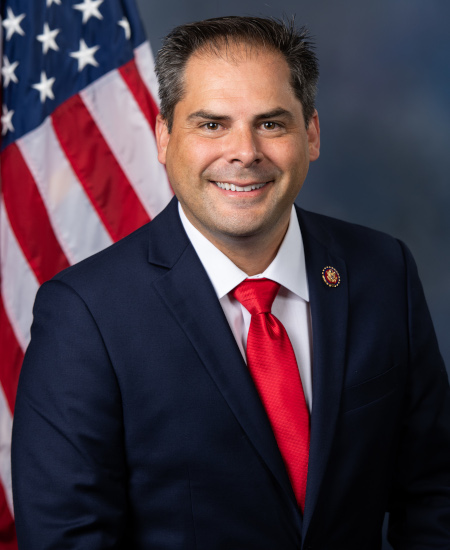
Rep. Mike Garcia
Sponsored bills
Maddy summaryHRES 830 is a non-binding House resolution condemning the Chinese Communist Party for its role in the U.S. fentanyl crisis. It urges the Biden administration to take six specific actions: impose sanctions on Chinese entities supplying fentanyl precursors, designate Chinese financial institutions evading U.S. sanctions, sanction Chinese officials linked to fentanyl trafficking, develop a plan to counter precursor shipments, and add China to a U.S. drug transit country list. The resolution focuses on holding China accountable for inaction on fentanyl precursor production in provinces like Hebei and suspended U.S.-China counternarcotics cooperation. It does not create new law but serves as a policy recommendation to the executive branch.
Maddy summaryThe Combatting Fentanyl Poisonings Act of 2023 authorizes federal grants to state/local law enforcement and nonprofit organizations to address fentanyl-related harms. It provides funding for law enforcement to target social media platforms used for selling controlled substances (including education on counterfeit fentanyl risks) and for nonprofits to run public awareness campaigns about fentanyl dangers, including naloxone training and support for families affected by fentanyl deaths. Grants under section 509(a) are capped at $50,000 per nonprofit, with strict limits prohibiting funds for harm reduction supplies (except naloxone). The bill reserves $10 million for law enforcement grants and $2 million for public awareness grants under this act.
Maddy summaryHRES 771 is a non-binding resolution expressing the U.S. House of Representatives' support for Israel following Hamas' October 7, 2023, attack. It condemns Hamas' actions, affirms Israel's right to self-defense, and calls for the immediate release of hostages. The resolution also urges enforcement of existing laws restricting aid to terrorists and sanctions against Iran for supporting Hamas. It does not create new policies or allocate funds, as it is a symbolic statement of congressional support.
Maddy summaryHRES 768 is a symbolic House Resolution expressing congressional support for Israel following Hamas' October 7, 2023 attacks. It condemns Hamas' actions, reaffirms Israel's right to self-defense, and calls for the immediate release of hostages. The resolution references the U.S. commitment to Israel's security through existing military aid programs, including the 2016 U.S.-Israel Memorandum of Understanding, and emphasizes enforcement of laws like the Taylor Force Act to prevent U.S. aid from reaching terrorist groups. As a symbolic resolution, it does not create new policy but serves as a statement of congressional support for Israel.
Maddy summaryHJRES 11 proposes a constitutional amendment that would limit Members of Congress to serving a maximum of three terms in the House of Representatives and two terms in the Senate. If passed and ratified, it would prevent any member who has already served the maximum terms from running for re-election, including time spent filling vacancies (for more than one year in the House or three years in the Senate). This amendment directly affects current and future members of Congress by changing eligibility rules for re-election. The proposal is currently a joint resolution in the House, requiring ratification by three-fourths of state legislatures to become part of the Constitution.
Maddy summaryHR 5791, the "Define the Mission Act," requires the President to submit a comprehensive strategy report to Congress within 30 days of the bill's enactment, detailing U.S. involvement in the Ukraine conflict. The report must define U.S. national interests in the conflict, set specific objectives with timelines, benchmarks, and resource estimates (including personnel and funding), list expected European NATO security contributions, and assess Russia’s natural gas market impact on resolving the conflict. It mandates the strategy must aim for a Russia-Ukraine cease-fire agreement and explicitly cannot depend on U.S. funding for Ukrainian reconstruction. The report must be unclassified but may include a classified annex for full transparency. This bill establishes a formal process for Congress to review and oversee U.S. policy toward Ukraine.
Employee Business Expense Deduction Reinstatement Act of 2023 This bill reinstates the tax deduction for the itemized miscellaneous expenses of employees performing services in a trade or busines (the deduction is currently suspended for the period beginning in 2018 through 2025). The amount the an employee may take into account in computing the deduction is 85% of unreimbursed food, lodging, travel, or transportation expenses. The bill also lowers the threshold for the deduction to the extent its aggregate amount exceeds 1% (2% under current law).
Maddy summaryHR 5641, the Pay Our Troops Act, ensures military personnel and their support staff continue receiving pay during fiscal year 2024 if Congress fails to pass regular budget appropriations. It appropriates existing Treasury funds to cover pay and allowances for active-duty troops, reserve components, and civilian employees or contractors supporting military operations. The bill automatically terminates on January 1, 2025, or earlier if Congress enacts a regular budget or continuing resolution. This provision directly affects service members, Department of Defense staff, and Coast Guard personnel (when not under the Navy) during budget implementation gaps.
Maddy summaryThis bill establishes special pay rates for wildland firefighters employed by the Forest Service or Department of the Interior. It creates a percentage increase over standard General Schedule base rates (ranging from 1.5% for GS-15 to 42% for GS-1), provides 450% premium pay for days deployed to qualifying wildfire incidents, and requires rest and recuperation leave following incident deployment. These changes apply specifically to firefighters whose duties primarily relate to wildland fires, not structural fires. The bill takes effect on October 1, 2023, and replaces standard pay rates for affected firefighters. Premium pay is not considered part of basic pay for various compensation calculations.