

Maddy summaryHR 7183, the PROTECTS Act of 2024, prohibits federal funding from being used to provide or refer for specific gender transition procedures to individuals under 18. The bill defines prohibited procedures broadly to include surgeries (like hysterectomy, mastectomy, or genital reconstruction), puberty-blocking medications, and hormone treatments administered at supraphysiologic doses. It includes limited exceptions for medically necessary care, such as treating precocious puberty or correcting genetic disorders of sex development. The law directly affects minors seeking gender-affirming medical care covered by federal programs, restricting federal financial support for these services.
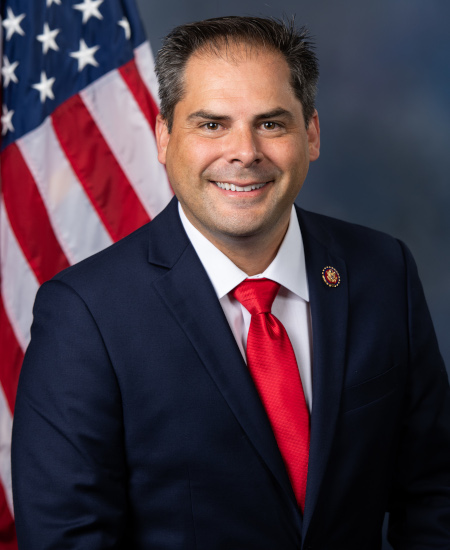
Rep. Mike Garcia
Sponsored bills
Maddy summaryThe Death Tax Repeal Act would eliminate the federal estate tax and generation-skipping transfer tax for estates of people who die on or after the bill's enactment date, and for generation-skipping transfers made after that date. It would also establish a new $10 million lifetime gift tax exemption (adjusted annually for inflation) and replace the existing gift tax rate schedule with a revised structure. These changes would primarily affect high-net-worth individuals and their heirs, as the estate tax and gift tax typically apply to large estates or gifts exceeding the new exemption threshold. The bill's provisions would take effect on the date of enactment, with transitional rules for the year the bill is signed into law.
Maddy summaryThe SAFE HOME Act creates a 25% refundable tax credit for homeowners who make qualifying wildfire mitigation improvements to their primary residence. It covers expenses like installing fire-resistant roofing, clearing flammable vegetation, and adding ignition-resistant exterior features, but excludes government-funded projects. The credit maxes at $25,000 per year and phases out for taxpayers with adjusted gross income over $200,000. The credit applies only to homes in areas with recent federal wildfire disaster declarations or FEMA hazard mitigation assistance, and expires after 2032.
Maddy summaryThe TRANQ Research Act of 2023 requires the National Institute of Standards and Technology (NIST) to coordinate research on illicit drugs containing xylazine, novel synthetic opioids, and other concerning substances. The bill mandates NIST to develop faster detection methods, create data tools for identifying these substances, and consult with agencies like the DEA, CDC, and National Institute on Drug Abuse to establish safe handling practices. NIST must also form partnerships with universities, federal labs, and the private sector to improve detection capabilities. Within one year, NIST must report to Congress on its implementation, and the Comptroller General must conduct a study on federal capabilities to respond to new psychoactive substances, reporting within two years.
Maddy summaryThis bill requires courts to advise defendants convicted of drug offenses involving fentanyl analogues (or similar substances) that caused death about the extreme dangers of illicit drugs, especially when mixed with fentanyl. It establishes that prior convictions for similar drug-related deaths can be used as evidence in subsequent homicide cases. The law also allows courts to admit sworn statements from prior cases across state and federal jurisdictions. This directly affects defendants in drug-related death cases involving fentanyl analogues, excluding minors at the time of the offense.
Maddy summaryThe Elizabeth Dole Home Care Act of 2023 increases the expenditure cap for home- and community-based care for veterans from 65% to 100% of costs, with exceptions for certain cases based on clinical need and geographic factors. It establishes new programs including Veteran-Directed Care, which allows veterans to select and manage their own in-home care services, and Home-Based Primary Care, which provides in-home health care overseen by VA providers. The bill requires improved coordination with existing programs like the Program of All-Inclusive Care for the Elderly (PACE) and mandates a centralized website with information about available services. It specifically targets veterans who would otherwise require nursing home care or face increased risk of hospitalization, and includes provisions to address home health aide shortages through pilot programs.
Maddy summaryThis bill allows ordained ministers, members of religious orders, and Christian Science practitioners who currently have Social Security exemptions to revoke that exemption. They can file an application by the due date of their second tax year after December 31, 2025 (2027), choosing to pay Social Security taxes starting in 2026 or 2027. Once revoked, the exemption cannot be reinstated, and late filings require back payment of taxes for the affected year. The IRS must also create a plan within 90 days to inform clergy about this option.
Maddy summaryHR 6131, the Commercial Space Act of 2023, establishes a new certification system for U.S. commercial space companies to operate spacecraft, replacing some existing licensing requirements. The bill requires companies to submit space debris mitigation plans and liability insurance as part of their certification application, with the Department of Commerce's Office of Space Commerce handling the process within 60 days. The law aims to reduce regulatory burdens while maintaining U.S. compliance with international space law obligations. This certification system directly affects commercial entities seeking to launch or operate spacecraft in outer space.
Maddy summaryHR 6300, the Veterans Education is Timeless Act of 2023, removes expiration dates for all Department of Veterans Affairs (VA) education benefits. It directly affects veterans and their dependents who use programs like the Post-9/11 GI Bill, Survivors' Benefits, and others, allowing them to access education benefits at any time without a deadline. The bill amends multiple sections of Title 38 to state that benefits "shall be afforded... at any time and are not subject to any delimiting date." It also requires the VA to refund veterans for contributions if they apply for a refund, and applies retroactively to all eligible individuals.
Maddy summaryThis bill appropriates $14.3 billion in supplemental security funding to Israel following the October 7, 2023 attacks. The funding includes $4 billion for Iron Dome and David's Sling defense systems, $1.35 billion for the Iron Beam defense system development, and $3.5 billion for foreign military financing. The bill requires regular reporting to Congress on security assistance provided to Israel and designates all funds as "emergency requirements" under federal budget law. It also modifies existing laws to facilitate the transfer of defense articles and services to Israel, aiming to strengthen Israel's defense capabilities against rocket threats.