

Maddy summaryHR 8764, the Clean Hands Firearm Procurement Act, prohibits federal agencies from entering contracts with gun dealers who are identified as "covered firearms dealers" based on firearm tracing data. A dealer becomes "covered" if 25 or more firearms traced to them were recovered within 3 years of a crime during two of the past three calendar years. Federal agencies must then avoid contracting with such dealers for the current year and the two preceding years, with a 180-day implementation period. The law includes a national security waiver for the Defense or Homeland Security Secretaries, requiring immediate notification to congressional judiciary committees. This directly affects federal procurement decisions and gun dealers meeting the specified tracing thresholds.
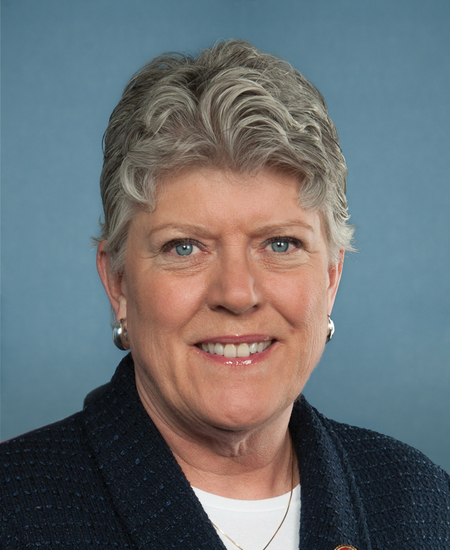
Rep. Julia Brownley
Sponsored bills
Maddy summaryHRES 1299 is a non-binding resolution passed by the U.S. House of Representatives that reaffirms the United States' commitment to the 1994 International Conference on Population and Development (ICPD) Programme of Action, which promotes comprehensive sexual and reproductive health and rights as fundamental human rights. The resolution calls for advancing bodily autonomy, opposing reproductive coercion (such as forced abortion or sterilization), and increasing funding for international family planning programs while ending policies like the global gag rule and Helms Amendment. It does not create new laws but sets a policy direction for U.S. government actions on global health and human rights.
Maddy summaryHR 8732, the Domestic Workers Bill of Rights Act, would establish new labor protections for domestic workers including nannies, housekeepers, and caregivers who work in private homes. The bill requires written agreements between employers and domestic employees, provides earned sick days, ensures fair scheduling practices, and prohibits unfair wage deductions for cash shortages or communications. It also creates a Domestic Employee Standards Board to recommend workplace standards and establishes a National Domestic Employee Hotline for assistance. The bill specifically targets domestic workers who have historically been excluded from labor protections under the Fair Labor Standards Act and Civil Rights Act, benefiting an estimated 2.2 million domestic workers in the U.S. who are disproportionately women of color and immigrants.
Maddy summaryHR 8733, the Child and Animal Abuse Detection and Reporting Act, amends federal law to require the national clearinghouse for child abuse and neglect data to also collect information on animal abuse incidents. Specifically, it adds a new requirement for the clearinghouse to track "the incidence of any such cases related to animal abuse," defined as any act or failure to act causing undue pain, suffering, or death to an animal, regardless of state or local animal cruelty laws. This change directly affects the federal data system and states that report to it, mandating they include animal abuse data in their submissions. The policy shift expands federal data collection to cover animal abuse alongside child abuse, without altering existing state animal cruelty laws.
Maddy summaryThis bill amends federal jury selection laws to explicitly prohibit discrimination based on sexual orientation and gender identity. It updates definitions in Title 28 of the U.S. Code by adding "sexual orientation and gender identity" to the protected characteristics under "sex" and defining key terms like "gender identity" and "sexual orientation." The changes directly affect federal jury pools by requiring courts to consider these factors when selecting jurors and preventing discrimination in the process. The law clarifies that discrimination based on these characteristics - including associations with others who share them - is prohibited during jury selection. This is a concrete policy change to expand anti-discrimination protections in federal jury service.
Maddy summaryThis bill requires gun dealers to provide buyers with specific secure storage information, including how to store firearms unloaded, locked, away from children, and separately from ammunition. It also mandates that dealers stock a variety of secure storage devices (like safes, lock boxes, and trigger locks) rather than just one type. Additionally, the bill creates a $500 tax credit for individuals purchasing "qualified gun safes" designed for secure, authorized-access storage of firearms. The law affects federal firearms licensees (dealers) and firearm buyers directly, with implementation set for six months after enactment.
Maddy summaryHR 2964, the WIPPES Act, requires clear "Do Not Flush" labeling on specific premoistened wipes to prevent wastewater pollution. It directly affects manufacturers, retailers, and sellers (covered entities) of wipes marketed as baby wipes or certain household/personal care wipes containing petrochemical fibers with flush potential. The bill mandates that these products display both the text "Do Not Flush" and a standardized symbol on packaging in highly visible locations meeting specific size and contrast requirements, while banning "flushable" marketing claims. Violations would be enforced by the Federal Trade Commission as deceptive practices, with daily penalties up to $2,500 per violation.
Maddy summaryHR 537 authorizes a Congressional Gold Medal to honor 60 diplomats who saved Jewish lives during the Holocaust by issuing visas and passports against their governments' orders, risking expulsion and personal danger. The medal will be presented to the next of kin of these diplomats, alongside representatives from their home countries, and permanently displayed at the United States Holocaust Memorial Museum. The bill also permits the sale of bronze duplicates to cover production costs, with proceeds going to the U.S. Mint. This legislation recognizes the diplomats' humanitarian actions without creating new government programs or altering existing laws.
Maddy summaryHR 8691, the Restoring Justice for Workers Act, prohibits employers from requiring workers to sign arbitration agreements before any dispute arises (predispute agreements) or retaliating against workers who refuse them. It also sets strict requirements for postdispute arbitration agreements, mandating written consent after a 45-day waiting period, clear disclosure of workers' rights, and proof the agreement wasn't forced. The bill directly affects all workers (including independent contractors) and employers covered under the Fair Labor Standards Act, ensuring collective claims and concerted activity cannot be barred through forced arbitration. Key provisions make predispute arbitration agreements void and require voluntary, informed postdispute agreements with specific safeguards.
Maddy summaryThis bill establishes specific qualifications for marriage and family therapists working within the Veterans Health Administration (VHA) who provide clinical supervision to other therapists. To be eligible for such a position, a therapist must first meet existing qualifications (from the current law) and also either hold a state license authorizing clinical supervision in their state or be designated as an approved supervisor by the American Association for Marriage and Family Therapy (AAMFT). The change directly affects VHA therapists seeking roles that include clinical supervision, ensuring they meet standardized, verifiable credentials. This policy update replaces vague eligibility language with concrete, measurable requirements for these clinical roles.