

Maddy summaryHR 8639, the Warehouse Worker Protection Act, requires employers in covered warehouse facilities (including distribution centers, storage facilities, and delivery services) to provide workers with clear written descriptions of any quotas they're subject to, including how performance is measured and monitored. The bill prohibits quotas that interfere with breaks, safety compliance, or anti-discrimination protections, and mandates that employers provide employee work speed data in human-readable formats. It creates new anti-retaliation protections for workers who exercise these rights or file complaints, and establishes a Fairness and Transparency Office within the Department of Labor to oversee implementation. The act also amends the National Labor Relations Act to explicitly prohibit quotas that discourage workers from exercising their labor rights.
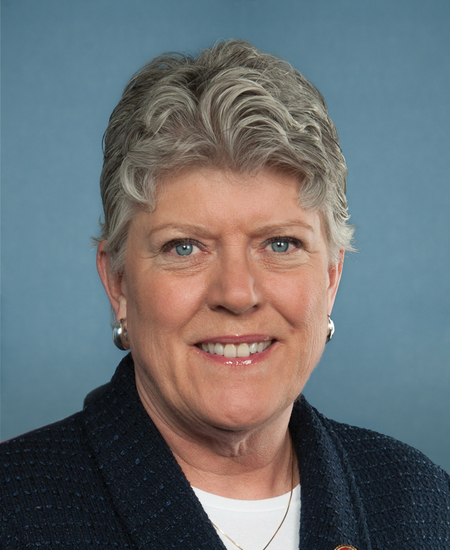
Rep. Julia Brownley
Sponsored bills
Maddy summaryHR 8609, the Supreme Court Ethics and Investigations Act, creates two new offices within the Supreme Court: an Office of Ethics Counsel to advise justices on ethical matters like financial disclosures and gift acceptance, and an Office of Investigative Counsel to review formal ethics complaints. The Ethics Counsel provides biannual training to justices and submits annual reports to Congress on ethics advice given, while the Investigative Counsel handles complaints filed only by specific congressional leaders (e.g., committee chairs, Senate leaders) and can issue subpoenas for investigations. If a complaint is validated, the Investigative Counsel submits a report to the Chief Justice (or senior associate justice if the Chief is the subject) with findings and recommendations, which must be shared with relevant congressional committees. The bill establishes specific qualifications, pay rates ($180,000-$225,000 annually), and term limits for both offices’ staff.
Maddy summaryHR 8617, the Adoptee Citizenship Act of 2024, automatically grants U.S. citizenship to certain internationally adopted individuals who meet specific criteria. It directly affects adoptees adopted by U.S. citizen parents before age 18, who were physically present in the U.S. in legal custody before age 18, never acquired citizenship before the bill's enactment, and were residing in the U.S. on the bill's effective date. For those already in the U.S., citizenship becomes automatic upon meeting these conditions; for those abroad, citizenship is granted upon lawful entry. The bill removes barriers that previously prevented automatic citizenship for these adoptees under prior immigration rules. It requires background checks for visa issuance but exempts applicants from standard inadmissibility grounds.
Maddy summaryHR 1687 names the United States Postal Service facility at 6444 San Fernando Road in Glendale, California, as the "Paul Ignatius Post Office." All official U.S. government references to this location - such as in laws, maps, or documents - will now use the new name. This is a procedural bill with no policy changes beyond the naming designation.
Maddy summaryThis resolution (HRES 1271) is a symbolic gesture expressing the House's support for designating June 7, 2024, as "National Gun Violence Awareness Day" and June 2024 as "National Gun Violence Awareness Month." It does not create new laws or policies but urges the public to wear orange, raise awareness about gun violence, and focus on community safety during summer months when such incidents often increase. The resolution references statistics on gun-related deaths and honors victims like Hadiya Pendleton, who was killed in 2013. It directly affects the public by calling on individuals and communities to participate in awareness activities. This is a non-binding, commemorative measure with no direct legal impact on legislation or regulations.
Maddy summaryThis bill, the GOSAFE Act, prohibits the sale, manufacture, transfer, and possession of gas-operated semi-automatic firearms and large capacity ammunition feeding devices (those holding more than 10 rounds). It defines "gas-operated" firearms as those using gas from fired cartridges to cycle the action, and requires the Attorney General to maintain a list of prohibited firearms. Manufacturers must seek approval for new semi-automatic firearms before selling them to civilians, and the bill creates a fund to support buy-back programs for prohibited firearms and devices. Violations could result in fines up to $5,000 or 12 months in jail, with harsher penalties for those who commit other federal crimes while in possession of prohibited firearms.
Maddy summaryHRES 1260 is a non-binding resolution expressing the U.S. House of Representatives' support for designating May 2024 as "Progressive Supranuclear Palsy Awareness Month." It recognizes progressive supranuclear palsy (PSP) as a rare neurodegenerative disease affecting approximately 30,000 Americans, with no known cure and symptoms including cognitive decline, balance issues, and speech difficulties. The resolution specifically supports raising public awareness, encourages research for better treatments and a cure, and commends efforts by patients, families, and organizations working to improve PSP care. As a symbolic gesture, it does not create new laws or allocate funding but aims to increase visibility for this under-recognized condition.
Maddy summaryThe Disaster Loan Forgiveness Act (HR 8581) cancels or repays part of Small Business Administration (SBA) disaster loans for low-to-moderate-income individuals and small businesses. It applies to borrowers with household income at or below 400% of the federal poverty line (covering 100% loan forgiveness) or between 400% of poverty and $250,000 (covering 50% forgiveness), and to small businesses/nonprofits (up to 50% forgiveness). The bill modifies SBA loan rules to automatically apply these relief percentages based on income and business type. It directly affects SBA disaster loan recipients who meet the income thresholds, reducing their debt without requiring new applications. The policy change specifically targets post-disaster financial relief for vulnerable borrowers.
Maddy summaryThis bill allows counties to directly request federal disaster declarations from the President if their governor fails to do so or excludes them from a state-level request. It establishes new criteria for county requests, requiring consideration of factors like poverty rates, unemployment, community vulnerability, and prior disaster impacts. FEMA must now monitor events affecting underserved communities (e.g., low-income or minority areas) that qualify for aid but lack a gubernatorial request, and incorporate equity metrics like income levels into assistance evaluations. The law also mandates FEMA to review how equity considerations affect aid distribution for vulnerable populations.
Maddy summaryThis bill changes Medicaid rules to exclude small mental health facilities (36 beds or fewer) from the definition of "institution for mental diseases" if they meet specific national standards for care. It directly affects small mental health and substance use disorder treatment centers seeking Medicaid coverage. Facilities must follow evidence-based standards approved by the federal Secretary, covering service types, clinical hours, and staff qualifications. The changes take effect 180 days after the law is signed, applying to state Medicaid plans from that date.