

Maddy summaryThe Dennis and Lois Krisfalusy Act expands eligibility for Department of Veterans Affairs headstones, markers, and burial receptacles by removing a requirement that veterans must have died on or after November 11, 1998. This change allows veterans who died before that date to qualify for these burial items, directly affecting veterans who previously fell outside the eligibility window. The bill also extends a related administrative deadline from October 1, 2024, to October 1, 2034, providing more time for implementation. These provisions aim to broaden access to VA burial benefits for a wider group of veterans and their families.
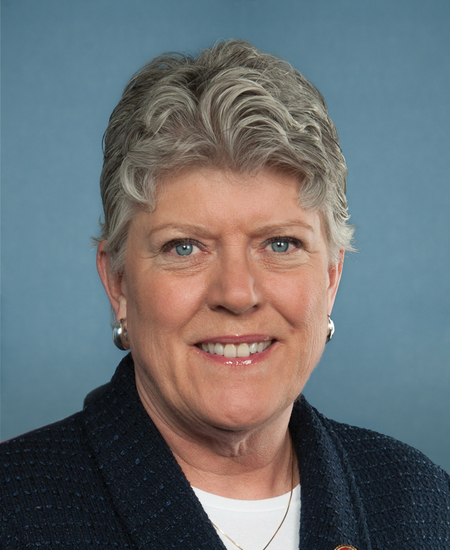
Rep. Julia Brownley
Sponsored bills
Maddy summaryThis bill creates a tax on imported oil and gas (defined as "methane adjustment substances") based on the methane emissions associated with their production in the exporting country. Importers pay the tax, which is calculated by comparing the volume of imported product to the total production in that country, multiplied by the emissions charge a foreign producer would pay under U.S. Clean Air Act rules. It aims to reduce global methane emissions by making high-emission imports more expensive, while encouraging international cooperation with major oil/gas importers to adopt similar measures. The tax applies to sales/use after December 31, 2024, and includes provisions for tracking supply chain emissions and expanding the mechanism to other oil/gas-dependent products.
Maddy summaryThis bill directs the Comptroller General to study how U.S. federal agencies use renewable energy certificates (RECs) to meet clean energy goals. The study will examine how REC demand influences new renewable energy investments, compare the costs and compliance risks of using RECs versus other methods (like power purchase agreements or onsite renewables), and assess expenses for both existing and new renewable projects. The findings will be reported to Congress with recommendations to improve how RECs support federal renewable energy investments. The bill itself does not change agency requirements but aims to inform future policy decisions.
Maddy summaryThis bill (HR 2365, Public Law 118-66) directs the U.S. Department of Health and Human Services (HHS) to establish the National Parkinson’s Project. It requires HHS to create and update a coordinated national plan for preventing, diagnosing, treating, and researching Parkinson’s disease and related disorders (including multiple system atrophy and progressive supranuclear palsy), while coordinating federal research and care efforts across agencies like the NIH, CDC, and VA. The law mandates annual progress assessments, an advisory council with patient advocates and diverse experts, and annual reports to Congress on federal Parkinson’s programs and recommendations for improvement. It affects federal agencies managing Parkinson’s-related programs and aims to improve care coordination and research efficiency for patients and caregivers, with the law sunsetting in 2035.
Maddy summaryHRES 1332 is a symbolic resolution recognizing June as LGBTQIA+ Pride Month. It encourages the celebration of Pride Month to honor the historical struggles and achievements of LGBTQIA+ people in the United States, while acknowledging the ongoing challenges they face. This resolution does not create new laws or policies, but serves as a formal recognition of LGBTQIA+ rights as human rights and highlights their integral role in American history. The resolution was introduced by multiple members of Congress and passed by the House of Representatives.
Maddy summaryThe SAFES Act creates a federal tax credit for individuals who purchase gun safes, allowing them to deduct 90% of the cost, up to $500 per person or $1,000 for joint returns. For purchases made before 2030, any qualifying gun safe qualifies; after 2029, only safes meeting standards set by the Secretary of Health and Human Services (HHS) will be eligible, based on an HHS report required within five years of enactment. The bill prohibits requiring taxpayers to disclose firearm ownership details to claim the credit. This policy directly affects individual firearm owners seeking to reduce tax liability through safe storage purchases.
Maddy summaryHR 8514, the Veteran Education Assistance Adjustment Act, increases the annual stipend for books and educational supplies under the Post-9/11 GI Bill from $1,000 to $1,400 for veterans using these benefits. It also establishes an automatic annual cost-of-living adjustment starting in fiscal year 2025, tying future increases to the difference between two 12-month Consumer Price Index (CPI) periods. This adjustment applies to stipends for books, supplies, equipment, and other educational costs covered under the VA's Post-9/11 Educational Assistance Program. The bill directly affects veterans enrolled in degree or certificate programs who receive education benefits through the VA. The key mechanism ensures the stipend grows with inflation, reducing the financial burden of educational expenses over time.
Maddy summaryThis bill requires the Comptroller General to study menopause care provided by the Department of Veterans Affairs (VA) to women veterans. The study will examine current VA services for perimenopause, menopause, and related conditions, including provider training, diagnosis protocols, access to care, veteran awareness, and care quality. The Comptroller General must issue a report within 18 months, followed by a VA strategic plan within 6 months to improve care based on the findings. The bill directly affects women veterans seeking VA health services related to menopause symptoms but does not change existing benefits or funding.
Maddy summaryThis bill creates a federal framework for "extreme risk protection orders" (ERPOs) that temporarily remove firearms from individuals who pose a risk of harming themselves or others. Family members or law enforcement officers can petition a federal court for a temporary order (up to 14 days) based on probable cause, followed by a hearing within 72 hours to determine if a longer-term order (up to 180 days) is warranted. The bill requires clear and convincing evidence of risk at the hearing and mandates respondents to surrender firearms to law enforcement within 48 hours. It also includes provisions for reporting, training law enforcement on ERPOs, and a federal grant program to support state ERPO implementation, without preempting state laws.
Maddy summaryHRES 1306 is a non-binding resolution expressing congressional support for designating June 21, 2024, as National ASK (Asking Saves Kids) Day. It encourages parents to ask visitors' homes, "Is there a gun in your house?" and "Is it locked and unloaded?" to promote safe gun storage around children. The resolution specifically supports the ASK Campaign, a national initiative run by the Brady Campaign since 2000 that focuses on preventing accidental child firearm injuries through simple safety conversations. This resolution does not create new laws but formally endorses an existing public health awareness effort.