

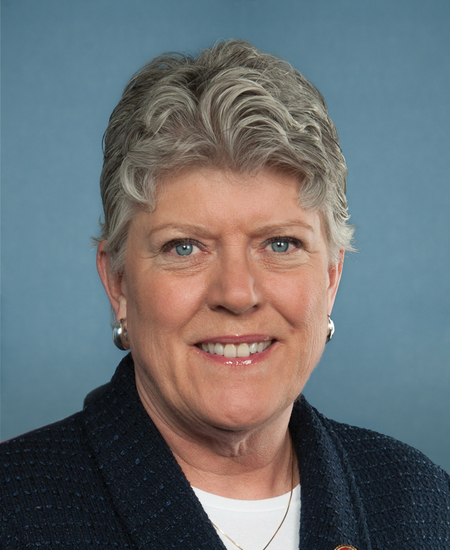
Photo of Julia Brownley
D United States House · District 26 · California

Rep. Julia Brownley

Compare
Total votes
2,837
all sessions
Attendance
98%
63 missed
Near the chamber average
With party
99%
of cast votes
Higher than 96% of chamber peers
Bipartisan score
1%
crosses aisle rarely
Lower than 97% of chamber peers
Sponsored
2,099
bills & resolutions
Higher than 92% of chamber peers
Committees
8
assignments
2,099 bills and resolutions

Sponsored bills

Total
2,099
Primary
170
Co-sponsor
1,929
This page
2,099
matching current filters
Co-sponsor HR 2497
In committee · United States House · Co-sponsor
Abortion Care Awareness Act of 2025

Maddy summaryThis bill directs the U.S. Department of Health and Human Services to launch a national public education campaign about abortion access. The campaign must provide medically accurate information on where to obtain abortion services (including medication abortion), legal rights for out-of-state care, identifying misleading anti-abortion centers, spotting disinformation, and protecting personal health data. It specifically targets underserved communities like people of color, immigrants, LGBTQ+ individuals, rural residents, and those with low incomes, while prohibiting the promotion of misinformation or abstinence-only programs.

In committee Mar 31, 2025 1 co-sponsor
Co-sponsor HR 2502
In committee · United States House · Co-sponsor
Law Enforcement Training for Mental Health Crisis Response Act of 2025

Maddy summaryThis bill establishes a federal grant program to fund mental health crisis response training for law enforcement and corrections officers. It provides up to $10 million annually for state, local, and tribal agencies to cover training costs, including travel and lodging, for officers responding to mental health crises. The training must be evidence-based, developed with healthcare professionals and people with lived mental health experience, and cover de-escalation, empathy, community resources, and safety protocols. Agencies applying must demonstrate current training gaps, officer safety records, and how the training will reduce injuries to officers and the public during mental health emergencies. The grants are supplemental to existing funding and require annual reporting on training participation and outcomes.

In committee Mar 31, 2025 1 co-sponsor
Co-sponsor HR 2487
In committee · United States House · Co-sponsor
Transgender Health Care Access Act

Maddy summaryHR 2487, the Transgender Health Care Access Act, aims to improve access to gender-affirming care for transgender individuals by funding training and education for healthcare providers. The bill provides $10 million annually for medical schools to develop curricula on gender-affirming care and culturally competent treatment, and $15 million annually for grants to train medical residents, nurse practitioners, and community health centers serving transgender patients. It specifically targets rural providers through $5 million annually for collaborative networks to expand care in underserved areas. The legislation requires a report to Congress within two years detailing progress in improving health equity for transgender populations.

In committee Mar 31, 2025 1 co-sponsor
Primary HR 1904
In committee · United States House · Lead sponsor
Improving Coordination of Agriculture Research and Data Act

Maddy summaryThis bill establishes an Agriculture Climate Scientific Research Advisory Committee to develop national research priorities for climate-smart agriculture and standardize data collection protocols, and creates a Rural Climate Alliance Network to connect agricultural producers, researchers, and technical assistance providers. The committee will identify research gaps, develop biennial research agendas, and recommend annual budget priorities for climate research. The network will facilitate sharing of climate data, improve communication about climate risks, and support implementation of climate-resilient practices across the agriculture sector. These changes aim to strengthen coordination of climate-related research, data systems, and technical assistance to better address climate change impacts on farming and rural communities.

In committee Mar 28, 2025 0 co-sponsors
Primary HR 1853
In committee · United States House · Lead sponsor
CALL Act

Maddy summaryThe CALL Act (HR 1853) requires the U.S. Department of Agriculture to conduct a comprehensive study on barriers to conservation practice adoption on leased agricultural land. It examines factors like lease agreements, landowner awareness, and regional differences affecting farmers (who operate leased land but don’t own it) and landowners. The study will analyze existing data, including the TOTAL Survey, and assess how lease structures influence conservation efforts, with special focus on Black, Indigenous, and beginning farmers. The USDA must submit a final report by December 2026 with recommendations for improving conservation participation on leased land. This is a research-focused bill with no immediate policy changes, aiming to inform future USDA actions.

In committee Mar 28, 2025 0 co-sponsors
Primary HR 1854
In committee · United States House · Lead sponsor
Climate Agricultural Conservation Practices Act

Climate Agricultural Conservation Practices Act This bill requires the Natural Resources Conservation Service (NRCS) to consider climate benefits in reviews or revisions of its conservation practice standards. Climate benefits include a reduction in agricultural greenhouse gas emissions, an increase in carbon sequestration, or mitigation against (or adaptation to) increased weather volatility. As background, NRCS administers most of the Department of Agriculture conservation programs, which assist producers and landowners who wish to practice conservation on agricultural lands. The NRCS conservation practice standards provide guidance and set out minimum quality criteria for implementing federally funded conservation practices.

In committee Mar 28, 2025 0 co-sponsors
Co-sponsor HR 1661
In committee · United States House · Co-sponsor
SAFE Act of 2025

Save America's Forgotten Equines Act of 2025 or the SAFE Act of 2025 This bill permanently prohibits the slaughter of equines (e.g., horses and mules) for human consumption. (Current law prohibits the slaughter of dogs and cats for human consumption. This bill extends the prohibition to equines.) Specifically, this bill prohibits a person from knowingly (1) slaughtering an equine for human consumption; or (2) shipping, transporting, possessing, purchasing, selling, or donating an equine to be slaughtered for human consumption or equine parts for human consumption. The bill subjects a violator to a fine. The bill applies to conduct in or affecting interstate or foreign commerce or within the special maritime and territorial jurisdiction of the United States. However, it does not apply to an activity carried out by an Indian for a religious ceremony. As background, in recent years, the appropriations acts have prohibited the Department of Agriculture (USDA) from using federal funds to inspect horses before they are slaughtered for human consumption. Therefore, there are currently no USDA-inspected horse slaughter facilities in the United States.

In committee Mar 28, 2025 1 co-sponsor
Co-sponsor HRES 261
In committee · United States House · Co-sponsor
Recognizing the heritage, culture, and contributions of Latinas in the United States.

Maddy summaryHRES 261 is a symbolic resolution recognizing the heritage, culture, and contributions of Latinas in the United States. It celebrates Latinas' historical and ongoing roles in fields like business, military service, science, arts, and public office, while acknowledging persistent challenges like wage gaps and systemic barriers. The resolution specifically highlights that Latinas make up approximately 1 in 6 U.S. women (31 million people) and emphasizes their economic impact (contributing $1.3 billion to GDP in 2021) and cultural achievements. It does not create new policies or allocate funds but formally honors these contributions and calls for continued efforts to address inequities. This resolution directly affects Latinas as a recognized demographic group within U.S. society.

In committee Mar 27, 2025 1 co-sponsor
Co-sponsor HR 2439
In committee · United States House · Co-sponsor
Support UNFPA Funding Act

Maddy summaryHR 2439 authorizes $50 million for fiscal year 2026 and $55 million for 2027 to fund the United Nations Population Fund (UNFPA), directly supporting its global programs. The bill specifies that these funds will help end preventable maternal deaths, address unmet contraceptive needs, combat gender-based violence, and end harmful practices like child marriage and female genital mutilation. UNFPA operates in over 150 countries, primarily aiding women and girls in developing nations and crisis zones, including those affected by conflict or natural disasters. The bill emphasizes UNFPA’s compliance with U.S. restrictions (not funding abortion) and its role in advancing U.S. strategic interests through voluntary family planning and reproductive health services.

In committee Mar 27, 2025 1 co-sponsor
Co-sponsor HR 2428
In committee · United States House · Co-sponsor
Wildfire Homeowner Relief Act

Maddy summaryThis bill mandates a 12-month study by the Government Accountability Office (GAO) to analyze the feasibility of a federal program that would buy properties from homeowners in high-risk wildfire areas before or after disasters. The study must examine existing buyout programs, develop definitions for terms like "disadvantaged community," and recommend how to implement such a program, including land use after buyouts and eligibility mapping. It does not create a new program or provide immediate relief but requires a report to Congress within one year detailing findings and cost analysis. The bill directly affects future policy decisions, not current homeowners.

In committee Mar 27, 2025 1 co-sponsor
Showing 501 to 510 of 2,099 bills
Previous 1 … 50 51 52 … 210 Next