

Maddy summaryThe John R. Lewis Voting Rights Advancement Act of 2023 would strengthen the Voting Rights Act of 1965 by updating the criteria for which states and localities must obtain federal preclearance before changing voting practices. It would establish new standards for proving vote dilution and vote denial by requiring courts to consider historical discrimination, racial polarization in voting, and whether voting practices disproportionately burden minority voters. The bill would also require states and localities to provide public notice of voting changes and share demographic data about polling locations. These changes would primarily affect jurisdictions with a history of voting rights violations, aiming to prevent discriminatory voting practices before they take effect.
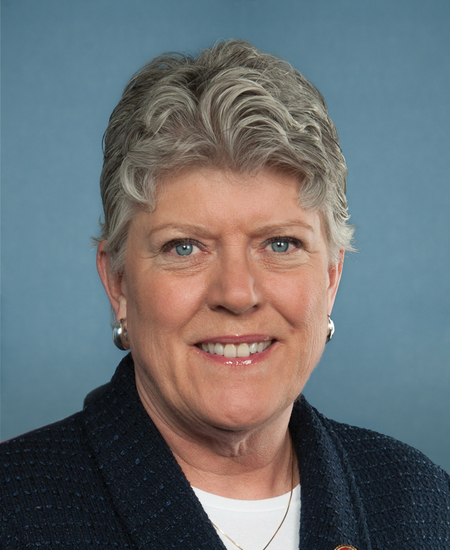
Rep. Julia Brownley
Sponsored bills
Maddy summaryHR 5467, the Gun Suicide Prevention Act, requires firearm manufacturers and retailers to attach a specific label to all firearms and their packaging. The label must be in both English and Spanish, display the National Suicide Prevention Lifeline phone number, and include a yellow triangle with an exclamation mark before the hotline message. This mandate applies to all firearms sold in the U.S. and takes effect two years after enactment. Violations would be enforced under the Consumer Product Safety Act, subjecting offenders to existing penalties for safety violations. The bill directly affects firearm sellers by requiring this standardized suicide prevention information on all products.
Maddy summaryThe Humane Cosmetics Act of 2023 bans cosmetic animal testing in the United States, prohibiting companies from conducting or contracting such testing after its enactment (effective 1 year later). It also bans selling or transporting cosmetics developed using animal testing conducted after that date within U.S. interstate commerce. The law directly affects cosmetic manufacturers, retailers, and suppliers operating in the U.S. market, requiring them to use non-animal testing methods for safety evaluations. Exceptions exist for foreign regulatory requirements or when no alternative testing methods are available for specific ingredients.
Maddy summaryHRES 688 is a non-binding House resolution expressing support for designating September 16-23, 2023, as "National Estuaries Week." It highlights estuaries' critical role in the U.S. economy, noting they support 39% of jobs, 47% of economic output, and 68% of commercial fish by value. The resolution aims to raise public awareness about estuaries' ecological importance - such as providing habitat for fish, flood control, and carbon sequestration - and encourages efforts to protect and restore them. It does not create new laws or funding but symbolically acknowledges ongoing conservation work by federal, state, and community partners.
Maddy summaryThe No Tax Breaks for Union Busting Act would deny tax deductions for employers who attempt to influence employees' decisions about union activities, including unfair labor practices like firing workers for organizing or using captive audience meetings. It targets expenses related to union-busting tactics, such as consulting fees and other costs used to sway workers' opinions about collective bargaining. Employers would need to report these expenses on tax returns and would no longer be able to deduct them from taxable income. The bill aims to prevent employers from using tax-deductible expenses to influence union elections, aligning with existing rules that deny tax deductions for political spending. It would apply to expenses incurred in taxable years beginning 240 days after enactment.
Maddy summaryHRES 682 is a symbolic resolution designating the week beginning September 11, 2023, as "National Hispanic-Serving Institutions Week." It does not create new programs or funding but formally recognizes Hispanic-Serving Institutions (HSIs) for their role in educating Hispanic students and underserved communities. The resolution calls for the public to observe the week with ceremonies during Hispanic Heritage Month, highlighting HSIs' contributions to higher education access and economic mobility. This resolution affects no specific entities or policies, as it is purely commemorative.
Maddy summaryHR 5433, the Child Care Stabilization Act, provides $16 billion annually from 2024 to 2028 to stabilize the child care sector through grants administered by the Health and Human Services Secretary. It directly affects licensed child care providers by offering stable funding to cover operating costs, while supporting higher wages for early educators without raising family fees. Key provisions include expanding access to high-quality, affordable care - especially for infants/toddlers, rural communities, and children with disabilities - and addressing shortages in underserved areas. The funding builds on existing American Rescue Plan resources, aiming to strengthen the child care workforce and increase available options for working families.
Maddy summaryHRES 306 directs the House Chief Administrative Officer to study ways to make live House floor proceedings more accessible to people without cable or satellite TV. The study must identify streaming options (like apps or platforms), assess potential partnerships with broadcasters, and evaluate how smart TVs could improve access. It requires a public report within six months detailing these findings for the House Administration Committee. This resolution affects individuals who rely on free or alternative TV services, not the general public. It is a procedural measure focused on improving access, not changing voting rules or policies.
Pollution-Free Aviation Sites Act or the PFAS Act This bill directs the Department of Transportation (DOT) to provide grants to Part 139 airports for a per- and polyfluoroalkyl substances (PFAS) replacement program for firefighting foams and related equipment. (Part 139 airports include airports that serve scheduled and unscheduled air carrier operations for aircraft with more than 30 seats or serve scheduled air carrier operations for aircraft with 10-30 seats.) DOT must establish the PFAS replacement program within 90 days of the Department of Defense approving a fluorine-free firefighting agent (i.e., an agent that does not contain any PFAS). Under the program, DOT must reimburse eligible airport sponsors for the reasonable and appropriate costs associated with the one-time initial acquisition of fluorine-free firefighting alternatives, the disposal of PFAS products as part of the transition to a fluorine-free agent, cleaning or disposal of existing equipment or components, and replacement of aircraft rescue and firefighting equipment. DOT must prioritize grants of up to $2 million to replace aircraft rescue and firefighting vehicles at specific smaller airports (i.e., Index A airports) that do not have existing capabilities to produce fluorine-free foam. DOT must determine the eligibility of costs payable under the PFAS replacement program by taking into account all engineering, technical, and environmental protocols and generally accepted industry standards that are developed or established for fluorine-free foams.
Maddy summaryThis bill increases penalties for companies causing oil spills in offshore waters. It directly affects offshore oil operations and polluters by raising minimum civil fines and doubling maximum criminal penalties, including higher fines and longer prison terms for violations. Key changes include raising minimum civil penalties from "up to" amounts to "at least" those amounts, and doubling all maximum fines (e.g., from $2,500 to $5,000 per violation) and prison sentences under the Federal Water Pollution Control Act. The bill modifies specific sections of the law to strengthen enforcement against offshore pollution.