Maddy summaryHR 5351, the Nationwide Right to Unionize Act, repeals a federal law (Section 14(b) of the National Labor Relations Act) that currently allows states to enact "right-to-work" laws. This would prevent states from banning agreements requiring workers to pay union dues as a condition of employment, directly affecting workers in states with such laws. The bill's key mechanism is overriding state right-to-work statutes with federal law, ensuring union security agreements remain enforceable nationwide.
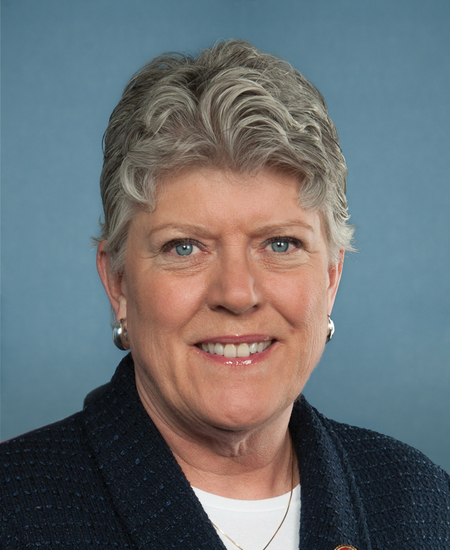
Rep. Julia Brownley
Sponsored bills
Maddy summaryThis bill renames a U.S. Postal Service facility in Escondido, California, to honor Captain E. Royce Williams. It officially designates the building at 1157 West Mission Avenue as the "Captain E. Royce Williams Post Office Building" and updates all federal references to the location to use this new name. The change affects only official documents and records, not the building's operations or services. This is a purely administrative naming action with no policy or funding implications.
Lead Endangers Animals Daily Act of 2023 or the LEAD Act of 2023 This bill directs the Department of the Interior to issue final regulations prohibiting the discharge of any firearm using ammunition other than nonlead ammunition on all lands and waters under the jurisdiction and control of the U.S. Fish and Wildlife Service. Interior must establish and annually update a list of nonlead ammunition. The prohibition does not apply to (1) a government official or agent who is carrying out a statutory duty unrelated to the management of wildlife; (2) a state, local, tribal, or federal law enforcement officer, or the agent of such an officer, who is carrying out a statutory duty; or (3) an active member of the U.S. military who is carrying out official duties. A person that knowingly violates the prohibition may be assessed a civil penalty by Interior of (1) no more than $500 for the first violation, and (2) no less than $1,000 or more than $5,000 for a second or subsequent violation.
Maddy summaryThis bill extends the existing "safe-to-report" policy for minor misconduct to the U.S. Coast Guard Academy. It amends a 2021 defense law to explicitly include the Academy under the policy, which allows service members to report certain minor issues (like harassment or misconduct) without facing disciplinary action for the initial minor offense. The change directly affects Coast Guard Academy cadets and staff by providing them the same reporting protections already available at other military service academies. This is a procedural update to existing law, not a new policy.
Maddy summaryThe School Food Modernization Act (HR 4483) provides funding to help schools upgrade food service infrastructure and equipment. It offers loan guarantees (up to 80% of loan amounts) and grants ($35 million annually) for local schools, tribal organizations, and consortia to improve kitchens, storage facilities, and durable equipment (like stoves or refrigerators valued over $500). The bill also allocates $10 million yearly for competitive grants to train school food staff on meeting nutrition standards, administered by third-party organizations like colleges or nonprofits. These provisions directly support schools serving meals under federal programs, aiming to enhance food safety, efficiency, and nutritional quality.
Advancing Automation Research and Development in Agriculture Act This bill directs the Department of Agriculture (USDA) to establish within USDA a stand-alone competitive research and extension grant program to increase the competitiveness of specialty crops in the United States through the advancement and acceleration of mechanization and automation. Specialty crops are fruits and vegetables, tree nuts, dried fruits, and horticulture and nursery crops (including floriculture). The bill provides specified funds for FY2024 and each succeeding year to carry out the program. The grant program includes projects that create or improve cost-effective technologies to reduce a specialty crop grower's manual labor requirements and increase the efficiency of crop production, resource management, harvesting, processing, post-harvest technologies, and packaging; increase adoption of mechanization and automation technologies; and accelerate automation and mechanization through prototype development, in-field trial testing, ongoing industry engagement, and rapid commercialization. Entities eligible for the grant program are federal agencies, national laboratories, colleges and universities, research institutions and organizations, private organizations and corporations, state agricultural experiment stations, individuals, and organizations representing specialty crop growers.

Maddy summaryThe Strengthening America's Families Act of 2023 establishes a federal program to create infant-toddler court teams that coordinate courts, child welfare agencies, and community services to support infants, toddlers, and their families experiencing or at risk of maltreatment. The bill authorizes $25 million annually for grants to states to establish or enhance these teams, requiring them to meet specific criteria including trauma-informed practices, preventing foster care placements, and addressing developmental needs. States receiving grants must work with a National Infant-Toddler Court Team Resource Center that provides technical assistance and collects data on program effectiveness. This program directly affects young children in the child welfare system, their families, and state child welfare systems by promoting coordinated, community-based support to improve outcomes.
Providing Essential Temporary Shelter Assistance For Emergencies Act of 2023 or the PETSAFE Act of 2023 This bill directs the Federal Emergency Management Agency (FEMA) to establish a pilot program to provide grants for mobile pet shelters during emergencies and major disasters. FEMA may provide funds to state, local, and tribal governments to establish a new pet shelter site that is a mobile unit, which may be a companion animal mobile equipment trailer, to be used in case of evacuation due to emergencies and major disasters. FEMA's authority to approve projects under this bill shall cease on January 1, 2029.
Maddy summaryHR 4249, the VET PFAS Act, provides healthcare benefits to veterans and their families exposed to PFAS chemicals at military bases. Veterans who served at contaminated bases (including through water sources) and developed specific conditions like testicular cancer, ulcerative colitis, or pregnancy-induced hypertension become eligible for VA healthcare without needing medical proof of cause. Family members who lived at these bases or were in utero during such residence also qualify for covered conditions. The bill creates a "presumption of service connection" for these illnesses, meaning the VA assumes PFAS exposure caused the condition. It requires annual VA reports tracking beneficiaries, denials, and conditions treated.
Maddy summaryThis bill authorizes increased federal funding for early childhood special education programs under the Individuals with Disabilities Education Act (IDEA). It specifically restores funding for Part C (services for infants and toddlers with disabilities) and Section 619 (preschool programs for children with disabilities ages 3-5) by setting annual appropriations from $503 million to $1.22 billion for Section 619 and $932 million to $1.73 billion for Part C through 2028. These funds would directly support states in delivering high-quality early intervention and preschool services to children with disabilities and their families. The bill aims to reverse decades of reduced per-child funding, which had fallen significantly from historical highs.