

Maddy summaryHR 3868, the Enhanced Background Checks Act of 2025, modifies federal firearm background check procedures to address delays. It requires federal firearms licensees to wait 10 business days after a background check query if the system doesn’t immediately flag a transfer, unless the buyer submits an electronic petition confirming they aren’t prohibited from owning firearms. The petition process includes a 10-day response deadline from the Attorney General, with licensees allowed to proceed if the system remains silent after 10 days. The bill also mandates detailed annual reports from the FBI on petition delays and GAO reports on implementation, focusing on how these changes affect firearm transfers to prohibited individuals.
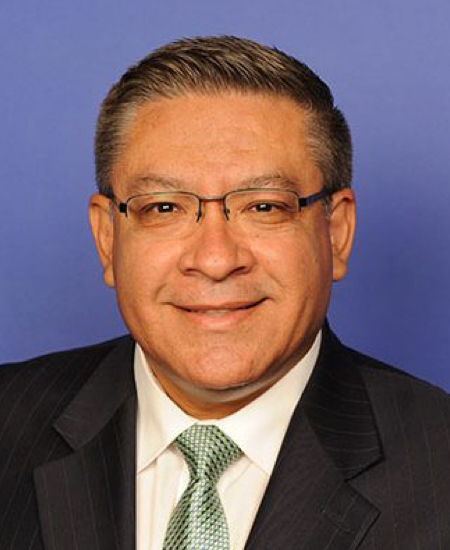
Rep. Salud O. Carbajal
Sponsored bills
Maddy summaryHR 2035, the American Cargo for American Ships Act, requires the U.S. Department of Transportation to ensure that when procuring, contracting for, or financing cargo transportation with federal funds, 100% of the gross tonnage for dry bulk carriers, dry cargo liners, and tankers must be transported on U.S.-owned commercial vessels - provided those vessels are available at fair and reasonable rates. This directly affects government procurement of cargo transportation using federal funds, mandating U.S. vessel use where commercially available. The key mechanism is a new requirement for the Secretary of Transportation or recipients of federal financing to take "necessary and practicable steps" to meet this 100% U.S. vessel standard for eligible cargo. The bill does not apply to all government shipping but specifically targets federally financed or procured cargo transportation.
Maddy summaryThis bill requires the Defense Department to study whether a grant program could help communities near military rocket launch sites reduce noise impacts from launches. The study must examine costs, eligible facilities (like schools and hospitals built before 2026), and specific noise metrics such as decibel levels and sonic boom effects. It will recommend how to implement potential noise mitigation measures and improve community outreach. The study is due within one year and does not create a new program - it only sets up research to inform future decisions. It directly affects local governments and residents near launch ranges like Cape Canaveral and Vandenberg.
Maddy summaryThe Housing Stability for Dreamers Act prevents federal housing programs from denying mortgage insurance or loans to individuals based on their DACA (Deferred Action for Childhood Arrivals) status. It amends key housing laws - including the National Housing Act, Rural Housing Service programs, Fannie Mae, Freddie Mac, and VA loans - to prohibit eligibility restrictions tied to DACA status for single-family mortgages. The bill defines a "DACA recipient" as someone granted deferred action under the 2012 Department of Homeland Security memo. This directly affects DACA recipients seeking home loans through these federally backed programs, ensuring they cannot be denied based solely on immigration status.
Maddy summaryHR 3794 grants Juana Maria Flores permanent resident status (lawful permanent residence) under U.S. immigration law, bypassing standard eligibility requirements. The bill waives grounds for removal or denial of admission based on her past immigration records and requires her to file an application within two years of the bill's enactment. It also mandates a one-time reduction in the visa number available for her country of birth and prevents her relatives from gaining preferential immigration status. This is a specific, one-time exception for an individual, not a broad policy change.
Farmers Feeding America Act of 2025 This bill reauthorizes The Emergency Food Assistance Program (TEFAP), increases funding for the program, and provides additional delivery options for geographically isolated states (i.e., Hawaii, Alaska, Puerto Rico, the Northern Mariana Islands, the U.S. Virgin Islands, and Guam). TEFAP is a federal program that helps supplement the diets of people with low income by providing them with emergency food assistance at no cost. Through TEFAP, the Department of Agriculture (USDA) purchases a variety of commodities and makes those food products (e.g., canned, frozen, dried, and fresh fruits and vegetables, eggs, meat, dairy, and whole-grain and enriched grain products) available to state distributing agencies. The bill increases funding for purchasing commodities under the program. Further, the bill directs USDA to coordinate with geographically isolated states to (1) establish alternative delivery options for allocated commodities, and (2) allow for the states to order commodities through the USDA Department of Defense Fresh Fruit and Vegetable Program. USDA may also provide geographically isolated states the ability to directly purchase domestically grown food in lieu of receiving a portion of the commodities. Under this option, USDA may distribute as cash to the state up to 20% of the cash value of the commodities that are allocated to the state under TEFAP. Further, USDA may consider additional factors beyond lowest price in determining winning bids for contracts for fresh produce packages (including product variety and transportation distance).
Maddy summaryHR 3757, the Pride In Mental Health Act of 2025, provides $20 million annually (2026-2030) to fund grants for mental health services targeting LGBTQ+ youth, including nonbinary, intersex, and Two Spirit youth, and their families/caregivers. The bill mandates grantees to provide trauma-informed care, cultural competency training, school bullying prevention guidelines, and evidence-based practices while explicitly prohibiting the use of funds for conversion therapy or its promotion. It also requires the federal government to restore mental health reports on LGBTQ+ youth, conduct a national survey measuring mental health distress, and produce a report on mental health services for LGBTQ+ youth in foster care. The law directly affects these youth populations by expanding access to tailored mental health resources and data collection, with funding administered through the Substance Abuse and Mental Health Administration.
Maddy summaryHR 3762, the Supporting Healthy Moms and Babies Act, requires health insurance plans to cover comprehensive prenatal, childbirth, neonatal, perinatal, and postpartum care without cost-sharing (like copays or deductibles). It mandates specific services including ultrasounds, care for pregnancy loss, delivery support, and postpartum behavioral health services for conditions like diabetes or hypertension. The bill applies to group health plans and individual insurance policies starting after the law's enactment, covering both biological mothers and legal parents who did not give birth. This policy directly affects insured individuals seeking maternal and newborn healthcare, ensuring these essential services are fully covered under existing Affordable Care Act requirements.
Maddy summaryHR 649, the Whole Milk for Healthy Kids Act of 2025, amends the National School Lunch Act to allow schools participating in the program to offer students both organic and non-organic whole milk, in addition to reduced-fat, low-fat, and fat-free options. Key provisions include clarifying that milk fat in whole milk should not count toward saturated fat limits for meal compliance, prohibiting schools from purchasing milk from Chinese state-owned enterprises, and ensuring schools cannot be barred from offering the full range of milk types listed. The bill directly affects public and private schools serving the National School Lunch Program by expanding their milk options for students. It focuses on concrete policy changes to dietary offerings and sourcing restrictions within the school nutrition program.
Maddy summaryHRES 473 is a non-binding House resolution calling on the U.S. government to urgently use diplomatic efforts to ensure food and medical supplies reach civilians in Gaza. It directly addresses the needs of approximately 2.2 million Palestinians facing acute hunger, including 10,000 children identified with acute malnutrition, following a border blockade that blocked aid from March to May 2025. The resolution specifically urges the White House and State Department to secure "immediate and secure delivery and disbursement" of aid and a lasting end to the conflict, citing collapsed bakeries, exhausted food rations, and a near-total health system collapse.