

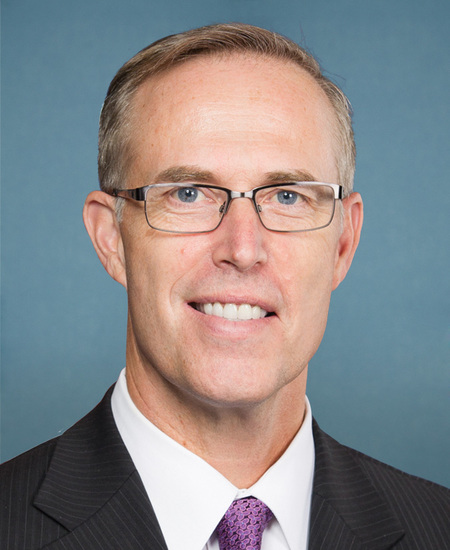
Photo of Jared Huffman
D United States House · District 2 · California On the 2026 ballot

Rep. Jared Huffman

Compare
Total votes
2,837
all sessions
Attendance
98%
65 missed
Near the chamber average
With party
97%
of cast votes
Near the chamber average
Bipartisan score
1%
crosses aisle rarely
Near the chamber average
Sponsored
1,767
bills & resolutions
Higher than 82% of chamber peers
Committees
5
assignments
1,767 bills and resolutions

Sponsored bills

Total
1,767
Primary
103
Co-sponsor
1,664
This page
1,767
matching current filters
Co-sponsor HR 1096
Signed into law · United States House · Co-sponsor
250th Anniversary of the United States Marine Corps Commemorative Coin Act

Maddy summaryThis bill directs the U.S. Treasury to mint commemorative coins marking the Marine Corps' 250th anniversary in 2025. It authorizes three coin types: $5 gold coins (max 50,000), $1 silver coins (max 400,000), and half-dollar coins (max 750,000), with surcharges of $35, $10, and $5 respectively. The surcharge proceeds will fund the Marine Corps Heritage Center's educational programs, with no net cost to taxpayers as the Treasury must recover all minting costs through the surcharges. The coins can only be issued during 2025, and the Treasury must ensure all costs are covered before distributing funds to the Heritage Foundation.

Signed into law Jul 26, 2023 1 co-sponsor
Co-sponsor HR 4893
In committee · United States House · Co-sponsor
Scientific Integrity Act

Maddy summaryHR 4893, the Scientific Integrity Act, requires federal agencies that fund, conduct, or oversee scientific research to adopt policies preventing political interference in science. The bill mandates these agencies to prohibit suppression or distortion of research findings, establish Scientific Integrity Officers to enforce policies, and implement training and reporting systems. It directly affects scientists and engineers employed by or contracted with covered agencies (like the EPA or NIH), ensuring their work remains free from political pressure. Key mechanisms include annual public reporting on misconduct complaints, whistleblower protections, and requiring scientific conclusions to be based on evidence, not ideology.

In committee Jul 25, 2023 1 co-sponsor
Co-sponsor HR 4889
In committee · United States House · Co-sponsor
Raise the Wage Act of 2023

Maddy summaryHR 4889, the Raise the Wage Act of 2023, would gradually increase the federal minimum wage for most workers to $15.50 per hour by 2027, with specific annual targets: $9.50 starting in 2023, rising to $11.00 after one year, $12.50 after two years, and $15.50 after four years. It would also phase out the separate lower minimum wage for tipped employees (starting at $6.00/hour) by aligning their pay with the regular minimum wage by 2028, while requiring employers to let workers keep all tips. The bill includes similar phased increases for workers under 20 and transitions toward fairer wages for workers with disabilities under special certificates, which would sunset after 2028. Future annual increases after 2028 would tie the minimum wage to the median hourly wage of all workers.

In committee Jul 25, 2023 1 co-sponsor
Co-sponsor HR 4888
In committee · United States House · Co-sponsor
Polluter Portfolio Disclosure Act

Maddy summaryThis bill requires large U.S. insurance companies (those collecting $100 million+ in annual premiums) to annually disclose all investments and insurance policies tied to fossil fuel industries - including coal, oil, gas extraction, and related infrastructure. Companies must report specific details like maximum financial exposure and policy amounts for each fossil fuel-related investment and policy. Federal agencies will use this data to monitor financial risks to consumers and the broader economy, and the public will access a searchable annual database of all disclosed information. The law directly affects major insurers regulated by the Federal Insurance Office, mandating transparency around their fossil fuel ties.

In committee Jul 25, 2023 1 co-sponsor
Co-sponsor HR 4157
In committee · United States House · Co-sponsor
Not Just a Number Act

Maddy summaryHR 4157, the "Not Just a Number Act," requires the Department of Veterans Affairs (VA) to produce annual reports on veteran suicide rates and their connection to VA healthcare and benefits. The reports must break down suicide rates by age, gender, and race, and examine how engagement with VA services (like Vet Centers, healthcare enrollment, benefits claims, and housing loans) correlates with suicide trends. The bill also mandates a VA toolkit for state/local coroners to improve veteran suicide death reporting, and a study on creating a dedicated VA suicide prevention office. These measures aim to standardize data collection and identify effective prevention strategies, directly affecting VA operations, congressional oversight, and veteran care systems.

In committee Jul 25, 2023 1 co-sponsor
Co-sponsor HR 4769
In committee · United States House · Co-sponsor
PFAS Alternatives Act

Maddy summaryHR 4769, the PFAS Alternatives Act, funds research and training to develop PFAS-free turnout gear for firefighters. It authorizes $25 million annually (2024-2028) for grants to eligible organizations to research, develop, and test next-generation gear without per- and polyfluoroalkyl substances (PFAS), which are linked to firefighter cancer risks. The bill requires partnerships with firefighting organizations to ensure research translates into practical training and gear care guidance, including decontamination protocols. It also allocates $2 million yearly for training programs on proper gear use and maintenance, aiming to reduce exposure to hazardous chemicals during fire operations.

In committee Jul 21, 2023 1 co-sponsor
Co-sponsor HR 4785
In committee · United States House · Co-sponsor
Fracturing Responsibility and Awareness of Chemicals Act of 2023

Maddy summaryHR 4785, the Fracturing Responsibility and Awareness of Chemicals Act of 2023, requires oil and gas companies conducting hydraulic fracturing operations to disclose detailed chemical information to state agencies or the EPA. Specifically, companies must provide a pre-operation list of chemicals (including CAS numbers and volumes) and a post-operation report of chemicals actually used, which states must then make publicly available online. The bill also mandates immediate disclosure of proprietary chemical formulas to medical personnel during emergencies, without requiring prior written consent. It explicitly excludes natural gas storage from the definition of hydraulic fracturing. This bill directly affects oil and gas operators and state environmental agencies managing disclosure requirements.

In committee Jul 21, 2023 1 co-sponsor
Co-sponsor HR 4774
In committee · United States House · Co-sponsor
Empowering Resilient Communities Act

Maddy summaryThis bill amends the Robert T. Stafford Disaster Relief Act to define "high need communities" as small areas (under 10,000 people) with high disaster risk, not already covered by existing programs. It requires FEMA to issue guidance on extreme temperature events within one year and mandates that state and local hazard mitigation plans include resilience goals, address disparities in underserved communities, and integrate nature-based solutions. The bill also allows communities meeting advanced building codes to use disaster funds for resilience projects and directs FEMA to provide technical assistance for implementing these plans. These changes primarily affect small, high-risk communities and state/local governments managing disaster recovery funds.

In committee Jul 21, 2023 1 co-sponsor
Co-sponsor HR 4782
In committee · United States House · Co-sponsor
CLOSE Act

Maddy summaryThis bill, the CLOSE Act (HR 4782), removes a loophole that allowed oil and gas facilities to aggregate emissions from multiple sources when calculating pollution levels under federal law. It requires the EPA to add hydrogen sulfide - a pollutant linked to health harm - directly to the list of hazardous air pollutants within 180 days of the bill becoming law. The EPA must then, within a year, define specific categories of oil and gas wells and other sources that emit hydrogen sulfide. This change directly affects oil and gas operators by subjecting hydrogen sulfide emissions from their facilities to stricter federal pollution controls.

In committee Jul 21, 2023 1 co-sponsor
Co-sponsor HR 4778
In committee · United States House · Co-sponsor
FRESHER Act of 2023

Maddy summaryThe FRESHER Act of 2023 requires the Secretary of the Interior to study stormwater runoff impacts from oil and gas operations on environmental contamination and groundwater resources. The study must analyze measurable contamination levels, groundwater conditions, and aquifer vulnerability to contamination in affected areas. The Secretary must complete the study and submit a report to Congress within one year of the bill’s enactment. This bill does not impose new regulations on the oil and gas industry but mandates a federal review to inform future environmental policy decisions.

In committee Jul 21, 2023 1 co-sponsor
Showing 781 to 790 of 1,767 bills
Previous 1 … 78 79 80 … 177 Next