

Maddy summaryHR 5004, the Southwestern Oregon Watershed and Salmon Protection Act of 2023, permanently withdraws specific federal lands in Curry and Josephine Counties, Oregon, from mining, development, and public land sales to protect watersheds and salmon habitats. The bill applies to lands depicted on two Bureau of Land Management maps (Hunter Creek/Pistol River and Rough and Ready/Baldface Creeks) and blocks all future mineral leasing, mining claims, and land disposal on these areas. Existing recreational uses like fishing, hunting, and forest management remain permitted on the withdrawn lands. The maps defining the affected areas must be publicly available within 30 days of the bill's enactment.
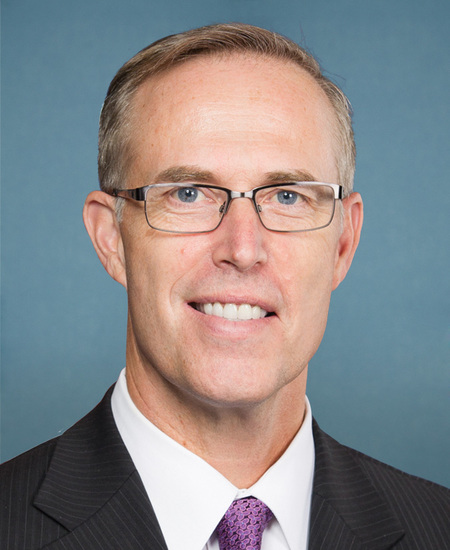
Rep. Jared Huffman
Sponsored bills
Maddy summaryHR 4963, the Tax Fairness for Workers Act, would restore tax deductions for certain employee expenses. It creates an above-the-line deduction for union dues and expenses paid by wage-earning employees, and allows miscellaneous itemized deductions for other work-related expenses (like uniforms or supplies) that were previously disallowed after 2017 tax law changes. These provisions directly affect employees who pay union dues or incur qualifying job-related costs. The bill amends specific sections of the Internal Revenue Code to make these deductions available for taxable years beginning after December 31, 2022. It does not change tax rates or provide new benefits, only reinstating previously eliminated deductions for eligible workers.
Maddy summaryThe Rebuild America's Schools Act of 2023 creates a $20 billion annual federal grant program to fund long-term improvements to public school facilities across the United States. It requires states to prioritize school districts serving high-poverty students (with high percentages of students eligible for free/reduced lunch) and those with deteriorating infrastructure, while mandating that recipient schools develop 10-year facilities master plans. The bill specifies that funds must be used for construction, renovation, and modernization projects that improve energy efficiency, address environmental health hazards (including lead, asbestos, and poor air quality), and ensure school safety, while requiring the use of American-made materials for construction projects.
Protect Innocent Victims Of Taxation After Fire Act This bill excludes from gross income, for income tax purposes, any amount received after 2019 and before 2026 by an individual taxpayer as a qualified wildfire relief payment. The bill defines such payment as compensation for expenses or losses incurred as a result of a federally declared forest or range fire disaster.
Maddy summaryHR 4965, the Kimberly Vaughan Firearm Safe Storage Act, requires the Attorney General to create voluntary best practices for safe firearm storage in homes, businesses, vehicles, and other locations within 180 days of enactment, with public input. Starting January 1, 2025, firearm manufacturers must include a "SAFE STORAGE SAVES LIVES" notice with each new handgun, rifle, or shotgun, directing buyers to the public website with these guidelines. The bill also establishes a $10 million annual grant program for states and tribes to fund public programs distributing safe firearm storage devices (like locked containers) and requires grantees to use at least 75% of funds for these programs. It does not mandate storage for individuals but provides resources and information to promote safer practices.
Maddy summaryHRES 578 is a non-binding House resolution calling for the immediate release of Eyvin Hernandez, a U.S. citizen and Los Angeles County public defender wrongfully detained by Venezuela since March 2022. The resolution urges U.S. officials, including the President and Secretary of State, to press Venezuela for his release and condemns Venezuela’s practice of detaining U.S. citizens for political purposes. It specifically references Hernandez’s wrongful detention without evidence or fair trial, noting his status as a Department of State-designated wrongfully detained individual. The resolution expresses support for Hernandez and other Americans detained abroad, without creating new legal requirements or funding.
Nonrestrictive Offshore Wind Act or the NOW Act This bill repeals certain requirements that the Department of the Interior must meet before issuing a lease for offshore wind development. Under the Inflation Reduction Act of 2022, Interior may not issue a lease unless (1) an offshore oil and gas lease sale has been held in the year prior to issuing the lease, and (2) Interior offers a specified minimum acreage for offshore lease sales in the previous year. The bill repeals those requirements.
Comprehensive Legislation for Expanding and Advancing Nonrestrictive Energy Act or the CLEAN Energy Act This bill repeals certain requirements that the Department of the Interior must meet before issuing an onshore wind or solar right-of-way for wind or solar energy development on federal land. Under the Inflation Reduction Act of 2022, Interior may not issue a right-of-way for such development unless (1) an onshore oil and gas lease sale has been held in the 120 days prior to issuing the right-of-way, and (2) Interior offers a specified minimum acreage for oil and gas lease sales in the previous year. The bill repeals those requirements.
Maddy summaryHR 4900, the Fair College Admissions for Students Act, bans colleges receiving federal financial aid from favoring applicants based on family connections to donors or alumni. Specifically, it amends the Higher Education Act to prohibit institutions from giving preferential treatment in admissions to students whose parents or relatives donated money to the school or are alumni. This applies to all colleges participating in federal student aid programs under the Higher Education Act. The rule takes effect for the second award year starting after the bill's enactment date.
Maddy summaryThis bill would impose a progressive wealth tax on high-net-worth individuals and certain trusts, targeting those with substantial assets above a defined threshold. The tax would be calculated on the net value of taxable assets exceeding a threshold amount (1,000 times the greater of $50,000 or median household wealth), with rates increasing from 2% to 8% as asset value rises. The bill includes specific provisions for trusts, deceased individuals, non-residents, and expatriates, and would require new information reporting from financial institutions to enforce the tax. It would apply to calendar years beginning after the bill's enactment date. The legislation defines "taxable assets" as all property minus debts, with certain exclusions for assets under $50,000.