

Maddy summaryThe PTO Act establishes a standard for paid annual leave, requiring most employers to provide employees with 1 hour of paid leave for every 25 hours worked, up to a maximum of 80 hours per 12-month period. It directly affects private sector employees and certain government workers, including those at the Government Accountability Office, Library of Congress, and federal agencies covered under the Congressional Accountability Act. The bill prohibits employers from interfering with employees' use of leave for any reason, requires clear notice of leave policies, and protects employees from retaliation for taking leave. It includes enforcement mechanisms through the Department of Labor, allowing employees to file complaints or lawsuits for violations of their leave rights. The Act takes effect 180 days after enactment, with specific provisions for collective bargaining agreements.
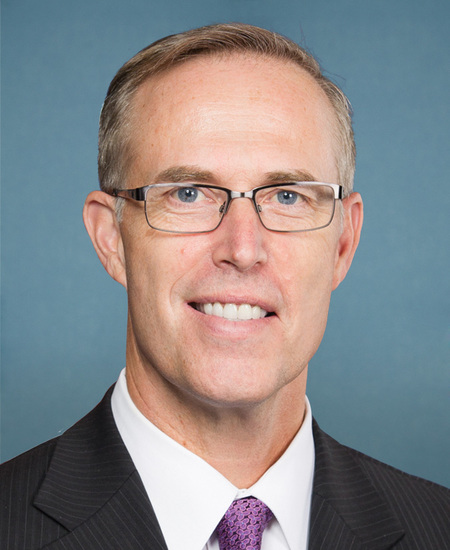
Rep. Jared Huffman
Sponsored bills
Maddy summaryThe Stateless Protection Act of 2024 would create "stateless protected status" for noncitizens in the United States who are stateless (not recognized as citizens by any country). The bill would allow these individuals to apply for protection from deportation, employment authorization, travel documents, and adjustment to lawful permanent resident status (a green card). It establishes a process for determining statelessness, requiring the Department of Homeland Security to consider evidence from various sources including international organizations and foreign governments. The legislation directly affects approximately 218,000 stateless people living in the U.S., who currently face barriers to work, education, healthcare, and travel due to their legal status. The bill also includes provisions for preventing statelessness internationally and updating U.S. laws to prevent future cases of statelessness.
Maddy summaryHCONRES 99 is a symbolic congressional resolution honoring Wadee Alfayoumi, a 6-year-old Palestinian-American boy murdered in a hate crime on October 14, 2023, after being stabbed 26 times by a perpetrator who made anti-Muslim and anti-Palestinian remarks. The resolution recognizes Congress's condemnation of hate crimes, Islamophobia, and anti-Palestinian discrimination, while affirming the United States' "zero tolerance" for such violence. As a procedural resolution (not a law), it does not create new policies but formally honors Wadee and his family, emphasizing the need to reject dehumanizing rhetoric targeting religious or ethnic groups.
Maddy summaryHR 7634, the Plastic Pellet Free Waters Act, prohibits plastic pellets and pre-production plastic materials from being discharged into water through wastewater, spills, or runoff from specific facilities. It directly affects plastic polymer production facilities, plastic molding and forming facilities, and any point source (like packaging or transport operations) handling plastic pellets. The bill requires the EPA to issue a final rule within 60 days of enactment banning these discharges and updating all relevant wastewater, stormwater, and performance standards in permits and regulations. This creates a legal requirement for facilities to prevent plastic pellet pollution in waterways, targeting a major source of ocean plastic pollution.
Maddy summaryHRES 1074 is a symbolic House resolution reaffirming congressional support for a two-state solution to the Israel-Palestine conflict. It explicitly states the House supports Israel's right to exist as a Jewish, democratic state and recognizes Palestinians' right to sovereignty through a separate state. The resolution identifies a two-state solution as the best path to lasting peace and condemns efforts opposing this approach. As a non-binding resolution, it does not create new law or policy but formally expresses the House's position on this issue. It was introduced by multiple House members on March 12, 2024.
Maddy summaryHR 7629, the Protect Our Letter Carriers Act of 2024, allocates $1.4 billion annually (2025-2029) to the U.S. Postal Service for high-security collection boxes and replacing physical universal mailbox keys with electronic versions, directly affecting USPS operations and letter carriers. It requires the Attorney General to appoint specialized prosecutors in each district to coordinate investigations and prosecutions of postal-related crimes, such as assaults on carriers or mail theft. The bill also mandates the U.S. Sentencing Commission to adjust guidelines so that assaults or robberies against postal employees are treated with the same severity as assaults against law enforcement officers. These provisions aim to enhance safety through infrastructure upgrades, improved prosecution, and stricter sentencing for crimes targeting postal workers.
Maddy summaryThis bill establishes a Federal Advisory Panel to analyze climate change risks to federal retirement investments and advise on transitioning toward low-carbon portfolios. It directly affects the Federal Retirement Thrift Investment Board (which manages retirement funds for over 5 million federal employees) by requiring the panel to assess fossil fuel investments, examine other pension funds' climate strategies, and produce a report within one year. Key mechanisms include creating a new "Climate Choice Stock Index Fund" that excludes fossil fuel companies (if the Board determines fossil fuel investments aren't financially sound), and mandating annual climate cost reports from the Federal Reserve and SEC. The bill focuses on aligning retirement fund investments with climate risk management while maintaining financial responsibility, without mandating immediate divestment.
Maddy summaryHR 886, the Save Our Seas 2.0 Amendments Act, updates administrative and structural provisions of the Marine Debris Foundation and its programs. It clarifies that "tribal organization" refers to entities defined under the Indian Self-Determination Act, enabling direct tribal participation in marine debris initiatives. The bill modifies board appointment rules (requiring Commerce Secretary approval for some roles), reclassifies the Foundation as a corporation, and sets a 24-month limit on using federal funds for salaries. It also expands eligible grant recipients to include Indian tribes, international NGOs, and foreign governments, while requiring the Foundation to develop tribal outreach best practices. These changes streamline operations and broaden collaboration without altering core marine debris reduction programs.
Maddy summaryThe ZEVs Act of 2024 requires automakers selling over 100 new passenger vehicles annually in the U.S. to gradually increase sales of zero-emission vehicles (ZEVs), starting with 43% of new passenger vehicle sales in 2027 and reaching 100% by 2035. Manufacturers must meet these targets using a credit system: they earn credits for each ZEV sold or can purchase credits from others, with unused credits bankable for up to five years. The bill sets annual, increasing percentage targets (e.g., 51% in 2028, 88% in 2033) and imposes civil penalties for noncompliance, including fines equal to twice the value of missing credits. After 2035, manufacturers must sell only ZEVs, with the EPA enforcing these requirements through penalties and potential injunctions.
Maddy summaryHR 7518, the SUN Act, streamlines the approval process for placing specific infrastructure in highway rights-of-way. It directs that electric vehicle charging stations, renewable energy facilities, electrical transmission lines, and broadband infrastructure be treated as "covered facilities" under existing federal regulations for highway accommodation. This means states can approve these projects under current rules (Section 109(l) of Title 23 U.S. Code) without needing separate federal permits. The bill directly affects infrastructure developers and state transportation departments by simplifying deployment along federal-aid highways.