

Maddy summaryHR 6195, the Wildland Firefighter Fair Pay Act, modifies federal pay rules for wildland firefighters and related personnel employed by the Forest Service, Department of the Interior, and National Weather Service. It establishes that premium pay earned during wildfire suppression activities (excluding prescribed fires) will be disregarded when calculating total pay for certain pay limits, preventing these employees from exceeding the Executive Schedule Level II pay cap. The bill requires the Secretaries of Agriculture, Interior, and Commerce to submit a hiring plan by March 2024 to ensure sufficient staffing without triggering pay caps. The changes take effect in January 2024 for most provisions and October 2023 for premium pay adjustments.
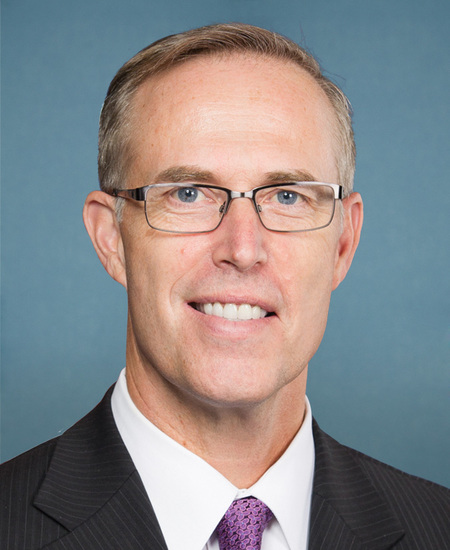
Rep. Jared Huffman
Sponsored bills
Maddy summaryHR 6148, the Advancing Tribal Parity on Public Land Act, requires federal agencies to consult with Native American tribes before selling public land that contains culturally significant sites. The bill creates a "tribal right of first refusal," allowing tribes with cultural or historical connections to the land to purchase it at fair market value within 60 days of notification. If multiple tribes bid, the sale is deferred for up to 180 days to allow for negotiation, and land purchased by tribes must be held in trust by the Department of the Interior. The bill defines "cultural sites" to include sacred sites, historic properties, and traditional gathering areas, and amends federal land management laws to require tribal consultation in land disposal decisions. This legislation directly affects Native American tribes with connections to specific public lands and federal agencies managing those lands.
Maddy summaryThe Tribal Cultural Areas Protection Act would establish a system to permanently protect Tribal cultural sites on public land by designating them as Tribal cultural areas, directly affecting Indian Tribes, federal land management agencies (Interior and Agriculture), and the public. Federal agencies must manage these areas in consultation with Tribal commissions, limiting new development that would disturb the land while preserving existing traditional practices like religious ceremonies and gathering of medicinal plants. The law requires management plans that incorporate Native knowledge and traditional practices, with special protections for sacred sites including restrictions on public disclosure of their locations. This bill ensures existing treaty rights are preserved while preventing commercial development that would harm cultural resources, without affecting existing water rights or federal environmental laws.
Maddy summaryThe Connect the Grid Act modifies federal energy regulations to improve grid connectivity, primarily affecting ERCOT (Texas' grid) and neighboring transmission organizations like SPP and MISO. It repeals exemptions for ERCOT under the Federal Power Act and establishes minimum power transfer requirements between ERCOT and other grids (e.g., 4.3-12.6 gigawatts to SPP). The bill requires joint planning by grid operators to build or upgrade transmission facilities by 2035, prioritizing grid-enhancing technologies, existing infrastructure corridors, environmental justice communities, and renewable energy access. Projects must follow environmental reviews under NEPA and the Endangered Species Act, with mandatory community outreach to tribal, Indigenous, and low-income groups.
Climate and Health Protection Act This bill provides statutory authority for the Climate and Health Program within the Centers for Disease Control and Prevention.
Maddy summaryThis bill establishes new federal performance measures requiring states to reduce transportation-related greenhouse gas emissions, decrease vehicle miles traveled, and improve transit accessibility. It directly affects states and metropolitan areas receiving federal transportation funds, mandating analysis of projects that increase traffic capacity and demonstrating cost-effectiveness compared to public transit alternatives. States failing to meet emissions targets face penalties requiring them to allocate more federal funds toward emissions-reducing projects like transit expansion and active transportation infrastructure. The bill also creates national standards for measuring transit accessibility, stop distance, and mode share to improve public transportation access and usage.
Maddy summaryThis bill establishes the Caribbean and Latin America Maritime Security Initiative to combat illegal, unreported, and unregulated (IUU) fishing in the region. It requires cooperation between the Departments of Defense, Homeland Security, and State to strengthen maritime security partnerships with Caribbean and Latin American countries. The initiative focuses on enhancing partner countries' capabilities for fisheries management, promoting vessel tracking systems on fishing vessels, and documenting unauthorized fishing activities. The bill also authorizes sanctions against foreign entities involved in IUU fishing, including blocking property, denying U.S. entry, and prohibiting access to U.S. ports. These measures aim to protect marine resources, support sustainable fisheries, and uphold international maritime law.
Maddy summaryHR 7127, the FAIR Act, establishes pay adjustments for federal employees in 2025. It increases base pay by 4% for most federal workers under statutory pay systems and for "prevailing rate" employees (like those in specific geographic areas), while raising locality pay rates by 3.4%. The bill directly affects all federal employees receiving pay under these systems, as it modifies their 2025 salary calculations. These changes are based on statutory formulas under Title 5 of the U.S. Code, with no new policy mechanisms beyond the specified percentage increases. The adjustments apply to pay rates in effect as of the end of fiscal year 2024.
Maddy summaryThe SWIMS Act of 2024 bans the captivity of orcas, beluga whales, false killer whales, and pilot whales for public display in the United States. It prohibits exporting, importing, or taking these animals for display - except for relocation to a sanctuary meeting specific welfare standards or release into the wild. The bill also makes it illegal to breed these species for public display. This directly affects marine parks and aquariums that currently display these animals, preventing them from acquiring new animals for exhibits or breeding them for that purpose.
Maddy summary# Summary of the Clean Electricity and Transmission Acceleration Act of 2023 This comprehensive legislation establishes significant reforms across environmental policy, energy infrastructure, and community engagement frameworks. Key provisions include: 1. **Environmental Justice Framework**: - Creates an Office of Environmental Justice and External Civil Rights at EPA - Establishes a White House Environmental Justice Interagency Council - Prohibits disparate impact discrimination under Title VI of the Civil Rights Act - Requires community impact reports for Federal actions affecting environmental justice communities 2. **NEPA Reforms**: - Mandates 90-day public comment periods for environmental justice communities - Requires translation of documents into languages spoken by 5%+ of affected communities - Requires assessment of cumulative impacts, including historical pollution - Requires climate change impact assessments using social cost of carbon - Establishes searchable digital archives of NEPA documents 3. **Community Engagement Requirements**: - Creates "Senior Community Engagement Officers" and "Tribal Community Engagement Officers" at all federal agencies - Requires community benefits agreements for major projects - Establishes grants for capacity building in environmental justice communities - Creates an E-NEPA permitting portal for public access to documents 4. **Energy Policy Provisions**: - Includes reforms for FERC (Federal Energy Regulatory Commission) environmental justice liaison - Establishes requirements for intervenor funding at FERC - Contains provisions for transmission planning and infrastructure 5. **Tribal Consultation**: - Strengthens tribal consultation requirements for projects affecting tribal lands - Requires government-to-government relationships with tribal nations The legislation represents a significant shift toward integrating environmental justice considerations throughout the federal permitting and review process, with specific requirements for meaningful community engagement, transparency, and consideration of cumulative impacts on vulnerable populations. It also establishes new funding mechanisms and administrative structures to support these environmental justice goals.