

Judicial Ethics and Anti-Corruption Act of 2022 This bill makes various changes to the federal framework governing judicial ethics. Among the changes, the bill prohibits federal judges and Supreme Court Justices from owning individual stocks and securities; requires the Judicial Conference of the United States to issue regulations restricting the solicitation or acceptance of gifts in connection with a private judicial seminar; expresses the sense of Congress that the Code of Conduct for U.S. Judges shall apply to Supreme Court Justices; requires federal judges and Supreme Court Justices to report on each association or interest that would require recusal, including any financial interest of a spouse or minor child who resides in the household; and establishes a committee to review complaints against the Supreme Court.
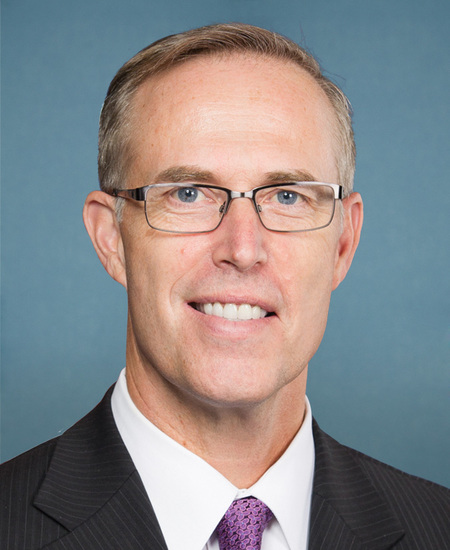
Rep. Jared Huffman
Sponsored bills
Oil and Gas Industry Antitrust Act This bill requires the Federal Trade Commission to investigate and report on whether the price of gasoline is being manipulated by reducing refinery capacity or by any other form of market manipulation. The report must include a long-term strategy for the commission and Congress to address manipulation of oil and gas markets during times of national or international crisis or emergency.
Latonya Reeves Freedom Act of 2022 This bill prohibits government entities and insurance providers from denying community-based services to individuals with disabilities that require long-term service or support that would enable such individuals to live in the community and lead an independent life. Specifically, these entities may not discriminate against such individuals in the provision of community-based services by such actions as imposing prohibited eligibility criteria, cost caps, or waiting lists or failing to provide a specific community-based service. Additionally, community-based services must be offered to individuals with such disabilities prior to institutionalization. Institutionalized individuals must be notified regularly of community-based alternatives. The bill requires the Department of Justice to issue regulations requiring government entities and insurance providers to offer community-based long-term services to individuals with such disabilities who would otherwise qualify for institutional placement. Government entities must ensure sufficient availability of affordable, accessible, and integrated housing that is not a disability-specific residential setting or a setting where services are tied to tenancy. Regulations shall also (1) require government entities and insurance providers to perform self-evaluation on current services, policies, and practices and concerning compliance with requirements of this bill; and (2) require government entities to submit a transition plan. The bill provides funds for FY2022 for the Department of Health and Human Services to provide technical assistance with respect to transition plans. The bill allows civil actions by individuals subjected to, or about to be subjected to, a violation of its requirements.
Schedules That Work Act This bill provides employees with the right to request changes to their work schedules related to the number of hours they are required to work or be on call, the location of the work, the amount of notification about work schedule assignments, and fluctuations in work hours. Employers must negotiate in good faith with employees who make such requests and comply with certain work schedule notice and split shift pay requirements for retail, food service, cleaning, hospitality, or warehouse employees.
This bill creates a private right of action for individuals harmed by violations of the Federal Trade Commission's Franchise Rule. The rule requires franchisors to disclose certain relevant information to prospective franchisees.
Climate Resilience Workforce Act This bill sets forth provisions to establish a climate resilience workforce, a national climate resilience action plan, an Office of Climate Resilience within the White House, and related efforts and entities.
Maddy summaryThis bill grants a federal charter to National American Indian Veterans, Incorporated, a nonprofit organization serving American Indian veterans. It formalizes the group’s structure, requiring it to maintain tax-exempt status while advocating for veterans’ needs with specific prohibitions (e.g., no stock, dividends, or loans to members). The charter mandates annual reports to Congress detailing the organization’s activities but does not create new benefits or services for veterans. It directly affects the organization and the American Indian veterans it represents, ensuring its operations align with federal nonprofit standards.
Comprehensive Addiction Resources Emergency Act of 2021 This bill establishes programs, grants, and other activities to address substance use disorders. Specifically, the Department of Health and Human Services (HHS) must establish a program for purchasing and distributing opioid overdose reversal drugs for states and Indian tribes. HHS must also award grants for and otherwise support addressing substance use, particularly in states, tribes, territories, and localities with disproportionately high drug overdose rates; increasing access to preventive, medical, recovery, and related services; developing innovative models of delivering treatment and harm reduction services; and expanding the treatment capacity of Medicaid providers. In addition, HHS must issue model standards of care for treatment services and recovery residences and may award grants for training health care professionals. The bill also supports prevention and treatment services for workers, addiction and pain management research, and data collection on substance use disorders. Further, dispensers, distributors, and manufacturers of schedule II controlled substances (e.g., oxycodone), with the exception of opioid treatment programs, must certify that they maintain effective drug diversion controls. Violators are subject to specified civil and criminal penalties. Collected penalties shall be used for the grant programs and other substance use disorder activities established under the bill.
Repeal Existing Policies that Encourage and Allow Legal HIV Discrimination Act of 2022 or the REPEAL HIV Discrimination Act of 2022 This bill addresses federal and state laws, policies, and regulations that may burden people living with HIV/AIDS. Specifically, the bill directs the Department of Justice (DOJ), the Department of Health and Human Services (HHS), the Department of Defense (DOD), and the White House Office of National AIDS Policy to initiate a national review of federal (including military) and state laws, policies, regulations, and judicial precedents and decisions regarding criminal and related civil commitment cases involving people living with HIV/AIDS. DOJ must transmit to Congress and make publicly available the results of such review with related recommendations. The White House Office of National AIDS Policy must also develop and publicly release guidance to assist states with handling relevant cases. The office, DOJ, HHS, and DOD must transmit to the President and Congress any proposals necessary to implement adjustments to federal laws, policies, or regulations. This bill shall not be construed to discourage the prosecution of individuals who act with the intent to do harm to another individual by intentionally transmitting HIV.
Bringing an End to Harassment by Enhancing Accountability and Rejecting Discrimination in the Workplace Act or the BE HEARD in the Workplace Act This bill expands protections against discrimination and harassment in the workplace and raises the minimum wage for tipped employees. Specifically, the bill (1) makes it an unlawful employment practice to discriminate against an individual in the workplace based on sexual orientation, gender identity, pregnancy, childbirth, a medical condition related to pregnancy or childbirth, or a sex stereotype; and (2) provides a statutory definition for what constitutes workplace harassment. Further, these protections apply to all workplaces, regardless of size, and to all workers, including independent contractors, interns, volunteers, and trainees. The bill prohibits employers from entering into contracts or agreements with workers that contain certain nondisparagement or nondisclosure clauses and prohibits certain predispute arbitration agreements and postdispute agreements. It also establishes grant programs to (1) prevent and respond to workplace discrimination and harassment, (2) provide legal assistance for low-income workers, and (3) establish a system of legal advocacy in states to protect the rights of workers. The bill further provides employees the right to retain their tips and it increases, in specified annual increments, the minimum wage for tipped employees to match the federal minimum wage for nontipped employees. Additionally, the bill requires the Equal Employment Opportunity Commission to provide specified training and resource materials, establish and convene a harassment prevention task force, and establish an Office of Education and Outreach with regard to prohibited discrimination and harassment in employment. The bill also requires specified studies, reports, and research on prohibited workplace harassment.