

Frank Harrison, Elizabeth Peratrovich, and Miguel Trujillo Native American Voting Rights Act of 2021 This bill addresses the voting rights of Native American and Alaska Native voters and voting access on tribal lands. The bill includes provisions expanding the types of facilities that can be used as voter registration agencies; increasing polling site accessibility, including by expanding early in-person voting and providing ballot drop boxes; providing enforcement power to citizens and attorneys general; requiring approval for actions like moving a polling place; validating certain tribal identification for voting or registering to vote; permitting voters to designate another individual to return a ballot on their behalf; and expanding requirements for bilingual voting accessibility. In addition, the bill establishes a Native American voting task force grant program for the purpose of increasing voter outreach, education, registration, turnout, and accessibility for Native American communities. The bill also directs the Government Accountability Office to study and report on (1) the prevalence of nontraditional or nonexistent mailing addresses among Indians, members of tribes, and individuals residing on Indian lands; and (2) the alternatives for removing barriers to voter registration, receipt of voter information and materials, and receipt of ballots.
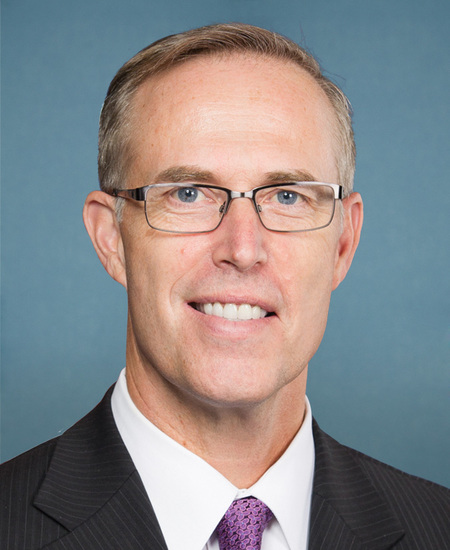
Rep. Jared Huffman
Sponsored bills
Supreme Court Ethics Act This bill establishes a new statutory requirement for the Judicial Conference of the United States to issue a judicial code of conduct for judges and justices of U.S. courts, including Justices of the Supreme Court. Currently, the Judicial Conference issues a code of conduct for judges of U.S. courts (but not for Justices of the Supreme Court).
Daniel Anderl Judicial Security and Privacy Act of 2021 This bill generally prohibits federal agencies and private businesses from publicly posting the personally identifiable information (e.g., home addresses) of federal judges and their immediate family members. It also (1) requires information to be removed upon written request from the federal judge concerned, (2) prohibits data brokers from purchasing or selling such information, and (3) establishes programs to protect such information at the state and local level and to enhance security for judges.
3D Printed Gun Safety Act of 2021 This bill makes it unlawful to intentionally publish digital instructions for programming a three-dimensional printer to make a firearm.
Bankruptcy Venue Reform Act of 2021 This bill limits where a non-individual debtor (e.g., a corporate debtor) may file for bankruptcy. Specifically, these debtors must file in the district court for the district in which the principal place of business or principal assets of the debtor are located. Such a debtor may also file in a district where there is a pending bankruptcy case concerning an affiliate that has a certain level of control or ownership of the debtor (e.g., if the affiliate is a controlling shareholder of the debtor), if that pending case is in a proper venue under this bill. Under current law, these debtors may also file where they are domiciled (i.e., incorporated) or where there is a bankruptcy case pending concerning an affiliate, general partner, or partnership. For certain debtors who are issuers of securities, their principal place of business is defined in the bill as the address of the entity's principal executive office as provided in specified Securities and Exchange Commission filings.
Disarm Hate Act The bill expands the categories of persons who are prohibited from receiving or possessing a firearm. Specifically, it prohibits firearm sale or transfer to and receipt, possession, shipment, or transport by a person (1) who has been convicted of a misdemeanor hate crime, or (2) who has received an enhanced hate crime misdemeanor sentence.
Greater Leadership Overseas for the Benefit of Equality Act of 2021 or the GLOBE Act of 2021 This bill contains provisions related to (1) the protection of LGBTQI individuals globally; and (2) immigration protections for vulnerable individuals. The bill establishes (1) an interagency group to respond to urgent threats to LGBTQI people in foreign countries, and (2) a permanent Special Envoy for the Human Rights of LGBTQI Peoples in the Department of State. The President shall impose visa-blocking sanctions on foreign persons responsible for violating the human rights of individuals based on sexual orientation, gender identity, or sex characteristics. The State Department shall establish the Global Equality Fund to provide assistance to nongovernmental organizations working to advance and protect human rights. The U.S. Agency for International Development shall establish the LGBTQI Global Development Partnership to work with the private sector and nongovernmental organizations to support LGBTQI rights. The bill removes prohibitions against providing foreign assistance to nongovernmental organizations that offer certain medical services (e.g., abortion-related services) using non-U.S. government funds. The bill contains several immigration-related provisions, such as those establishing that persecution based on sexual orientation or gender identity may form the basis of an asylum request, allowing certain applicants to file asylum claims more than a year after their arrival in the United States, including a permanent partnership between two partners as a marriage for immigration law purposes, providing for free counsel in certain immigration proceedings, and granting U.S. citizenship to a child born abroad through assistive reproductive technology from a U.S. citizen who is the child's nonbiological parent.
United States-Cuba Relations Normalization Act This bill repeals the trade embargo on Cuba and other provisions restricting trade and travel to Cuba. The bill also (1) removes restrictions on certain transactions related to trademarks used in connection with a confiscated business or asset, (2) extends nondiscriminatory trade treatment to Cuban products, and (3) prohibits and rescinds limits on remittances to Cuba. The President may, in relation to Cuba, impose new export controls and exercise powers related to declared national emergencies. The bill authorizes common carriers to provide telecommunications services between the United States and Cuba. Travel by U.S. citizens and residents to Cuba may not be regulated or prohibited if such travel would be lawful in the United States. The President shall take all necessary steps to engage with Cuba to (1) negotiate settlements relating to claims that Cuba had taken the property of U.S. nationals, and (2) secure the protection of internationally recognized human rights.
Requirements, Expectations, and Standard Procedures for Effective Consultation with Tribes Act or the RESPECT Act This bill establishes tribal consultation procedures for federal agencies. Specifically, the bill requires federal agencies to consult with tribal governments (1) before undertaking any proposed federal activity or finalizing any federal regulatory action that may have a tribal impact, and (2) for all activities that would affect any part of federal land sharing a border with Indian land. Tribal impact refers to any federal action that may have an impact on tribal governments, including tribal cultural practices and tribal treaty-protected rights. Agencies must prepare tribal impact statements to identify potential tribal impacts of a proposed activity or action. Agencies must also make a good faith effort to identify areas that contain sacred sites important to tribal governments. The bill further outlines consultation requirements, including outreach and meeting arrangements. In general, the consultation shall conclude only upon the execution of a memorandum of agreement between the agency and the tribal government or the members of a designated tribal leader task force. Next, the bill requires agencies to take certain actions during the decision stage for a proposed activity (e.g., public comment) and for a regulatory action. Agencies must recognize and respect tribal self-government and sovereignty and grant tribal governments maximum discretion in the administration of federal statutes and regulations. Tribal governments may seek judicial review of a determination of an agency under this bill if the tribal government has exhausted all other administrative remedies.
Neighbors Not Enemies Act of 2021 This bill repeals provisions authorizing the President to apprehend and remove from the United States the citizens of a particular nation, if the United States has declared war against that nation or that nation has threatened an invasion against the United States.