

Asunción Valdivia Heat Illness and Fatality Prevention Act of 2022 This bill directs the Occupational Safety and Health Administration to promulgate a standard that requires employers to implement certain measures for protecting workers from heat stress and related illnesses or injuries. Heat stress refers to the load of heat that a person experiences due to sources of heat or heat retention (including metabolic heat, environmental factors, and clothing or personal protective equipment) or the presence of heat in a work setting. Further, if an employer cannot reduce exposure to heat stress below hazardous levels through engineering controls (e.g., heat shields and insulation) or personal protective equipment (e.g., heat reflective clothing), the employer must implement a program that mitigates such exposure through access to appropriate hydration and cool-down spaces, acclimatization policies, and periodic paid rest breaks. Additionally, the bill establishes requirements concerning judicial review, implementation, enforcement, recordkeeping, and whistle-blower protections related to the standard. The bill also requires the Department of Labor to include questions about heat-related illness and injury in the National Agricultural Workers Survey (an employment-based, random-sample survey of U.S. crop workers that collects demographic, employment, and health information).
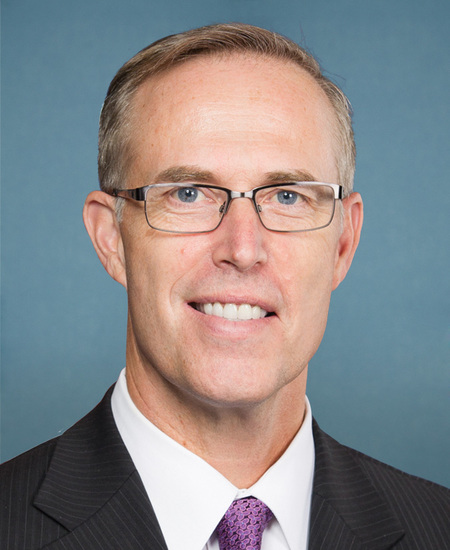
Rep. Jared Huffman
Sponsored bills
This joint resolution proposes a constitutional amendment to prohibit the Constitution from being construed to forbid Congress or the states from (1) imposing reasonable viewpoint-neutral limitations on private campaign contributions or independent election expenditures; or (2) enacting systems of public campaign financing, including those designed to restrict the influence of private wealth by offsetting campaign spending or independent expenditures with increased public funding.
Maddy summaryHJRES 53 proposes a constitutional amendment to ban slavery and involuntary servitude as a criminal punishment. Currently, the 13th Amendment to the U.S. Constitution permits such punishments for crimes, creating a legal loophole. If ratified by 3/4 of state legislatures, this amendment would eliminate that exception nationwide, making it unconstitutional to impose forced labor or slavery as part of criminal sentences. The change would directly affect all states' criminal justice systems, particularly prison labor practices, by prohibiting these punishments for any offense.
This joint resolution proposes a constitutional amendment providing that the rights protected by the Constitution are the rights of natural persons only. Artificial entities, such as corporations, shall have no rights under the Constitution and are subject to regulation. The amendment requires federal, state, and local government to (1) regulate, limit, or prohibit election contributions and expenditures, including a candidate's own contributions and expenditures; and (2) require that any permissible contributions and expenditures be publicly disclosed. The judiciary is prohibited from construing the spending of money to influence elections to be speech under the First Amendment, and the amendment shall not be construed to abridge the freedom of the press.
Maddy summaryHRES 1392 is a non-binding congressional resolution recognizing "Banned Books Week" and expressing concern about widespread book bans in U.S. schools and libraries. It cites data showing over 1,600 unique books were banned in K-12 schools during the 2021-2022 school year, including works addressing race, LGBTQ+ themes, and historical topics. The resolution urges educational institutions to follow best practices for handling book challenges, protect students' access to diverse materials, and avoid censorship based on political or ideological preferences. It does not create new laws but formally condemns book bans as threats to free expression and democratic discourse.
This resolution expresses the sense of the House of Representatives that the proposed constitutional amendment known as the Equal Rights Amendment has been duly proposed by Congress and ratified by the states and is therefore valid as the Twenty-Eighth Amendment to the Constitution. (The proposed amendment prohibits the United States or any state from denying or abridging equal rights under the law on account of sex.)
This resolution recognizes the annual celebration of Dia de los Muertos. The resolution urges the United States and the Department of Homeland Security to promote policies that uphold the human dignity of each migrant person and put an end to migrant deaths along the U.S.-Mexico border. Finally, this resolution calls on the United States and the Department of Health and Human Services to promote policies focused on COVID-19 protections and ensure that all communities have equal access to these to put an end to COVID-19 related deaths.
Maddy summaryHRES 507 is a non-binding House resolution condemning legislative actions and violence targeting transgender and nonbinary individuals. It references 2021 state bills restricting transgender youth access to gender-affirming medical care, sports participation, and public facilities, alongside statistics on rising violence (44 transgender killings in 2020) and mental health impacts. The resolution formally condemns discriminatory legislation and violence, remembers victims of transphobic hate, and commits to advocating for the community’s safety. As a symbolic resolution - not a law - it expresses congressional disapproval but does not create new policies or alter existing laws.
Afghan Adjustment Act This bill expands eligibility for special immigrant visas to certain Afghan nationals (and accompanying spouse and children) and addresses related issues. The Department of Homeland Security may provide such visas to Afghan nationals who provided qualifying service as a member of the Afghan Air Force or other specified entities and meet eligibility requirements, such as passing a background check. Currently, special immigrant visas for Afghan nationals are generally only available to those who were employed by or on behalf of the U.S. government in Afghanistan. Such visas shall also be available to an Afghan national who is a qualifying relative of a veteran or member of the U.S. Armed Forces. The bill also modifies procedures for providing lawful permanent resident status to certain classes of Afghan nationals, such as by (1) providing a streamlined process with specified vetting requirements for certain individuals, including those who provided support to the U.S. government in Afghanistan; and (2) preserving the eligibility of certain battered spouses whose eligibility for such status stemmed from a marriage that has terminated. Furthermore, the Department of State (1) must respond to inquiries from Members of Congress about specific applications from Afghan nationals seeking special immigrant or refugee status; and (2) establish an office in Afghanistan to perform certain tasks, such as issuing visas, if no U.S. embassies are operational in Afghanistan. The President must establish a task force to develop and implement a strategy to assist Afghan nationals who qualify for admission to the United States.
Renewing Immigration Provisions of the Immigration Act of 1929 This bill expands eligibility for a program that authorizes the Department of Homeland Security to, at its discretion, provide lawful permanent resident status to certain long-term residents of the United States, including individuals who are unlawfully present. Currently, this program, sometimes referred to as the Registry program, is only available to eligible non-U.S. nationals ( aliens under federal law) who entered the United States before January 1, 1972. The bill removes this entry cutoff date and opens up the program to eligible individuals who have resided in the United States for at least seven years. Existing requirements (e.g., the individual must not be inadmissible or deportable due to certain grounds related to crime or terrorism) continue to apply.