

Maddy summaryThis bill reauthorizes the National Alzheimer's Project Act through 2035 (extending the previous deadline of 2025) and adds new requirements to promote healthy aging and reduce Alzheimer’s risk factors. It mandates the program to provide information on healthy behaviors that may lower cognitive decline risk and expands the advisory group to include representatives from agencies like the Department of Justice, FEMA, and Social Security Administration, plus experts with diverse clinical trial experience. The bill directly affects Alzheimer’s research, care programs, and the federal advisory group overseeing national efforts. Key changes include requiring annual evaluations instead of initial ones and adding a focus on reducing health disparities in Alzheimer’s initiatives.
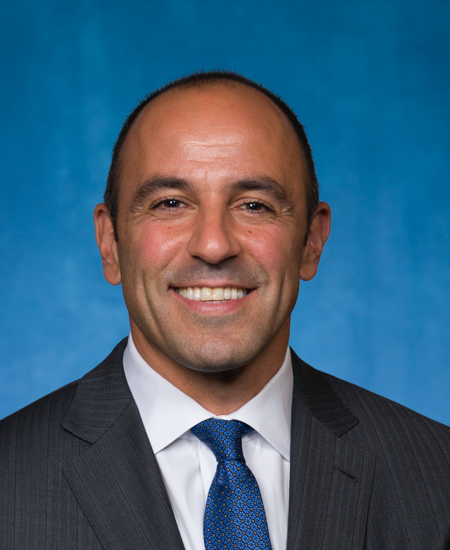
Rep. Jimmy Panetta
Sponsored bills
Maddy summaryHR 895, the Combating Organized Retail Crime Act of 2023, expands federal law to better prosecute organized retail theft by amending sections 2314 and 2315 of Title 18. It clarifies that crimes involving stolen goods valued at $5,000 or more over 12 months - including retail theft - can be prosecuted under existing federal statutes, and broadens definitions to include goods taken via "any facility of interstate or foreign commerce." The bill also creates a new Organized Retail Crime Coordination Center within Homeland Security, requiring it to coordinate federal, state, and local law enforcement efforts, share threat information with retailers, and produce annual public reports on trends. This directly affects law enforcement agencies, retailers, and criminal justice systems by standardizing prosecution thresholds and enhancing interagency collaboration.
Maddy summaryThis bill creates a 40% tax credit for businesses investing in new or upgraded facilities manufacturing critical supply chain items like pharmaceuticals, semiconductors, medical devices, and medical countermeasures. The credit applies to tangible equipment (like machinery) placed in service after December 31, 2024, for facilities primarily producing these designated goods. It specifically targets U.S. manufacturers of nationally vital products, excluding facilities already claiming other tax credits (like electricity production credits). The credit aims to incentivize domestic production of items deemed essential for public health, national security, and economic resilience.
Maddy summaryHR 5754 renames the U.S. courthouse at 350 W. 1st Street, Los Angeles, California, as the "Felicitas and Gonzalo Mendez United States Courthouse." The bill updates all federal references - such as legal documents, maps, and records - to use the new name. This is a ceremonial designation with no policy changes or direct impact on citizens or laws. The bill solely affects the courthouse's official name and related federal paperwork.
Maddy summaryThe Unity through Service Act of 2024 establishes an Interagency Council on Service to coordinate and strengthen military, national, and public service opportunities across federal agencies. The Council, composed of cabinet secretaries and agency directors, will develop recruitment strategies, share best practices, and report to Congress on service participation trends. The bill also creates joint marketing efforts between the military, Peace Corps, and national service programs, and improves transition assistance for service members entering civilian careers. It requires regular reports to Congress on recruitment effectiveness, cross-service participation, and strategies to enhance service opportunities. The bill does not authorize new funding and directs a GAO report on the Act's effectiveness within 30 months.
Maddy summary# Summary of Legislative Text This is a comprehensive legislative proposal focused on addressing substance use disorder through public health approaches, with significant funding and program requirements. Key elements include: 1. **Major Funding Programs:** - **Subtitle A (Local Grants):** $3.0 billion annually (2024-2033) for local entities to provide prevention, treatment, and recovery services - **Subtitle B (State/Regional Grants):** $4.6 billion annually (2024-2033) for state-level programs - **Subtitle C (Other Grants):** $1.0 billion annually (2024-2033) for specific entities and underserved populations - **Subtitle D (Innovation/Training):** $1.5 billion annually (2024-2033) for training, research, and capacity building 2. **Key Program Requirements:** - Mandates for evidence-based treatment services across multiple levels of care - Requirements for cultural competency, particularly for Native American communities - Specific focus on harm reduction, prevention, and recovery support - Provisions for naloxone distribution and overdose reversal programs 3. **Regulatory Changes:** - New certification requirements for covered manufacturers, distributors, and dispensers of Schedule II controlled substances - Penalties for failure to submit certifications or submitting false certifications - Creation of a "Comprehensive Addiction Resources Fund" for penalty revenues 4. **Focus Areas:** - Prevention services (including trauma-informed approaches) - Early intervention services - Recovery support services - Harm reduction programs - Workforce development for treatment providers - Special attention to underserved populations (rural communities, racial minorities, formerly incarcerated individuals) 5. **Funding Priorities:** - 10% of funds for Native American communities - Specific requirements for cultural competency and language access - Mandated data collection and reporting systems This legislation represents a significant shift toward public health approaches to substance use disorder, emphasizing prevention, treatment, and recovery support rather than punitive measures, with substantial funding commitments over a decade.
Maddy summaryHRES 1063 is a non-binding resolution passed by the U.S. House of Representatives to reaffirm America's commitment to NATO ahead of its 75th anniversary. It formally recognizes NATO's role in collective security, emphasizes Article 5's importance for mutual defense, and supports Finland and Sweden's membership. The resolution also calls on NATO allies to meet the 2% defense spending target, but does not create new laws or affect specific individuals or groups.
Maddy summaryThe Public Service Freedom to Negotiate Act of 2024 establishes federal minimum standards for collective bargaining rights for public employees and supervisory employees. The Federal Labor Relations Authority will determine if each state's laws "substantially provide" for these rights, and if not, federal standards will apply to that state. These standards include the right to self-organization, collective bargaining, recognition of labor organizations, and procedures for resolving disputes. The bill preserves existing collective bargaining agreements and excludes certain employee categories like emergency services workers from some provisions.
Maddy summaryHR 8342, the Improper Payments Transparency Act, requires federal agencies that already report improper payments to include detailed explanations in the President's annual budget. It mandates agencies to describe why improper payment amounts and rates changed (or stayed the same) for specific programs over three years, and to list incomplete corrective actions alongside future steps to address these issues. This directly affects all executive agencies required to submit improper payment reports under existing law (Chapter 33, Title 31). The bill focuses on increasing transparency about government spending errors without changing current reporting requirements.
Maddy summaryHR 6462, the READINESS Act, helps federal employees who are spouses of military members or Foreign Service officers when their spouse receives a permanent relocation order. The bill requires federal agencies to offer these employees one of four options within 30 days: full-time remote work, a local transfer to a position of equal grade, a remote transfer, or unpaid leave for up to 36 months. Agencies must report all requests and actions taken annually to the Office of Personnel Management (OPM), with OPM then summarizing this data for Congress each year. This directly affects federal employee spouses facing relocation due to a service member's permanent duty station change, aiming to reduce employment disruption.