

Maddy summaryHCONRES 129 designates the week of September 22-28, 2024, as "National Fall Prevention Awareness Week" to raise public awareness about falls among older adults. The resolution cites CDC data showing falls cause approximately 14 million incidents, 3 million emergency visits, and $80 billion in annual medical costs for adults aged 65+. It supports existing evidence-based prevention strategies - such as balance exercises, home safety modifications, and medication management - without creating new legal requirements or funding. The bill focuses on awareness and collaboration among government agencies, healthcare providers, and community organizations to reduce fall risks.
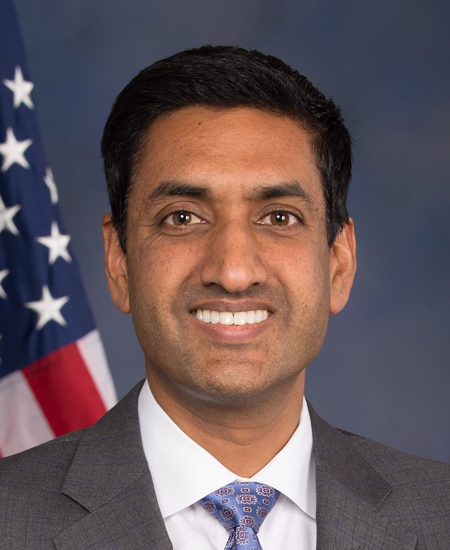
Rep. Ro Khanna
Sponsored bills
Maddy summaryThis bill requires the Department of Defense to provide clear, annual information to TRICARE beneficiaries (military members, families, and retirees) about reproductive healthcare access under the military health system. It mandates details on covered care (including abortion), when care is available at military facilities, how to request leave/travel for out-of-state care, and how to find non-DoD providers. Military healthcare providers must also receive annual training on their obligation to offer covered reproductive care (abortion, contraception, fertility) regardless of state laws, and their legal protections. The information must be shared in person, in writing (including electronically), and posted in accessible areas at military medical facilities. This focuses on improving transparency and provider knowledge, not expanding coverage.
Maddy summaryThis bill expands TRICARE coverage to allow military service members and their dependents to obtain up to a full year's supply of contraception in a single fill (365 days) at military pharmacies, retail pharmacies, or through TRICARE's mail-order program. It requires TRICARE to implement this coverage within 180 days of enactment and mandates outreach to inform beneficiaries and providers within 90 days of implementation. The policy directly affects active-duty military members and their eligible dependents enrolled in TRICARE, removing prior restrictions on supply limits for contraceptive prescriptions. This change simplifies access by eliminating the need for frequent refills while maintaining existing coverage requirements under TRICARE.
Maddy summaryHR 6319 (the 911 SAVES Act of 2023) requires the Office of Management and Budget to reclassify public safety telecommunicators as "Protective Service Occupations" within 30 days of enactment. This change corrects their current misclassification in the federal Standard Occupational Classification (SOC) system, which is used for statistical data on jobs. The bill directly affects how these professionals - critical in emergency calls involving missing children, active threats, and officer safety - are officially categorized in government workforce data. It does not create new benefits or funding but aims to better recognize their lifesaving role through accurate federal job classification.
Maddy summaryThe Homes Act of 2024 would establish a new Housing Development Authority within the Department of Housing and Urban Development to develop permanently affordable housing. The Authority would acquire properties and convey them to eligible entities (including community land trusts, tenant organizations, and public housing agencies) under strict requirements for permanent affordability, climate resilience, and community control. The bill would set rents at 25% of household income, limit annual rent increases to 3% or the Consumer Price Index, and require "just-cause" evictions with tenant protections. It would also create a tenant right to purchase their rental properties through a "first look" process and prioritize housing for underserved communities and families experiencing homelessness.
Maddy summaryThis bill directs the U.S. government to immediately restore funding to the United Nations Relief and Works Agency for Palestine Refugees (UNRWA), reversing a temporary funding pause. It repeals two appropriations acts that halted payments and requires the Secretary of State to resume UNRWA funding under existing authorities. The legislation specifically aims to support UNRWA’s critical humanitarian work - providing shelter, education, healthcare, and aid to Palestinian refugees across Gaza, the West Bank, Syria, Lebanon, and Jordan - during an acute famine risk in Gaza. It also mandates quarterly reports to Congress on UNRWA’s implementation of reforms from an independent review, ensuring accountability for its humanitarian mission.
Maddy summaryHR 9650 requires federal agencies to purchase WaterSense-labeled water-efficient products (like fixtures or appliances) when procuring water-consuming items, unless cost or availability prevents it. It establishes an EPA grant program to provide rebates or incentives for households to buy WaterSense products, prioritizing low- and middle-income families through eligible entities like state governments or utilities. The bill also makes these rebates non-taxable income for individuals and expands existing tax exclusions for water conservation measures. These changes directly affect federal agencies, local governments, and households purchasing water-efficient products.
Maddy summaryHR 9647, the President Jimmy Carter Congressional Gold Medal Act, authorizes Congress to award a single gold medal to former President Jimmy Carter in recognition of his service. The bill directs the Treasury Secretary to design and strike the medal, with bronze duplicates available for sale to cover costs. It does not create new policies or affect any government programs or individuals beyond this ceremonial honor. The medal is intended to commemorate Carter's presidency, humanitarian work through the Carter Center, and his Nobel Peace Prize. This is a procedural bill with no substantive legislative impact.
Maddy summaryThis bill expands online privacy protections under the Children's Online Privacy Protection Act to cover teens aged 12-17, in addition to children under 13. It requires website and app operators to obtain verifiable consent from parents for children and from teens themselves before collecting personal information. The bill restricts operators from using collected data for individual-specific advertising to children or teens and mandates clear notices about data practices. Operators must provide users with the right to access, delete, and correct personal information they've collected. These requirements apply to websites, online services, and mobile applications that collect information from children or teens or have actual knowledge a user is a child or teen.
Maddy summaryThe Kids Online Safety Act (HR 7891) would require major online platforms (with high revenue or user numbers) to implement safety features for children and teens, including default protective settings, parental controls, and age verification. It would mandate platforms to report annually on risks to minors and their safety measures, and prohibit advertising harmful products (like tobacco, alcohol, or gambling) to minors. The bill directly affects social media platforms, online video games, and video streaming services that are used by minors, with the goal of preventing mental health harms, compulsive usage, and cyberbullying.