

Maddy summaryHRES 824 is a ceremonial House resolution recognizing the religious and historical significance of Diwali, the festival of lights. It acknowledges Diwali’s meaning across Hindu, Sikh, and Jain traditions - symbolizing light over darkness, good over evil, and marking spiritual milestones like Guru Hargobind’s release and Lord Mahavira’s Nirvana. The resolution expresses respect for Indian-Americans and the global Indian diaspora, highlighting Diwali’s role in U.S. religious diversity. As a non-binding recognition, it does not create new laws, policies, or funding, but formally honors the cultural observance.
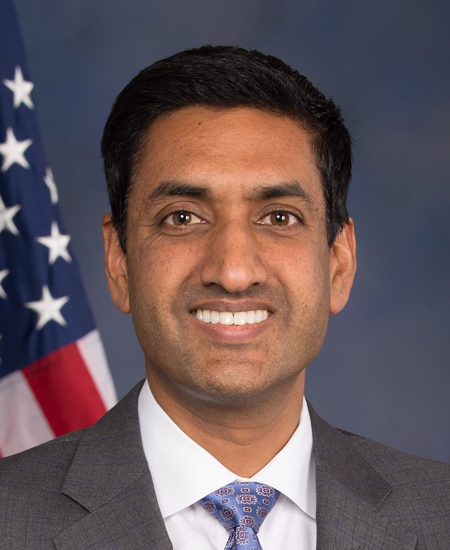
Rep. Ro Khanna
Sponsored bills
Maddy summaryHRES 815 is a non-binding House resolution expressing that immigration enforcement by ICE and CBP must be transparent and respect constitutional rights. It requires ICE/CBP officers to wear body cameras during public operations, ban masks/face coverings (except for safety threats), and visibly display name/badge/agency. The resolution also calls for civilian oversight boards, mandatory de-escalation training, and Justice Department oversight of ICE. It directly affects all ICE and CBP enforcement personnel and their interactions with the public, particularly in residential raids and detention. The resolution references similar pending bills but does not create new law.
Maddy summaryHRES 807 is a procedural resolution requesting the President to provide specific documents to the House of Representatives about government employee pay during a funding gap. It asks for unredacted communications related to potential pay withholdings, legal arguments about the Government Employee Fair Treatment Act, and plans affecting furloughed federal employees during the October 1, 2025, appropriations lapse. The resolution directly targets the President and relevant agencies (like OMB and OPM) to disclose internal records within 14 days. It does not change policy but seeks transparency about decisions impacting federal workers' pay during a funding interruption.
Maddy summaryThis bill makes federal funding for the WIC program mandatory by requiring Congress to appropriate necessary funds annually for fiscal year 2026 and each subsequent year. It removes discretionary language from WIC funding requirements and clarifies that eligible participants must be served without participation limits. The bill directly affects low-income pregnant women, new mothers, and young children who rely on WIC for nutrition assistance, ensuring continued access to critical food, health, and education services.
Maddy summaryThis bill adds Medicare coverage for multi-cancer early detection screening tests (blood or biological tests analyzing cell-free DNA) starting January 1, 2028. It directly affects Medicare beneficiaries aged 68 and older (starting in 2028, with the age limit increasing by 1 year annually), requiring tests to be FDA-cleared and deemed reasonable/necessary by the Secretary for early cancer detection across multiple organ sites. Payment will initially match current stool DNA test rates before 2031, then shift to a lower rate or new payment system after 2031, with limits preventing more than one test per year. The bill explicitly states it does not alter coverage for existing cancer screenings like breast, colorectal, or prostate cancer tests.
Maddy summaryHRES 774 is a non-binding resolution that expresses congressional support for recognizing October 2025 as Filipino American History Month. It celebrates the historical contributions of Filipino Americans to U.S. society, including their roles in military service (such as World War II veterans), healthcare, labor movements, and cultural achievements. The resolution does not create new laws or benefits but urges the public to observe the month through educational programs and activities that highlight Filipino American history and culture. It directly affirms the heritage of the Filipino American community - approximately 4.6 million people - who are the third-largest Asian American group in the U.S. and have made significant contributions across multiple fields.
Maddy summaryHR 5655, the "No Shame at School Act of 2025," requires schools to eliminate stigma around unpaid meal fees for students. It mandates that school districts automatically certify eligible students for free/reduced meals (replacing "may" with "shall"), prohibits physical segregation or public identification of students with unpaid fees (like special tokens or name lists), and bans withholding grades or activities due to meal debt. The bill also prevents schools from using debt collectors for meal fees and requires adjustments to past meal claims when eligibility is later confirmed. This directly affects schools, local educational agencies, and students from households with outstanding meal fees.
Maddy summaryThis concurrent resolution designates the week of September 22-28, 2025, as "National Falls Prevention Awareness Week" to raise public awareness about falls among older adults (65+). It directly affects older adults and organizations working on fall prevention, such as healthcare providers and community groups. The resolution cites CDC data showing falls cause 41,000 annual deaths and $80 billion in medical costs, while encouraging existing evidence-based strategies like home safety modifications and balance exercises. It does not create new laws or funding but supports awareness efforts and collaboration among federal agencies, the Aging Network, and healthcare providers.
Maddy summaryHR 5604, the National Guard Proper Use Act, prohibits military and National Guard personnel from being ordered to enforce federal immigration laws. It adds new sections to military law (Title 10 for active forces and Title 32 for the National Guard), explicitly stating members cannot be directed to perform duties related to immigration enforcement. This directly affects military commanders who might attempt to assign such tasks and ensures National Guard members remain focused on their core missions, not civilian immigration enforcement. The bill references the Posse Comitatus Act (18 U.S.C. §1385), a longstanding law that limits military involvement in domestic law enforcement. It clarifies existing legal boundaries without creating new programs or funding.
Maddy summaryHCONRES 51 directs the President to withdraw U.S. military forces from hostilities against Venezuela and designated terrorist organizations (transnational criminal groups listed as Foreign Terrorist Organizations or Specially Designated Global Terrorists) without congressional authorization. It applies to military actions since February 20, 2025, including recent Caribbean operations referenced in the bill's findings. The resolution invokes the War Powers Resolution, requiring removal of forces when no declaration of war or specific statutory authorization exists. It explicitly excludes self-defense against sudden attacks but mandates withdrawal for unapproved military engagement.