

Closing Loopholes for Oil and other Sources of Emissions Act or the CLOSE Act This bill amends the Clean Air Act to revise requirements for hazardous air pollutants. Specifically, the bill allows (1) emissions from oil or gas exploration or production wells and emissions from pipeline compressors or pump stations to be aggregated with emissions from other similar sources and regulated as a major source of toxic air pollutants, (2) emissions from those wells to be aggregated for purposes of emissions standards for hazardous air pollutants, and (3) emissions from oil or gas production wells to be regulated as an area source of toxic air pollutants. The Environmental Protection Agency must (1) issue a final rule adding hydrogen sulfide to the list of hazardous air pollutants; and (2) revise the list of air pollution sources within 365 days after issuing the rule to include categories and subcategories of major sources and area sources of hydrogen sulfide, including oil and gas wells.
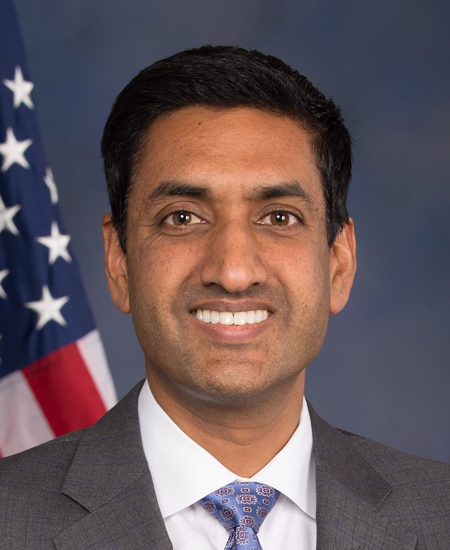
Rep. Ro Khanna
Sponsored bills
Maddy summaryHRES 876 is a non-binding House resolution calling on the U.S. government to formally recognize Israel's actions in Gaza as genocide under the Genocide Convention. It directs the U.S. to cease arms transfers to Israel where genocide is suspected, ensure Israel complies with International Court of Justice orders, investigate potential genocide-related crimes, and support UNRWA funding. The resolution specifically cites findings from the UN Commission of Inquiry, the International Association of Genocide Scholars, and major human rights organizations regarding Israel's conduct. It affects U.S. foreign policy and military aid decisions toward Israel, requiring the administration to take concrete steps to fulfill U.S. legal obligations under the Genocide Convention. The resolution does not alter U.S. law but sets a policy stance for congressional action.
Maddy summaryThis bill extends and modifies the premium tax credit (subsidy) for health insurance purchased through the marketplace, applying to coverage for 2026 and 2027. It raises the income threshold for full subsidy eligibility from 400% to 600% of the federal poverty level, meaning more low-to-moderate-income households (up to 600% of poverty) will pay lower monthly insurance costs. The bill also adds new penalties for agents or brokers who provide false information during enrollment, including civil fines up to $50,000 per person and criminal charges for intentional fraud. These changes directly affect individuals buying health insurance through marketplaces and the agents/brokers who assist them.
Maddy summaryHR 5940, the Seniors Deserve SMARTER Care Act of 2025, prohibits the implementation of the Medicare WISeR model (described in a July 2025 federal notice). The bill specifically blocks the Secretary of Health and Human Services from using the WISeR model, which would have required prior authorization for certain medical services under Medicare. This directly affects Medicare beneficiaries and healthcare providers who would have been subject to the model's requirements. The key provision is a clear ban on implementing WISeR or any substantially similar payment model, preventing changes to Medicare's service authorization process. The bill does not create new programs but stops a specific proposed Medicare policy change.
Maddy summaryThis bill establishes a federal council to coordinate support for worker cooperatives - businesses owned and controlled by their employees - and requires key agencies like the Small Business Administration and Treasury to remove barriers, provide capital access, and offer training to help these businesses form and grow. It amends existing laws to expand a small business lending program for worker cooperatives and directs community development funds to include cooperative support. The council must identify regulatory obstacles, develop a national strategy, and report progress to Congress annually. These changes aim to make federal resources more accessible for employee-owned businesses through concrete policy adjustments.
Maddy summaryThis bill ensures continuous funding for SNAP (food assistance) and WIC (nutrition program for mothers/children) during government funding gaps. It authorizes emergency Treasury funds to cover SNAP/WIC benefits and reimburse states for costs if Congress fails to pass regular appropriations for the Department of Agriculture by September 30, 2025. The funding covers missed payments retroactively from September 30, 2025, through the bill’s enactment date, and continues until either regular appropriations pass or September 30, 2026. It directly affects low-income households relying on these programs and state agencies administering them during funding lapses.
Maddy summaryThis bill, HR 5973, requires federal immigration enforcement personnel to follow strict limits on force use, including proportional application, mandatory de-escalation efforts, and prohibitions on equipment like flash bangs or rubber bullets except for specific public safety threats. It mandates body-worn and vehicle cameras for all operations, with footage retained for one year (three years for force incidents or complaints), and grants affected individuals the right to inspect recordings. The law also requires annual training on force policies, First Amendment compliance, and racial bias avoidance, while demanding detailed quarterly reports to Congress on force usage, assaults on agents, and equipment approvals. These provisions directly affect all federal immigration agents conducting enforcement actions, aiming to increase transparency and accountability during operations.
Maddy summaryHRES 849, the "Ban Crypto Corruption Resolution," would prohibit current and prospective federal elected officials (including the President, Vice President, Members of Congress, and their immediate families) from creating, endorsing, or holding digital assets like cryptocurrencies, memecoins, or NFTs. It requires these individuals to place existing digital assets in a blind trust during their service and for two years afterward, mandates full public disclosure of all crypto transactions, and bans foreign investment in politician-linked digital ventures. The resolution also establishes civil and criminal penalties for violations and clarifies that any personal crypto activities would be deemed unofficial acts. This applies broadly to all covered officials, aiming to prevent conflicts of interest, self-enrichment, and foreign influence through digital asset activities.
Maddy summaryThis resolution (HRES 841) is a symbolic statement expressing the U.S. House of Representatives' support for recognizing and commemorating the 1984 Sikh Genocide in India. It calls for official remembrance of the violence that killed over 30,000 Sikhs, destroyed communities, and involved state complicity, while urging accountability for perpetrators and rejecting denial of the event. The resolution does not create new laws or affect individuals directly but affirms the House's position on historical justice.
Maddy summaryThe American Energy Independence and Affordability Act extends multiple clean energy tax credits that were set to expire between 2025 and 2026. It specifically extends residential clean energy credits through 2034, clean electricity investment credits for wind and solar through 2032, and clean vehicle credits for electric vehicles through 2032. The bill also reinstates special rates for sustainable aviation fuel and modifies requirements for energy-efficient home improvements. These provisions directly affect homeowners installing solar panels, businesses investing in clean energy infrastructure, and manufacturers producing clean energy equipment.