Maddy summaryHR 3502, the Responsible Firearms Marketing Act, directs the Federal Trade Commission (FTC) to study and regulate deceptive advertising practices related to firearms. The FTC must study marketing that targets minors, implies illegal use, or promotes semiautomatic assault weapons, then report findings to Congress within two years. If the FTC identifies unfair practices, it must issue enforceable regulations within 18 months of the report to prohibit such marketing by firearm manufacturers, dealers, and importers. The law aims to stop deceptive advertising through FTC enforcement under existing consumer protection rules, directly affecting the firearms industry.
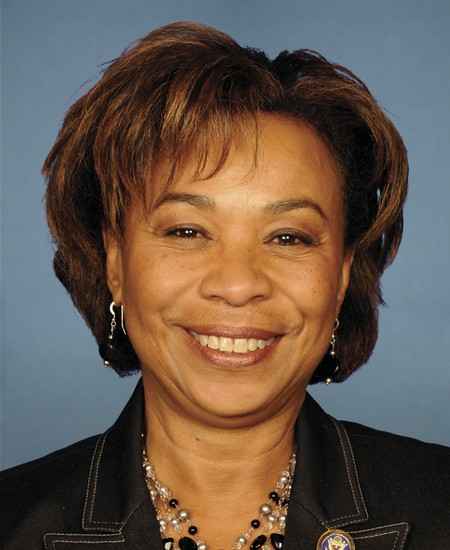
Rep. Barbara Lee
Sponsored bills
Maddy summaryHR 3548, the Pursuing Equity in Mental Health Act, aims to reduce mental health disparities for racial and ethnic minority groups by directing federal funding and policy changes. It increases annual grants for primary/behavioral health services to $60 million in 2023 and $80 million yearly through 2029, prioritizing entities serving minority communities. The bill requires the NIH to study mental health disparities within 9 months and mandates new training for mental health professionals (including social work and psychiatry) on culturally appropriate care. Additionally, it funds a $15 million annual outreach strategy to combat stigma and improve access to care, requiring materials tailored to cultural and language needs of minority groups.
Maddy summaryHR 3523, the Perinatal Workforce Act, provides $15 million annually from 2024 to 2028 to expand and diversify maternity care providers. It directs HHS to issue guidance for states on recruiting diverse providers (including midwives, nurses, and community health workers) and requires grant recipients to prioritize students from racial/ethnic minority groups, implement bias training, and target health professional shortage areas. The bill also mandates annual reporting on workforce diversity and outcomes, and requires a GAO report assessing barriers to equitable access in maternal healthcare. This legislation directly affects hospitals, nursing schools, midwifery programs, and insurers by funding targeted workforce development to address racial disparities in maternal care.
Maddy summaryThis bill requires that AM radio receivers be included as standard equipment in all new motor vehicles (such as cars and trucks) sold in the United States, with a rule to be issued by the Department of Transportation within one year. The rule must ensure AM radio is easily accessible on the dashboard and allows manufacturers to use digital AM radio technology instead of traditional AM. During the one-year period between the bill's enactment and the rule's effective date, manufacturers must clearly label vehicles without AM radio. The bill also directs a study to evaluate whether an alternative system could deliver emergency alerts as reliably as AM radio across the country, especially during crises.
Maddy summaryHR 3420, the My Body, My Data Act of 2023, restricts how companies can handle reproductive and sexual health data - such as pregnancy details, contraceptive use, or abortion-related information - by requiring them to collect only what’s necessary for requested services and limiting employee access. It gives individuals the right to access, correct, or delete their data, see which third parties received it, and get clear privacy policies explaining data practices. The Federal Trade Commission enforces the law, with penalties for violations including $100-$1,000 per violation per day, and bans retaliation for exercising these rights. The law applies to companies (like health apps or insurers) but excludes HIPAA-covered healthcare providers and entities subject to existing federal health privacy rules.
This bill requires the National Telecommunications and Information Administration (NTIA) to publish on its website data about diversity, equity, inclusion, and accessibility that is collected from recipients of funding through the Broadband Equity, Access, and Deployment (BEAD) Program. The BEAD Program provides funds to states and territories for broadband deployment, connectivity, mapping, and adoption projects. The data that the NTIA must publish includes (1) ownership and workforce demographics of subrecipients, and (2) the number and amount of contracts and subcontracts awarded to minority- and women-owned businesses.
Support, Treatment, and Overdose Prevention of Fentanyl Overdoses Act of 2023 or the STOP Fentanyl Overdoses Act of 2023 This bill addresses data collection, treatment, harm reduction, and other issues related to substance misuse and addiction. It particularly focuses on opioids, fentanyl, and related substances. Specifically, the bill expands surveillance of fentanyl and related substances. This includes requiring a study on how to track overdoses by type of drug (including fentanyl) and awarding grants to states for collecting data about fentanyl-involved overdoses. The bill also provides for (1) training on detecting and handling fentanyl for law enforcement, and (2) grants for forensic laboratories to facilitate surveillance of controlled substances seized by law enforcement. Additionally, the bill establishes and modifies requirements to increase access to treatment and prevention services. For example, the Bureau of Prisons must make certain services, including medication-assisted treatments, available to individuals in its custody. The bill also establishes grants and requires other efforts to expand access to medications that temporarily reverse opioid overdoses (e.g., naloxone) and related harm reduction activities. Furthermore, the bill extends, subject to some conditions, liability protections for those who administer aid in an emergency (commonly known as Good Samaritan laws) to individuals who administer opioid overdose reversal drugs and to individuals who seek medical attention for themselves or on behalf of another for a drug overdose. The bill also requires multiple reports, including a report by the Department of State on foreign sources of certain drugs.

Maddy summaryThe Maternal Vaccination Act amends public health law to specifically target vaccination outreach for pregnant and postpartum individuals and their children, directly affecting public health campaigns and health agencies. It updates existing provisions to include these groups in awareness efforts, requires new activities to increase vaccination rates - particularly among racial and ethnic minority communities - and increases annual funding from $15 million to $17 million for fiscal years 2024-2028. Key mechanisms include revising language in the Public Health Service Act to explicitly cover pregnant/postpartum individuals in campaign descriptions and adding a new requirement (Section 317(k)(1)(E)(vii)) to address vaccination equity. The bill focuses on concrete policy changes to expand access and awareness, not on predicting outcomes.
Maddy summaryThe Kira Johnson Act (HR 3310) provides $100 million annually from 2024-2028 to fund community-based organizations working to improve maternal health outcomes for racial and ethnic minority groups with elevated rates of maternal mortality, severe maternal morbidity, and health disparities. It requires hospitals to establish respectful maternity care compliance programs allowing patients to report racism or bias, and mandates training for all maternity care employees to address bias, racism, and discrimination. The bill also requires annual reports on program effectiveness and studies to evaluate strategies for reducing bias in maternity care settings. These provisions directly affect hospitals, maternity care providers, community-based organizations, and pregnant and postpartum individuals from racial and ethnic minority groups.
Maddy summaryThe Data to Save Moms Act allocates $10 million annually (2024-2028) to help maternal mortality review committees improve community engagement and diversity, with special focus on racial and ethnic minority groups. It requires committees to better document pregnancy-related deaths, consider nonclinical factors affecting maternal health, and collect more detailed demographic data including race, ethnicity, and socioeconomic status. The bill also mandates a comprehensive review of maternal health data collection processes and establishes a study specifically focused on maternal health outcomes for American Indian and Alaska Native individuals. Additionally, it provides grants to minority-serving institutions to research maternal health disparities among racial and ethnic minority groups. These provisions aim to improve data quality, community involvement, and address maternal mortality and severe maternal morbidity.