

Maddy summaryHR 1374 would prohibit colleges and universities receiving federal funds under the Higher Education Act from requiring COVID-19 vaccines for students or staff. If a school enforces such a mandate, it would lose access to those federal funds for as long as the mandate remains in place. The bill defines a "vaccine mandate" as any requirement for a COVID-19 vaccine tied to admission, enrollment, or employment. This policy change directly affects public and private colleges participating in federal student aid programs. It uses funding eligibility as the mechanism to end vaccine requirements at these institutions.
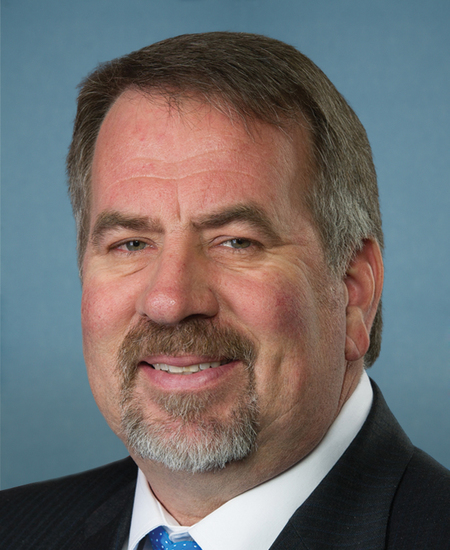
Rep. Doug LaMalfa
Sponsored bills
This resolution supports the designation of National FFA Week. It also (1) recognizes the important role of the National FFA Organization (Future Farmers of America) in developing the next generation of leaders who will change the world, and (2) celebrates the 90th anniversary of the iconic FFA jacket.
Maddy summaryThis bill creates a new framework for imposing sanctions on foreign governments that engage in "gross negligence" with respect to chemical or biological programs. It defines gross negligence as when a government knew or should have known such actions would cause injury or damage to other countries. The President would be required to make determinations based on credible information about such negligence and impose specific sanctions, including suspending scientific cooperation, restricting exports of certain goods and technologies, and terminating foreign assistance. The bill also mandates a specific determination about China within 180 days of enactment, requiring the President to report whether reasonable grounds exist for concluding China meets the gross negligence criteria. Sanctions can be lifted if the foreign government addresses the negligence, develops preventive measures, and provides information to the U.S. and international organizations.
Maddy summaryThe Military Spouse Hiring Act expands the Work Opportunity Tax Credit to include military spouses. Employers who hire a spouse of an active-duty military member - certified by a local agency as meeting eligibility requirements on the hiring date - can claim this tax credit. The credit reduces the employer's federal tax liability for hiring such individuals. This provision applies to new hires after the bill's enactment date.
Maddy summaryHR 1310 (SHARE Act) requires the FBI to share criminal history records with state licensing agencies when needed for professional licensing checks across state lines through existing interstate compacts. It directly affects state licensing boards (like those for nurses or contractors) and individuals applying for licenses in multiple states. The bill mandates that states use this data *only* for license applications and prohibits sharing it with other agencies or the public, while allowing a simple "pass/fail" notification to the compact’s governing body.
Maddy summaryHR 1275 prohibits federal funding from being used to implement Executive Order 14091, which directed federal agencies to advance racial equity and support underserved communities. The bill directly affects federal agencies that would have allocated taxpayer funds toward programs or initiatives under the executive order. Its key provision blocks all federal financial resources for the order's requirements, preventing agencies from carrying out its equity-focused actions. This policy change stops the government from using public money to support the specific racial equity initiatives outlined in the executive order.
Maddy summaryThis bill authorizes the posthumous award of a Congressional Gold Medal to honor the Jewish participants of the 1943 Warsaw Ghetto Uprising who resisted Nazi forces. The medal, designed by the Treasury Secretary, will be presented by congressional leaders and permanently displayed at the U.S. Holocaust Memorial Museum, with potential future loans to institutions like Warsaw's POLIN Museum. It directly commemorates the historical resistance of approximately 3,000 Jewish fighters who defended their community against Nazi deportation and extermination efforts. The bill also permits the sale of bronze duplicates to cover production costs. This is a commemorative measure focused on preserving historical memory, not on creating new policy.
Maddy summaryHR 1247 would award a Congressional Gold Medal to the Freedom Riders collectively, honoring their pivotal role in challenging segregation in interstate travel during the Civil Rights movement. The medal, to be struck by the U.S. Mint and displayed at the Smithsonian Institution, recognizes their nonviolent protests that led to the 1961 federal ban on segregation in interstate public facilities. This is a symbolic tribute with no legal effect, as the bill does not create new policies or alter existing laws.
Maddy summaryThis bill amends the Higher Education Act to exempt certain family-owned assets from being counted when calculating federal student aid eligibility. Specifically, it excludes family farms where the family resides and small businesses with 100 or fewer full-time equivalent employees owned and controlled by the family. These assets will no longer be considered when determining a student's financial need for aid programs. The change directly affects students from qualifying family farms or small businesses when applying for federal financial aid. The exemption applies to assets held by the family, not just the business itself.
Maddy summaryHR 1229, the "Stop CRT Act," codifies Executive Order 13950 into law and restricts federal funding for entities teaching specific concepts about race. It prohibits federal grants to organizations that teach any of six specified ideas, including that race determines moral worth, the U.S. is fundamentally racist, or individuals bear responsibility for historical actions based on race. The bill directly affects schools, nonprofits, and other recipients of federal funds by banning support for educational content matching these prohibitions. Key provisions require federal agencies to deny funding to any entity advancing these concepts, making the executive order legally binding. This policy change alters how federal funds are distributed based on mandated educational content.