

Maddy summaryHR 1228 prohibits the U.S. military and Department of Defense-operated academic institutions from promoting specific anti-American or racist theories in training. It bans military programs that teach ideas such as "the U.S. is fundamentally racist," "the Constitution is fundamentally racist," or that "an individual’s worth is determined by race." The bill explicitly states it does not restrict protected speech, research access, or educational contexts that clearly disavow military endorsement of such theories. This directly affects military training curricula, workshops, and educational materials within the armed forces.
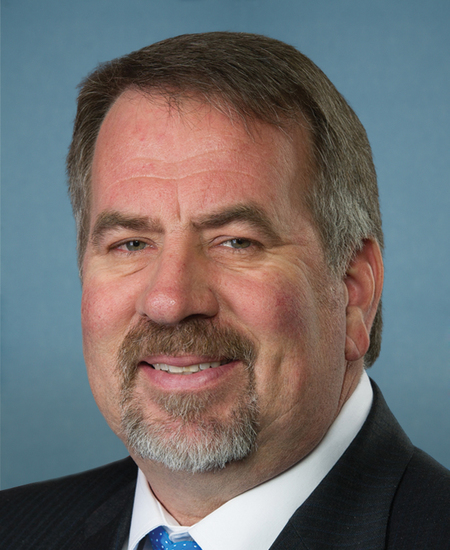
Rep. Doug LaMalfa
Sponsored bills
Maddy summaryHRES 132 is a non-binding House resolution expressing condolences for the over 36,000 earthquake victims in Türkiye and Syria and commending humanitarian response efforts. It specifically condemns the Assad regime for obstructing aid delivery and exploiting the disaster, urging the Biden administration to open all UN border crossings for aid and prevent U.S.-funded assistance from being diverted to Syria’s government. The resolution also calls for continued enforcement of the Caesar Syria Civilian Protection Act to protect Syrian civilians. As a symbolic resolution, it does not create new law but formally directs the administration’s diplomatic approach to the crisis.
Maddy summaryHR 1222, the Buffalo Soldiers Congressional Gold Medal Act of 2023, authorizes a single Congressional Gold Medal to honor the six all-Black cavalry and infantry regiments established in 1866 (later consolidated into four regiments). The medal recognizes their service from the post-Civil War era through World War II, including roles in frontier protection, national park preservation, and combat during major conflicts. After awarding the medal, it will be permanently displayed at the Smithsonian's National Museum of African American History and Culture, with bronze duplicates available for sale to cover costs. This bill is purely commemorative, with no new policies or direct impacts on current laws or individuals.
Maddy summaryThe Stop the Cartels Act (HR 597) aims to disrupt drug trafficking organizations and related criminal activities by requiring enhanced intelligence gathering on cartels in Mexico and Central American countries, mandating improved U.S.-Mexico law enforcement cooperation, and cutting federal funding from jurisdictions that restrict immigration enforcement. The bill creates a "Special Transnational Criminal Organization" designation for major cartels like the Sinaloa Cartel and Jalisco New Generation Cartel, requires monthly reports on migrant encounters at the border, and establishes refugee processing centers in Mexico and Central America. It also increases staffing for immigration courts by 500 judges, prohibits asylum applications from nationals of countries with refugee processing centers, and reauthorizes substance abuse prevention funding at higher levels while repealing several existing drug programs. These provisions directly affect U.S. intelligence and law enforcement agencies, Mexican and Central American governments, local jurisdictions receiving federal funds, and migrants seeking asylum or refugee status.
Maddy summaryHRES 124 is a non-binding House resolution expressing congressional support for expanding domestic nuclear energy and advanced nuclear technology. It states the House believes the U.S. should promote nuclear energy as a reliable, low-carbon power source to enhance energy leadership and independence, citing its high reliability (92% operation rate), carbon reduction benefits (482 million metric tons avoided in 2021), and economic contributions (475,000 jobs supported). The resolution urges actions like streamlining regulations for advanced reactors, securing domestic uranium supply chains, and addressing misinformation about nuclear safety - though it does not create new laws or funding. It serves solely as a statement of policy preference, not a legislative mandate.
Women's Public Health and Safety Act This bill allows a state to exclude from participation in the state's Medicaid program a provider that performs an abortion, unless (1) the pregnancy is the result of rape or incest, or (2) the woman suffers from a physical issue that would place her in danger of death unless an abortion is performed. Under current law, a state plan for medical assistance must provide that any individual eligible for medical assistance may obtain required services from any provider qualified to perform them.
Maddy summaryThis bill requires drug manufacturers to include patient experience data in the U.S. Food and Drug Administration's risk-benefit assessments for new drug approvals. It amends the Federal Food, Drug, and Cosmetic Act to mandate that sponsors submit and describe how patient experience data was considered during the review process. The law directly affects pharmaceutical companies seeking new drug approvals and the FDA during its evaluation. The key provision adds specific language to the approval framework, making patient experience data a formal part of the assessment.
Maddy summaryHR 1007, the Nuclear Assistance for America’s Small Businesses Act, delays collection of nuclear regulatory fees for small businesses applying for permits to build or operate advanced nuclear reactors. It allows eligible small businesses (defined as those with NAICS code 221113 that responded to NRC's RIS-20-02) to delay up to 50% of pre-application fees and 35% of post-application fees. The delayed fees must be repaid over 10 years at 10% annually, or accelerated to 25% if the business fails to submit a covered application within 5 years, withdraws it, or faces denial. This applies specifically to applications for construction permits, operating licenses, or combined licenses for advanced nuclear reactors under NRC oversight.
Maddy summaryHR 1006, the NRC Survey Act, requires the Nuclear Regulatory Commission (NRC) to conduct surveys of its employees and nuclear industry stakeholders to identify ways to improve the efficiency of reactor licensing. The employee survey asks about internal processes, communication, funding, and barriers to innovation, while the stakeholder survey seeks industry input on regulatory challenges and engagement. The Inspector General must distribute these surveys within 60 days of enactment and submit reports to Congress with aggregated feedback and individual responses. This bill gathers direct input to inform potential future regulatory improvements without changing existing laws or creating new requirements.
Maddy summaryHR 1009 requires the President to develop a national strategy for using microreactors (small nuclear reactors under 20 MW thermal) to replace diesel generators during natural disasters. The strategy must evaluate current diesel generator use, compare environmental impacts, and address deployment logistics like storage, transportation, and maintenance. It mandates collaboration between agencies like FEMA, the Department of Energy, and the Nuclear Regulatory Commission, with annual reports to Congress. The bill aims to improve disaster response by providing reliable, low-emission power to critical facilities like hospitals and water plants, while reducing reliance on diesel.