

Maddy summaryThe IDEA Full Funding Act (HR 4519) mandates specific annual increases in federal funding for special education programs under the Individuals with Disabilities Education Act (IDEA). It requires Congress to appropriate increasing amounts each fiscal year - from $5.87 billion for 2024 up to $55.53 billion for 2033 - to reach 40% of the national average per-pupil expenditure for public schools by 2033. This directly affects all public school districts serving students with disabilities, as federal IDEA funding supports their special education services. The bill sets fixed dollar amounts or percentage targets (whichever is greater) for each fiscal year, aiming to gradually close the long-standing gap between promised and actual federal funding. It does not alter eligibility for services but mandates higher, phased funding levels to meet the 40% target.
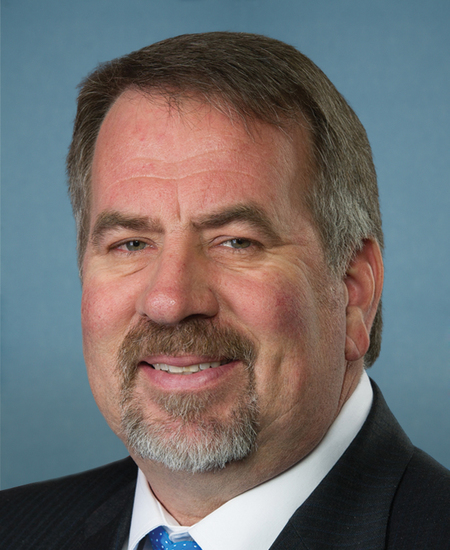
Rep. Doug LaMalfa
Sponsored bills
Maddy summaryHR 4417, the "Ending Agricultural Trade Suppression Act," prevents state and local governments from imposing additional production standards on agricultural products sold across state lines if those standards aren't already required by federal law or the state where the product is grown. It directly affects agricultural producers, distributors, and businesses operating in interstate commerce by allowing them to sue states in federal court to challenge such regulations. The bill creates a private right of action for affected parties to seek court invalidation of the regulations and damages for economic losses, with provisions for preliminary injunctions to halt enforcement during litigation. This aims to reduce regulatory barriers that could hinder the movement of agricultural goods between states.
Maddy summaryHR 4345, the Dignity for Aborted Children Act, requires abortion providers to offer patients choices for handling fetal tissue after an abortion, including taking it home or having the provider arrange interment or cremation. Providers must obtain patient consent in writing for tissue disposal and arrange final disposition (interment or cremation) within 7 days if patients choose to release the tissue, failing which faces civil penalties up to $50,000 or criminal charges. The bill mandates annual reporting by providers on abortion procedures and tissue disposal methods, and requires the Secretary to submit annual reports to Congress on abortion statistics and disposal practices. This directly affects abortion providers and patients by changing post-abortion tissue handling procedures under federal law.
Maddy summaryHR 4355, the Rural Veterinary Workforce Act, modifies the Internal Revenue Code to exclude certain loan repayment or forgiveness assistance from taxable income. It specifically adds programs under the National Agricultural Research, Extension, and Teaching Policy Act of 1977 and similar state initiatives - designed to boost veterinary services in rural areas - to the list of tax-exempt benefits. This directly affects veterinary students participating in these state or federal programs who work in underserved rural communities. The change takes effect for assistance received in taxable years beginning after December 31, 2023.
Maddy summaryHR 4321 prohibits the U.S. government from providing any federal loans, grants, or financial assistance to state or local governments that enact reparations programs based on slavery, race, ethnicity, national origin, or related historical practices. This bill directly affects state and local governments that pass such reparations laws by blocking access to federal funds for those specific programs. The key provision bans all forms of federal financial aid - including from the Federal Reserve and independent agencies - to the jurisdiction enacting the reparations program, without applying to other government functions. The bill focuses solely on restricting federal funding for these programs, not on creating or funding reparations themselves.
Maddy summaryHJRES 44 is a congressional resolution seeking to block a 2021 rule by the Bureau of Alcohol, Tobacco, Firearms, and Explosives (ATF). The rule classified firearms with stabilizing braces as "short-barreled rifles," which would have required additional licensing and regulation. This resolution uses a specific legal process (under Title 5, U.S. Code) to formally disapprove the ATF rule, meaning the rule would no longer be in effect. It directly affects firearm owners, manufacturers, and dealers who would have been subject to the rule’s requirements.
Maddy summaryThis bill renames the U.S. Food for Peace program after Peter O'Brien and makes key changes to how agricultural aid is delivered. It prohibits using cash, food vouchers, or foreign-sourced food for aid (section 2d), requires that at least 50% of annual funds be used for procuring U.S. agricultural commodities (section 2b(5)), and mandates annual reports to Congress on fund usage (section 2b(6)). These changes directly affect U.S. farmers supplying aid and international recipients of food assistance. The bill focuses on strengthening domestic agricultural exports within the Food for Peace program while adding transparency requirements.
Maddy summaryHJRES 45 is a congressional disapproval resolution targeting a specific Department of Education rule about federal student loans. It seeks to block the rule implementing "One-Time Federal Student Loan Debt Relief" (including modifications to Perkins, FFEL, and Direct Loan programs) by invoking the Congressional Review Act. If passed, this resolution would nullify the rule, preventing the Department of Education from using it to modify or waive student loan obligations. The bill directly affects borrowers who might have qualified for debt relief under the targeted rule.
Maddy summaryHR 4245, the "Enforce the Caps Act," sets specific annual spending limits for discretionary federal programs from fiscal years 2026 through 2029. It establishes new budget authority caps at $1.622 trillion for 2026, increasing to $1.671 trillion for 2029. The bill directly affects how Congress allocates funds for non-mandatory programs like education, transportation, and defense by legally binding these spending levels. This is a procedural adjustment to existing budget control law, not a new policy affecting specific groups or creating new programs.
Maddy summaryHR 4237, the Ensuring Sound Guidance Act, requires investment advisors and retirement plan fiduciaries to prioritize financial factors (like investment returns and costs) when making decisions for clients or plan participants. It mandates that non-financial factors (such as environmental or social goals) can only be considered if the client provides written consent, and advisors must then disclose the expected and actual financial impact over a three-year period. The bill amends the Investment Advisers Act and ERISA to enforce this standard, with changes taking effect 12 months after enactment. Additional provisions direct studies on state pension plans, climate disclosures in municipal bonds, and rules preventing payments to officials for government business.