

Maddy summaryThis bill increases criminal penalties for non-citizens who reenter the U.S. after being deported or excluded. It specifically targets individuals with prior convictions for drug offenses, violent crimes, or multiple prior removals, imposing stricter fines and longer prison terms. For example, those convicted of an aggravated felony or two prior illegal reentries face mandatory minimum sentences of 5 years in prison, up to 20 years. The law also expands penalties for those who reenter without Homeland Security's permission after being removed under certain provisions.
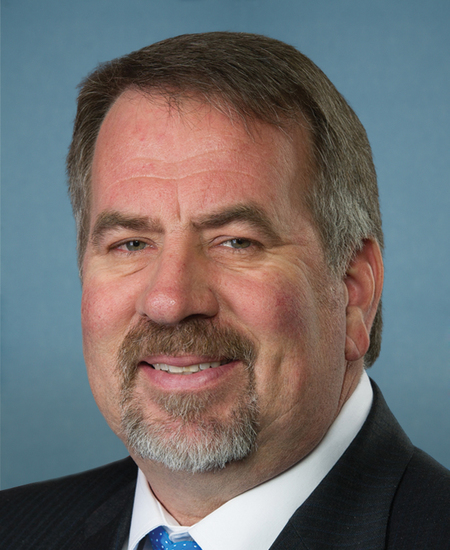
Rep. Doug LaMalfa
Sponsored bills
Maddy summaryHR 277 would require Congress to approve major federal regulations before they take effect. Major rules are defined as those with significant economic impact ($100 million+ annually), major cost increases for consumers or industries, or significant adverse effects on competition, employment, or innovation. Agencies must submit detailed information about these rules to Congress, including cost-benefit analyses, before they can take effect. Congress would have 70 session days to approve the rule with a joint resolution; if they don't act within that timeframe, the rule would not take effect. This would increase congressional oversight of federal regulations and require more detailed information about proposed rules before they become law.
Maddy summaryThis bill prohibits providing, facilitating, or possessing wireless devices (like cell phones) in U.S. detention facilities (e.g., prisons, jails) if such actions violate existing federal or state laws. It imposes civil fines up to $50,000 per violation (capped at $1 million total) or criminal fines up to $50,000 for intentional violations. The law explicitly excludes lawful law enforcement activities and state enforcement powers, and defines "detention facility" broadly to include all correctional and penal institutions. It applies to conduct occurring after enactment.
Maddy summaryHR 3946, the FASD Respect Act, establishes a new federal program within the Department of Health and Human Services (HHS) to address fetal alcohol spectrum disorders (FASD). The bill creates FASD Centers for Excellence to build state, tribal, and national capacity for prevention, identification, and support services - directly affecting individuals with FASD, their families, and healthcare providers. Key provisions include developing standardized diagnostic guidelines, expanding screening and training for medical professionals, creating a national resource directory for FASD services, and promoting culturally informed interventions. The program requires HHS to report to Congress on progress within four years. This legislation restructures existing HHS authority to focus comprehensively on FASD across the lifespan, replacing older terminology with consistent "FASD" references.
Maddy summaryThis bill requires medical providers to provide written parental notification (delivered personally or via certified mail) for abortions performed on unemancipated minors under 18, with a 96-hour waiting period after notification. Parents (including legal guardians) may seek a federal court injunction to block an abortion, which must be granted temporarily until the court rules. Exceptions exist for medical emergencies where immediate treatment is needed to prevent the minor’s death, with documentation required in medical records. Violations carry fines up to $100,000 or one year in prison per offense. The law does not override stricter state parental notification requirements.
Maddy summaryHJRES 42 is a congressional resolution disapproving the District of Columbia Council's approval of the *Comprehensive Policing and Justice Reform Amendment Act of 2022* (D.C. Act 24-781), which the Council enacted on January 19, 2023. This resolution, introduced by 18 House members on March 9, 2023, formally expresses Congress's objection to the DC law but does not alter the law itself or its implementation in the District. The resolution targets the DC Council’s action under the Home Rule Act, requiring Congress to formally disapprove such local legislation before it takes effect. It affects DC’s local policing policies but does not directly change federal law or impact residents beyond this procedural disapproval.
Maddy summaryHR 4070, the Disaster Mitigation and Tax Parity Act of 2023, excludes certain payments received from state disaster mitigation programs from taxable income. It directly affects homeowners who get funds from state or state-regulated programs to make property improvements specifically designed to reduce damage from windstorms, earthquakes, or wildfires (like installing fire-resistant roofing or seismic upgrades). The bill adds a new tax exclusion in the Internal Revenue Code, meaning these qualified mitigation payments won't be counted as gross income for tax purposes. This change applies to payments made after December 31, 2020, with options for retroactive tax filings.
Maddy summaryHR 4035, the Protecting Small Business Information Act of 2023, requires the Treasury Secretary to coordinate the effective dates of all rules under the Corporate Transparency Act. It mandates that all final rules related to beneficial ownership reporting must take effect on the same date, delaying implementation until the Secretary certifies to Congress that all rules are issued and will align on a single effective date. This directly affects small businesses required to report beneficial ownership information under the Corporate Transparency Act. The bill’s key mechanism is creating a unified implementation timeline, preventing staggered rule deadlines that could complicate compliance for small entities. It does not change reporting requirements but ensures a synchronized rollout of the regulations.
This resolution expresses support for keeping AM radios in cars. (Several car manufacturers announced plans to remove AM radio options from some or all of their models.)
Maddy summaryThis resolution designates May 5, 2023, as the "National Day of Awareness for Missing and Murdered Indigenous Women and Girls" to honor victims and support families. It asks the public to commemorate affected individuals and demonstrates solidarity with impacted communities. The bill also recommends the Justice Department commission a new study to update statistics on violence against Indigenous women, referencing the 2016 DOJ study that found 84.3% experienced violence in their lifetime. This symbolic measure aims to raise awareness and encourage federal action, without changing laws or allocating new funding.