

Stop China’s Continuous Purchase of Land Act or the Stop CCP Land Act This bill requires states that receive certain federal program funds to restrict the purchase of agricultural land by a covered foreign country. Covered foreign country means a country included in Department of State regulations as subject to certain prohibitions (i.e., Belarus, Burma, China, Cuba, Iran, North Korea, Syria, and Venezuela), as well as Russia. Specifically, a state may not receive funds for certain programs funded by the Inflation Reduction Act of 2022 (e.g., certain energy efficiency and conservation programs) unless that state has a law prohibiting a covered foreign country (or persons acting on behalf of the country) from purchasing agricultural land in the state. Further, a state must require that a person from a covered foreign country that holds agricultural land in the state prior to the state law's enactment submit an annual report to the state on the agricultural holdings. The Department of Agriculture must submit a report to Congress on how the Agricultural Foreign Investment Disclosure Act of 1978 should be updated to ensure accurate documentation and monitoring of foreign investment in agricultural land. The Government Accountability Office must submit a report to Congress that includes (1) an assessment of this bill's impact on national security, and (2) any measures that can be taken to better secure U.S. real estate from foreign manipulation.
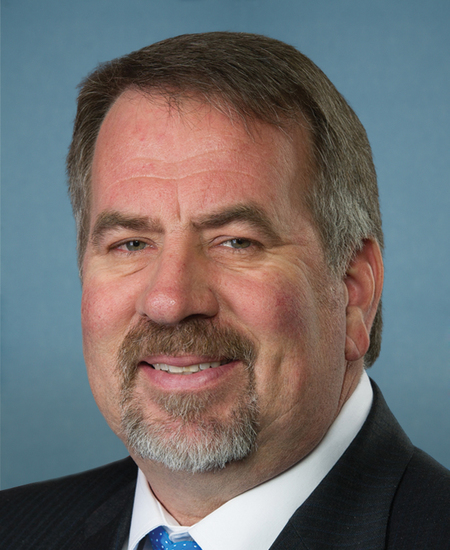
Rep. Doug LaMalfa
Sponsored bills
Maddy summaryThis bill cancels a 2016 rule requiring new truck drivers to complete specific training programs. It removes the Federal Motor Carrier Safety Administration's mandate for minimum training standards for entry-level commercial drivers. The repeal directly affects trucking companies and new drivers who would no longer need to follow these training requirements. The change eliminates a specific regulatory obligation without creating new policies or funding.
Maddy summaryHR 4721, the Main Street Tax Certainty Act, makes a permanent the 20% tax deduction for eligible small business owners under Section 199A of the tax code. This provision directly affects pass-through business owners (like S-corps, partnerships, and sole proprietorships) who qualify for the deduction. The bill achieves this by removing the temporary expiration language (subsection (i)) from the existing tax code provision. The key change is ending the need for annual congressional extensions of this deduction, providing long-term tax certainty for small businesses.
Maddy summaryThis bill prohibits the General Services Administration (GSA) from considering the legality or availability of abortion when acquiring, constructing, leasing, or entering into agreements for federal buildings or properties. It directly affects GSA's decisions regarding federal real estate, ensuring that such actions are not influenced by state abortion laws. The law amends specific sections of Title 40 (including building acquisition, construction, and leasing rules) to explicitly ban this consideration. It does not change abortion laws or apply to non-federal properties.
Maddy summaryThe ACE Act changes how federal education grants are calculated to better support schools in high-poverty areas. It phases out a current system that favored larger school districts by shifting to a formula based solely on the percentage of students from low-income families, starting in 2024. This directly benefits smaller school districts with high concentrations of economically disadvantaged students that were previously disadvantaged under the old dual-weighting system. The change aims to align funding more closely with congressional intent to direct more resources to schools serving the most economically disadvantaged students.
Maddy summaryHRES 580 is a symbolic resolution expressing the House's support for designating "Journeyman Lineworkers Recognition Day." It honors lineworkers who work in hazardous conditions (such as at heights near live wires) and respond to disasters like hurricanes and wildfires, while recognizing their contributions and the legacy of Henry Miller, an early electrical worker who died on the job. The resolution has no legal effect - it solely encourages public recognition and reflection on these workers' service.
This resolution expresses the sense of the House of Representatives that research and promotion boards support efforts to develop new markets and strengthen existing markets via research, education, and promotion.
Maddy summaryThe American Food for American Schools Act of 2023 requires school meal programs (including lunch, breakfast, summer food, and child care programs) to prioritize purchasing domestic food products, defined as those produced, processed, or harvested in the United States. Schools may request waivers to buy foreign products for up to 5% of annual food costs per category if domestic options are unavailable in sufficient quantity or quality, and must notify parents annually about such purchases. The bill also mandates that suppliers of school food contracts comply with domestic purchasing rules, with penalties for noncompliance requiring reimbursement of federal funds used for foreign products. It increases funding for "Buy American" training programs and adds transparency requirements, including public reporting of waivers and noncompliance instances.
Maddy summaryHR 4604, the Don Young American Grown Act, requires that cut flowers and cut greens displayed in public areas of Executive Office, State Department, and Defense Department buildings must be grown in the United States. This affects federal agencies by mandating U.S.-sourced decorative floral products for official displays, excluding personal use by employees. The bill defines "produced in the United States" to include all states, D.C., territories, and federally recognized tribal lands. It takes effect one year after enactment, with no impact on personal displays by federal staff.
Maddy summaryThe Mount Rushmore Protection Act prohibits federal funding for any changes to the Mount Rushmore National Memorial, including altering, destroying, or removing its carved faces or features. It specifically bans the use of federal funds to modify the memorial's existing names, faces, or other physical elements. The bill also formally designates the site as "Mount Rushmore" in all federal records, maps, and documents. This legislation directly affects federal agencies and government documents that reference the memorial, ensuring its current appearance remains protected from funded modifications.